


All JEE Mains 2024 Chemistry questions
26 chaptersShowing 151–200 of 490 questions
-
- (A) \(20\)
- (B) \(25\)
- (C) \(30\)
- (D) \(35\)
Show answer and solution
Correct Answer: (A)
Reaction suggests that \(1\) mole of aniline give \(1\) mole of orange dye.\(\text { so }(\mathrm{mol})_{\text {aniline }}=(\mathrm{mole})_{\text {orange dye }}\)
\(\frac{9.3 \mathrm{~g}}{93 \mathrm{~g} \mathrm{~mol}^{-1}}=\frac{\text { mass of orange dye }}{199 \mathrm{~g} \mathrm{~mol}^{-1}}\)
\(\text { mass of orange dye }=19.9 \mathrm{~g} \simeq 20 \mathrm{~g}\)

-
- (A) \(10\)
- (B) \(11\)
- (C) \(2\)
- (D) \(4\)
Show answer and solution
Correct Answer: (C)
ImageGain in molecular weight after acylation with one \(-\mathrm{NH}_2\) group is 42 .
Total increase in molecular weight \(=84\)
\(\therefore\) Number of amino group in \(\mathrm{x}=\frac{84}{42}=2\)

-
- (A) 325
- (B) 287
- (C) 151
- (D) 244
Show answer and solution
Correct Answer: (B)
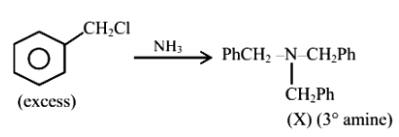
Molar Mass of \((X)\) is \(287 g mol ^{-1}\) -
- (A) Pyrrole \(>\) Piperidine \(>\) Pyridine
- (B) Pyrrole \(>\) Pyridine \(>\) Piperidine
- (C) Pyridine \(>\) Piperidine \(>\) Pyrrole
- (D) Piperidine \(>\) Pyridine \(>\) Pyrrole
Show answer and solution
Correct Answer: (D)
\(N\left(s p^3\right.\), localized lone pair \()>N\left(s p^2\right.\), localized lone pair \()>N\left(s p^2\right.\), delocalized lone pair, aromatic)
\(\therefore\) Piperidine > Pyridine > Pyrrole - 155. From \(6.55 \mathrm{~g}\) of aniline, the maximum amount of acetanilide that can be prepared will be _______ \(\times 10^{-1} \mathrm{~g}\). 2024 Medium
- (A) \(90\)
- (B) \(96\)
- (C) \(97\)
- (D) \(95\)
Show answer and solution
Correct Answer: (D)
\(93 \mathrm{~g}\) aniline form \(135 \mathrm{gm}\) acetanlideso \(6.55 \mathrm{~g}\) anilne form \(\frac{135}{93} \times 6.55=9.5\)
\(95 \times 10^1\)
-
- (A) Statement I is false but Statement II is true
- (B) Statement I is true but Statement II is false
- (C) Both Statement I and Statement II are true
- (D) Both Statement I and Statement II are false
Show answer and solution
Correct Answer: (D)
P - tolenesulfonyl chloride is Heisenberg reagent.
⇒ gives reaction with Primary and secondary amines not with tertiary.
⇒ Product of \(1^{\circ}\) Amine ⇒ Soluble in Base (NaOH)
Product of \(2^{\circ}\) Amine ⇒ Soluble in acid \(( HCl )\) -
- (A) Both Statement \(I\) and Statement \(II\) are correct
- (B) Statement \(I\) is correct but Statement \(II\) is incorrect
- (C) Statement \(I\) is incorrect but Statement \(II\) is correct
- (D) Both Statement \(I\) and Statement \(II\) are incorrect
Show answer and solution
Correct Answer: (B)
Aniline is also known as amino benzene. -
- (A) Both Statement \(I\) and Statement \(II\) are correct
- (B) Both Statement \(I\) and Statement \(II\) are incorrect
- (C) Statement \(I\) is incorrect but Statement \(II\) is correct
- (D) Statement \(I\) is correct but Statement \(II\) is incorrect
Show answer and solution
Correct Answer: (A)
The \(\mathrm{NH}_2\) group in Aniline is ortho and para directing and a powerful activating group as \(\mathrm{NH}_2\) has strong \(+\mathrm{M}\) effect.Aniline does not undergo Friedel-Craft's reaction (alkylation and acylation) as Aniline will form complex with \(\mathrm{AlCl}_3\) which will deactivate the benzene ring.
- 159. Number of amine compounds from the following giving solids which are soluble in \(\mathrm{NaOH}\) upon reaction with Hinsberg's reagent is _______.
 2024 Medium
- (A) \(3\)
- (B) \(4\)
- (C) \(5\)
- (D) \(6\)
Show answer and solution
Correct Answer: (C)
Primary amine give an ionic solid upon reaction with Hinsberg reagent which is soluble in \(\mathrm{NaOH}\).
-
- (A) \(8\)
- (B) \(5\)
- (C) \(3\)
- (D) \(4\)
Show answer and solution
Correct Answer: (D)
Compounds which can not undergo Friedel Crafts reaction are\(Image\)

- 161. Phthalimide is made to undergo following sequence of reactions. (Image) Total number of \(\pi\) bonds present in product ' \(P\) ' is _______.
 2024 Medium
- (A) \(7\)
- (B) \(8\)
- (C) \(9\)
- (D) \(10\)
Show answer and solution
Correct Answer: (B)
Total number of \(\pi\)-bonds present in product \(P\) is \(8\)
-
- (A) \(39\)
- (B) \(40\)
- (C) \(45\)
- (D) \(50\)
Show answer and solution
Correct Answer: (C)
\(\underset{\substack{\text { Mol..wt.45g }}}{\mathrm{CH}_3 \mathrm{CH}_2 \mathrm{NH}_2} \xrightarrow{\mathrm{N}_2 \mathrm{NO}_2+\mathrm{HCl}} \xrightarrow{\mathrm{H}_2 \mathrm{O}} \mathrm{CH}_3 \mathrm{CH}_2-\mathrm{OH}+\underset{14 \mathrm{~g}}{\mathrm{~N}_2}\)given: \(\mathrm{N}_2\) evolved is \(2.24 \mathrm{~L}\) i.e. \(0.1 \mathrm{~mole}\).
1.e. \(\mathrm{CH}_3 \mathrm{CH}_2 \mathrm{NH}_2\) (ethyl amine) will be \(4.5 \mathrm{~g}\)
\((=0.1 \mathrm{~mole})\)
Hence the answer \(=45 \times 10^{-1} \mathrm{~g}\)
-
- (A) \(5\)
- (B) \(4\)
- (C) \(10\)
- (D) \(11\)
Show answer and solution
Correct Answer: (A)
Major product \(B\) is \(\rightarrow\)(Image)
Total number of \(\pi\) bonds in \(B\) are \(5\)

- 164. Match List - \(I\) with List -\(II\).
Choose the correct answer from options given below: 2024 Hard
- (A) \(A-(III), (B)-(IV), (C)-(I), (D)-(II)\)
- (B) \(A-(IV), (B)-(II), (C)-(I), (D)-(III)\)
- (C) \(A-(IV), (B)-(II), (C)-(III), (D)-(I)\)
- (D) \(A-(III), (B)-(IV), (C)-(II), (D)-(I)\)
Show answer and solution
Correct Answer: (B)
\(\mathrm{CH}_3\left(\mathrm{CH}_2\right)_5 \mathrm{COOC}_2 \mathrm{H}_5 \xrightarrow{\text { DB. } 4 \text { L-H. } \mathrm{H}_2 \mathrm{O}} \mathrm{CH}_3\left(\mathrm{CH}_2\right)_5 \mathrm{CHO}\)
\(\mathrm{C}_6 \mathrm{H}_5 \mathrm{COC}_6 \mathrm{H}_5 \xrightarrow{\mathrm{Zn}(\mathrm{Hg}) \& \text { conc. } \mathrm{HCl}} \mathrm{C}_6 \mathrm{H}_5 \mathrm{CH}_2 \mathrm{C}_6 \mathrm{H}_5\)
\(\mathrm{C}_0 \mathrm{H}_5 \mathrm{CHO} \xrightarrow[\mathrm{H}, \mathrm{O}]{\mathrm{CH}_3, \mathrm{Mgr}} \mathrm{C}_0 \mathrm{H}_5 \mathrm{CH}(\mathrm{OH}) \mathrm{CH}_5\)
\(\mathrm{CH}_3 \mathrm{COCH}_2 \mathrm{COOC}_2 \mathrm{H}_5 \xrightarrow{\text { Nath }, \mathrm{H}^{+}} \mathrm{CH}_3 \mathrm{CH}(\mathrm{OH}) \mathrm{CH}_2\)\(\mathrm{COOC}_2 \mathrm{H}_5\) -
- (A) \(HCOOH > CH _3 COOH > CH _3 CH _2 COOH > CH _3 CH _2 CH _2 COOH\)
- (B) \(HCOOH > CH _3 CH _2 CH _2 COOH > CH _3 CH _2 COOH > CH _3 COOH\)
- (C) \(CH _3 CH _2 CH _2 COOH > CH _3 CH _2 COOH > CH _3 COOH > HCOOH\)
- (D) \(CH _3 COOH > CH _3 CH _2 COOH > CH _3 CH _2 CH _2 COOH > HCOOH\)
Show answer and solution
Correct Answer: (A)
\(HCOOH > CH _3 COOH > CH _3 CH _2 COOH > CH _3 CH _2 CH _2 COOH\) - 166. The product \((c)\) in the following sequence of reactions has _______\(\pi\) bonds.
 2024 Medium
- (A) \(2\)
- (B) \(3\)
- (C) \(8\)
- (D) \(4\)
Show answer and solution
Correct Answer: (D)
\(\pi\) bonds \(=4\)
- 167. For the compounds :

The increasing order of boiling point is :
Choose the correct answer from the options given below : 2024 Medium- (A) \((\mathrm{A})<(\mathrm{B})<(\mathrm{C})<(\mathrm{D})\)
- (B) \((\mathrm{B})<(\mathrm{C})<(\mathrm{C})<(\mathrm{D})\)
- (C) \((\mathrm{D})<(\mathrm{C})<(\mathrm{A})<(\mathrm{B})\)
- (D) \((\mathrm{B})<(\mathrm{A})<(\mathrm{D})<(\mathrm{C})\)
Show answer and solution
Correct Answer: (B)
Compounds having same number of carbon atoms follow the boiling point order as:(Boiling point \()_{\text {Hydogen bending }}>\) (Boiling point \()_{\text {iigh polarity }}>\) \((\text { Boiling point })_{1 \text { or polarity }}>(\text { Boiling point })_{\text {nou polar }}\)
-
- (A) \(3\)
- (B) \(4\)
- (C) \(10\)
- (D) \(6\)
Show answer and solution
Correct Answer: (A)
Acetaldehyde \(\left(\mathrm{CH}_3 \mathrm{CHO}\right)\), Methanal \((\mathrm{HCHO})\), andcyclohexane carbaldehyde
-
- (A) Both Statement \(I\) and Statement \(II\) are correct.
- (B) Both Statement \(I\) and Statement \(II\) are incorrect.
- (C) Statement \(I\) is incorrect but Statement \(II\) is correct.
- (D) Statement \(I\) is correct but Statement \(II\) is incorrect.
Show answer and solution
Correct Answer: (D)
Aldehyde and ketones having acidic \(\alpha\)-hydrogen show aldol reaction
-
- (A) Stephen reaction
- (B) Etard reaction
- (C) Gatterman-koch reaction
- (D) Rosenmund reduction
Show answer and solution
Correct Answer: (C)
Gatterman-Koch reaction
- 171. In the above chemical reaction sequence " \(\mathrm{A}\) " and " \(\mathrm{B}\) " respectively are :
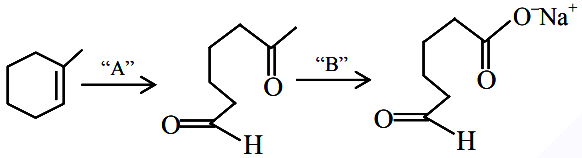 2024 Medium
- (A) \(\mathrm{O}_3, \mathrm{Zn} / \mathrm{H}_2 \mathrm{O}\) and \(\mathrm{NaOH}_{\text {(alc.). }} / \mathrm{I}_2\)
- (B) \(\mathrm{H}_2 \mathrm{O}, \mathrm{H}^{+}\)and \(\mathrm{NaOH}_{\text {(alc.) }} / \mathrm{I}_2\)
- (C) \(\mathrm{H}_2 \mathrm{O}, \mathrm{H}^{+}\)and \(\mathrm{KMnO}_4\)
- (D) \(\mathrm{O}_3, \mathrm{Zn} / \mathrm{H}_2 \mathrm{O}\) and \(\mathrm{KMnO}_4\)
Show answer and solution
Correct Answer: (A)
Explanation:
To determine the identity of reagents "A" and "B", we analyze each transformation step in the reaction pathway:
1. First Transformation (Identification of "A"):
The starting reactant is an unsymmetrical cyclic alkene, 1-methylcyclohexene. Under the action of reagent "A", the carbon-carbon double bond (\( \text{C}=\text{C} \)) undergoes oxidative cleavage to open the ring, generating a dicarbonyl product containing both a ketone group and an aldehyde group (6-oxoheptanal). This specific cleavage with a reductive workup that preserves aldehydes without further oxidation to carboxylic acids is known as reductive ozonolysis. Therefore, reagent "A" must be:
\( \text{O}_3 \text{ followed by } \text{Zn/H}_2\text{O} \)
2. Second Transformation (Identification of "B"):
The intermediate contains a methyl ketone group (\( -\text{COCH}_3 \)). Upon treatment with reagent "B" in the presence of iodine (\( \text{I}_2 \)), the methyl ketone group undergoes a haloform cleavage to form a bright yellow precipitate of iodoform (\( \text{CHI}_3 \)) alongside the corresponding sodium carboxylate salt. This confirmation test for methyl ketones requires a strong base. Therefore, reagent "B" is:
\( \text{NaOH} \)
Combining both components, "A" and "B" correspond perfectly to option A. -
- (A) \(317\)
- (B) \(318\)
- (C) \(320\)
- (D) \(325\)
Show answer and solution
Correct Answer: (B)
Claisen Schmidt reaction(Image)
\(\mathrm{mw}\) of benzaldehyde \(=106\)
\(106 \times 3=318 \mathrm{gm}\). Benzaldehyde is required to give \(1.5 \mathrm{~mole}\) (or \(351 \mathrm{gm}\) ) product

- 173. The product of the following reaction is \(\mathrm{P}\).
The number of hydroxyl groups present in the product \(\mathrm{P}\) is ______. 2024 Hard
- (A) \(1\)
- (B) \(10\)
- (C) \(15\)
- (D) \(0\)
Show answer and solution
Correct Answer: (A)

Explanation:
To find the correct product P and the number of hydroxyl groups, we analyze the competitive reaction pathways of Grignard reagents:
1. Acid-Base vs. Nucleophilic Addition: The starting material is 4-hydroxybenzaldehyde, which contains two functional groups: a carbonyl group (\( -\text{CHO} \)) and a phenolic hydroxyl group (\( -\text{OH} \)). Grignard reagents (\( \text{PhMgBr} \)) are exceptionally strong nucleophiles, but they are also extremely strong bases. Because acid-base proton transfer reactions are kinetically much faster than nucleophilic addition reactions to carbonyl groups, the Grignard reagent will preferentially act as a base.
2. First Step (Deprotonation): Since only 1 equivalent of \( \text{PhMgBr} \) is added, it completely reacts with the highly acidic proton of the phenolic \( -\text{OH} \) group instead of attacking the aldehyde group:
\( \text{H-O-C}_6\text{H}_4\text{-CHO} + \text{PhMgBr} \rightarrow \text{BrMg-O-C}_6\text{H}_4\text{-CHO} + \text{Ph-H} \)
This step yields a magnesium phenoxide salt and leaves the carbonyl group (\( -\text{CHO} \)) completely untouched.
3. Second Step (Acidic Workup): The addition of aqueous ammonium chloride (\( \text{aq. NH}_4\text{Cl} \)) neutralizes the mixture and protonates the phenoxide salt back to its original form:
\( \text{BrMg-O-C}_6\text{H}_4\text{-CHO} + \text{NH}_4\text{Cl} \rightarrow \text{H-O-C}_6\text{H}_4\text{-CHO} + \text{Mg(OH)Br} + \text{NH}_3 \)
4. Hydroxyl Group Count: Consequently, the principal organic product P recovered after workup is the unaltered starting material, 4-hydroxybenzaldehyde. Looking at its chemical structure, it contains exactly 1 phenolic hydroxyl (\( -\text{OH} \)) group.
Hence, Option A is the correct choice. -
- (A) Rosenmund reduction
- (B) Wolff-Kishner reduction
- (C) Stephen reduction
- (D) Etard reduction
Show answer and solution
Correct Answer: (A)
It is known as rosenmund reduction that is the partial reduction of acid chloride to aldehyde.
- 175. The total number of 'sigma' (σ) and 'Pi' (π) bonds in 2-oxohex-4-ionic acid is ______. 2024 Medium
- (A) 12
- (B) 14
- (C) 16
- (D) 18
Show answer and solution
Correct Answer: (D)
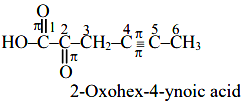
Number of \(\sigma\)-bonds \(=14\)
Number of \(\pi\)-bonds \(=4\)
Total number of bonds \(=18\) - 176. Vanillin compound obtained from vanilla beans, has total sum of oxygen atoms and \(\pi\) electrons is _______. 2024 Medium
- (A) \(10\)
- (B) \(11\)
- (C) \(15\)
- (D) \(20\)
Show answer and solution
Correct Answer: (B)
Vanillin compound is an organic compound molecular formula \(\mathrm{C}_3 \mathrm{H}_5 \mathrm{O}_3\). It is a phenolic aldehyde. Its functional compounds include aldehyde, hydroxyl and ether. It is the primary component of the extract of the vanilla beans.(Image)
Total sum of oxygen atoms and \(\pi\)-electrons is \(3+8=11\)
Total number of oxygen atoms \(=3\)
Total number of \(\pi\)-bonds \(=4\)
\(\therefore\) Total number of \(\pi\)-electrons \(=8\)

-
- (A) \(\mathrm{CH}_3 \mathrm{CH}_2 \mathrm{CH}_2 \mathrm{CH}_3\)
- (B) \(\mathrm{CH}_3 \mathrm{CH}_2 \mathrm{CH}_2 \mathrm{CH}_2-\mathrm{OH}\)
- (C) \(\mathrm{CH}_3 \mathrm{CH}_2 \mathrm{CH}_2 \mathrm{CHO}\)
- (D) \(\mathrm{H}_5 \mathrm{C}_2-\mathrm{O}-\mathrm{C}_2 \mathrm{H}_5\)
Show answer and solution
Correct Answer: (B)
Due to \(H\)-bonding boiling point of alcohol is High. -
- (A) \(C\) and \(D\) only
- (B) \(A\), \(B\) and \(C\) only
- (C) \(A\) only
- (D) \(B\) and \(C\) only
Show answer and solution
Correct Answer: (B)
Apart from aldehyde, Formic acid also gives silver mirror test with ammonical silver nitrate.
-
- (A) quinol
- (B) resorcinol
- (C) catechol
- (D) o-cresol
Show answer and solution
Correct Answer: (C)
\(IUPAC\) name : Benzene-\(1,2\)-diolCommon name : catechol

- 180. Consider the given chemical reaction sequence : Total sum of oxygen atoms in Product \(A\) and Product \(B\) are _______.
 2024 Medium
- (A) \(10\)
- (B) \(11\)
- (C) \(15\)
- (D) \(14\)
Show answer and solution
Correct Answer: (D)
Picric acid is prepared by treating phenol first with concentrated sulphuric acid which converts it to phenol\(-2,4-\)disulphonic acid and then with concentrated nitric acid to get \(2,4,6\) trinitrophenol. -
- (A) Statement \(I\) is true but Statement \(II\) is false.
- (B) Both Statement \(I\) and Statement \(II\) are true
- (C) Both Statement \(I\) and Statement \(II\) are false.
- (D) Statement \(I\) is false but Statement \(II\) is true.
Show answer and solution
Correct Answer: (D)
Phenol is a highly activated compound which can undergo bromination directly with Bromine without any lewis acid. -
- (A) \(A\) is true but \(R\) is false.
- (B) A is false but \(R\) is true.
- (C) Both \(A\) and \(R\) are true and \(R\) is the correct explanation of \(A\).
- (D) Both \(A\) and \(R\) are true but \(R\) is NOT the correct explanation of \(A\).
Show answer and solution
Correct Answer: (A)
Phenol is more acidic than ethanol because conjugate base of phenoxide is more stable than ethoxide. -
- (A) \(A\) is false but \(R\) is true.
- (B) \(A\) is true but \(R\) is false.
- (C) Both \(A\) and \(R\) are true and \(R\) is the correct explanation of \(A\).
- (D) Both \(A\) and \(R\) are true but \(R\) is NOT the correct explanation of \(A\)
Show answer and solution
Correct Answer: (D)
As per \(NCERT\), Assertion \((A)\) and Reason \((R)\) is correct but Reason \((R)\) is not the correct explanation. -
- (A) Statement \(I\) is true but Statement \(II\) is false
- (B) Both Statement \(I\) and Statement \(II\) are true
- (C) Both Statement \(I\) and Statement \(II\) are false
- (D) Statement \(I\) is false but Statement \(II\) is true
Show answer and solution
Correct Answer: (A)
Acidic strength
Ethanol give lucas test after long time
Statement\((I)\) \(\rightarrow\) correct
Statement \((II)\) \(\rightarrow\) incorrect
-
- (A) Statement \(I\) is incorrect but Statement \(II\) is correct.
- (B) Both Statement \(I\) and Statement \(II\) are incorrect.
- (C) Statement \(I\) is correct but Statement \(II\) is incorrect.
- (D) Both Statement \(I\) and Statement \(II\) are correct.
Show answer and solution
Correct Answer: (A)
picric acid\((2,4,6\) - trinitrophenol \()\)

- 186. Match List-\(I\) with List-\(II.\) Choose the correct answer from the options given below:
 2024 Hard
- (A) \((A)-(IV)\), \((B)-(I)\), \((C)-(III)\), \((D)-(II)\)
- (B) \((A)-(II)\), \((B)-(III)\), \((C)-(I)\), \((D)-(IV)\)
- (C) \((A)-(II)\), \((B)-(I)\), \((C)-(III)\), \((D)-(IV)\)
- (D) \((A)-(IV)\), \((B)-(III)\), \((C)-(I)\), \((D)-(II)\)
Show answer and solution
Correct Answer: (D)
A \(\rightarrow\) Kolbe Schmidt Reaction
B \(\rightarrow\) Reimer Tiemann Reaction
C \(\rightarrow\) Oxidation of phenol to p-benzoquinone
D \(\rightarrow \mathrm{PhOH}+\mathrm{NaOH} \rightarrow \mathrm{H}_2 \mathrm{O}+\mathrm{PhO}^{-}\)
-
- (A) \(A-I\), \(B-II\), \(C-III\), \(D-IV\)
- (B) \(A-IV\), \(B-I\), \(C-II\), \(D-III\)
- (C) \(A-III\), \(B-IV\), \(C-I\), \(D-II\)
- (D) \(A-II\), \(B-I\), \(C-IV\), \(D-III\)
Show answer and solution
Correct Answer: (D)
Ethanol \(\rightarrow 15.9\)Phenol \(\rightarrow 10\)
M-Nitrophenol \(\rightarrow 8.3\)
P-Nitrophenol \(\rightarrow 7.1\)
-
- (A) Phthalein dye test
- (B) Lucas test
- (C) Tollen’s test
- (D) Carbylamine test
Show answer and solution
Correct Answer: (A)
Carbylamine Test-Identification of primary amines
Lucas Test - Differentiation between \(1^{\circ}, 2^{\circ}\) and \(3^{\circ}\) alcohols
Tollen's Test - Identification of Aldehydes
Phthalein Dye Test - Identification of phenols
Phenol on heating with phthalic anhydride in the presence of concentrated sulphuric acid forms a colourless condensation compound called phenolphthalein. On further reaction with dilute sodium hydroxide solution gives a pink colour fluorescent compound called fluorescein. Characteristic colours are produced by different phenolic compounds which can be viewed under white background. -
- (A) Salicyclic acid
- (B) Benzene-\(1\),\(2\)-diol
- (C) Benzene-\(1\), \(3\)-diol
- (D) \(2\)-Hydroxybenzaldehyde
Show answer and solution
Correct Answer: (D)
It is Reimer Tiemann Reaction
- 190. Which one the following compounds will readily react with dilute \(\mathrm{NaOH}\) ? 2024 Medium
- (A) \(\mathrm{C}_6 \mathrm{H}_5 \mathrm{CH}_2 \mathrm{OH}\)
- (B) \(\mathrm{C}_2 \mathrm{H}_5 \mathrm{OH}\)
- (C) \(\left(\mathrm{CH}_3\right)_3 \mathrm{COH}\)
- (D) \(\mathrm{C}_6 \mathrm{H}_5 \mathrm{OH}\)
Show answer and solution
Correct Answer: (D)
Stronger \(ACID\) than \(\mathrm{H}_2 \mathrm{O}\)
-
- (A) \(\mathrm{NaCN}\)
- (B) \(\mathrm{NH}_4 \mathrm{CN}\)
- (C) \(\mathrm{KCN}\)
- (D) \(\mathrm{AgCN}\)
Show answer and solution
Correct Answer: (D)
Covalent character of \(\mathrm{AgCN}\). - 192. Compound \(\mathrm{A}\) formed in the following reaction reacts with \(B\) gives the product \(C\). Find out \(A\) and \(B\).
 2024 Hard
- (A) \(\mathrm{A}=\mathrm{CH}_5-\mathrm{C} \equiv \overline{\mathrm{CNa}}{ }^{+}, \mathrm{B}=\mathrm{CH}_5-\mathrm{CH}_2-\mathrm{CH}_2-\mathrm{Br}\)
- (B) \(\mathrm{A}=\mathrm{CH}_3-\mathrm{CH}=\mathrm{CH}_2, \mathrm{~B}=\mathrm{CH}_3-\mathrm{CH}_2-\mathrm{CH}_2-\mathrm{Br}\)
- (C) \(\mathrm{A}=\mathrm{CH}_3-\mathrm{CH}_2-\mathrm{CH}_3, \mathrm{~B}=\mathrm{CH}_3-\mathrm{C} \equiv \mathrm{CH}\)
- (D) \(\mathrm{A}=\mathrm{CH}_3-\mathrm{C} \equiv \overline{\mathrm{CN}} \stackrel{+}{+}, \mathrm{B}=\mathrm{CH}_3-\mathrm{CH}_2-\mathrm{CH}_3\)
Show answer and solution
Correct Answer: (A)
\(\mathrm{CH}_3-\mathrm{C}=\mathrm{CH} \xrightarrow{\mathrm{Na}} \mathrm{CH}_3-\mathrm{C}=\mathrm{C}^{-} \mathrm{Na}^{+} \xrightarrow{\mathrm{CH}_3 \mathrm{CH}_2 \mathrm{CH}_2-\mathrm{Br}} \downarrow\)\(\mathrm{NaBr}+\mathrm{CH}_3-\mathrm{C}=\mathrm{C}-\mathrm{CH}_2 \mathrm{CH}_2 \mathrm{CH}_3\)
-
- (A) \((A)\) is true but \((R)\) is false
- (B) Both \((A)\) and \((R)\) are true but \((R)\) is not the correct explanation of \((A)\)
- (C) \((A)\) is false but \((R)\) is true
- (D) Both \((A)\) and \((R)\) are true and \((R)\) is the correctexplanation of \((A)\)
Show answer and solution
Correct Answer: (A)
\(\mathrm{CH}_2=\mathrm{CH}-\mathrm{CH}_2-\mathrm{Cl}\)
It is allyl carbon and \(\mathrm{sp}^3\) hybridized. -
- (A) Both \(\mathrm{A}\) and \(\mathrm{R}\) are true but \(\mathrm{R}\) is \(NOT\) the correct explanation of \(\mathrm{A}\)
- (B) \(A\) is false but \(R\) is true
- (C) \(A\) is true but \(R\) is false
- (D) Both \(\mathrm{A}\) and \(\mathrm{R}\) are true and \(\mathrm{R}\) is the correct explanation of A
Show answer and solution
Correct Answer: (C)
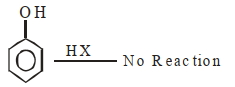
Assertion \((A)\): Given statement is correct because in phenol hydroxyl group cannot be replaced by halogen atom.Reason \((\mathrm{R})\) :
Given reason is false.
-
- (A) \((A)\) is correct but \((R)\) is not correct
- (B) Both \((A)\) and \((R)\) are correct but \((R)\) is not the correct explanation of \((\mathrm{A})\)
- (C) \((A)\) is not correct but \((R)\) is correct
- (D) Both \((A)\) and \((R)\) are correct and \((R)\) is the correct explanation of \((A)\)
Show answer and solution
Correct Answer: (A)
\(\mathrm{AgCN}\) is mainly covalent in nature and nitrogen is available for attack, so alkyl isocyanide is formed as main product.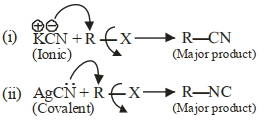
-
- (A) \((A)\) is not correct but \((R)\) is correct
- (B) Both \((A)\) and \((R)\) are correct but \((R)\) is not the correct explanation of \((A)\)
- (C) Both \((A)\) and \((R)\) are correct and \((R)\) is the correct explanation of \((A)\)
- (D) \((A)\) is correct but \((R)\) is not correct
Show answer and solution
Correct Answer: (C)
The benzyl group acts in much the same way using the \(\pi\)-system of the benzene ring for conjugation with the p-orbital in the transition state.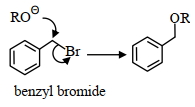
-
- (A) Statement \(I\) is true but Statement \(II\) is false
- (B) Statement \(I\) is false but Statement \(II\) is true.
- (C) Both statement \(I\) and Statement \(II\) are false.
- (D) Both statement \(I\) and Statement \(II\) are true.
Show answer and solution
Correct Answer: (D)
Statement - \(I\): Rate of \(\mathrm{S}_{\mathrm{N}} 2 \propto[\mathrm{R}-\mathrm{X}]\left[\mathrm{Nu}^{-}\right]\)\(\mathrm{S}_{\mathrm{N}} 2\) reaction is favoured by high concentration of nucleophile \(\left(\mathrm{Nu}^{-}\right)\)& less crowding in the substrate molecule.
Statement - \(II\): Solvolysis follows \(\mathrm{S}_{\mathrm{N}} 1\) path.
Both are correct Statements.
-
- (A) Statement \(I\) is true but Statement \(II\) is false
- (B) Statement \(I\) is false but Statement \(II\) is true
- (C) Both Statement \(I\) and Statement \(II\) is true
- (D) Both Statement \(I\) and Statement \(II\) is false
Show answer and solution
Correct Answer: (C)
\(\mathrm{SN}^2 \rightarrow\) Inversion\(\mathrm{SN}^1 \rightarrow\) Racemisation
- 199. Identify the correct set of reagents or reaction conditions ' \(\mathrm{X}\) ' and ' \(\mathrm{Y}\) ' in the following set of transformation.
 2024 Medium
- (A) \(\mathrm{X}=\) conc.alc. \(\mathrm{NaOH}, 80^{\circ} \mathrm{C}, \mathrm{Y}=\mathrm{Br}_2 / \mathrm{CHCl}_3\)
- (B) \(\mathrm{X}=\) dil.aq. \(\mathrm{NaOH}, 20^{\circ} \mathrm{C}, \mathrm{Y}=\mathrm{HBr}\) /acetic acid
- (C) \(\mathrm{X}=\) conc.alc. \(\mathrm{NaOH}, 80^{\circ} \mathrm{C}, \mathrm{Y}=\mathrm{HBr}\) /acetic acid
- (D) \(\mathrm{X}=\) dil.aq. \(\mathrm{NaOH}, 20^{\circ} \mathrm{C}, \mathrm{Y}=\mathrm{Br}_2 / \mathrm{CHCl}_3\)
Show answer and solution
Correct Answer: (C)
\(1\). \(\mathrm{CH}_3-\mathrm{CH}_2-\mathrm{CH}_2-\mathrm{Br} \xrightarrow[80^{\circ} \mathrm{C}]{\mathrm{X}=\text { conc.alc.NaOH }}\)\(\mathrm{CH}_3-\mathrm{CH}=\mathrm{CH}_2 \xrightarrow{\mathrm{Y}=\mathrm{HBr} / \mathrm{Acetic} \text { acid }} \mathrm{CH}_3-\mathrm{CHBr}-\mathrm{CH}_3\)
-
- (A) \({ A-I, B-II, C-III, D-IV }\)
- (B) \({ A-III, B-II, C-IV, D-I }\)
- (C) \({ A-III, B-I, C-IV, D-II }\)
- (D) \({ A-II, B-IV, C-I, D-III }\)
Show answer and solution
Correct Answer: (C)
Iodoform - Antiseptic\(\mathrm{CCl}_4\) - Fire extinguisher
\(CFC\) - Refrigerants
\(DDT\) - Insecticide
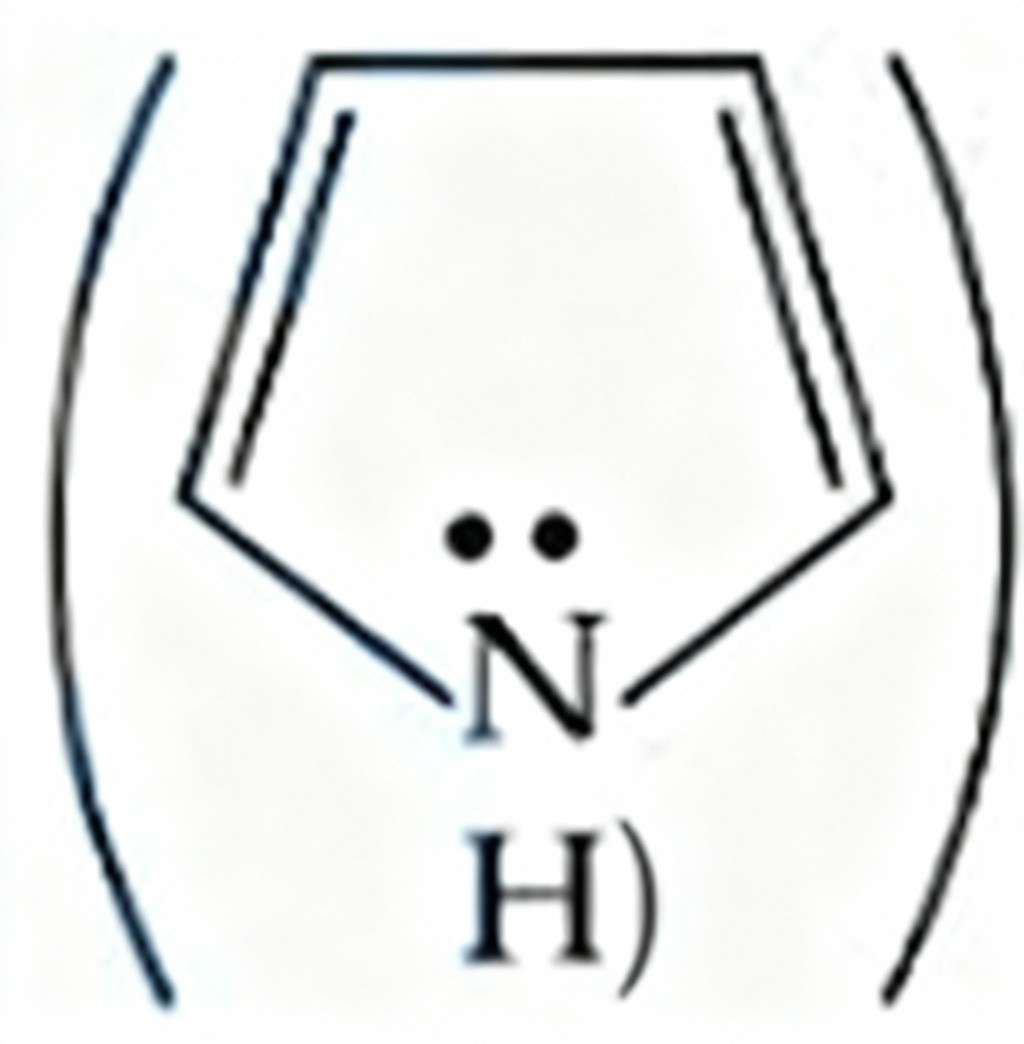 ,Pyridine
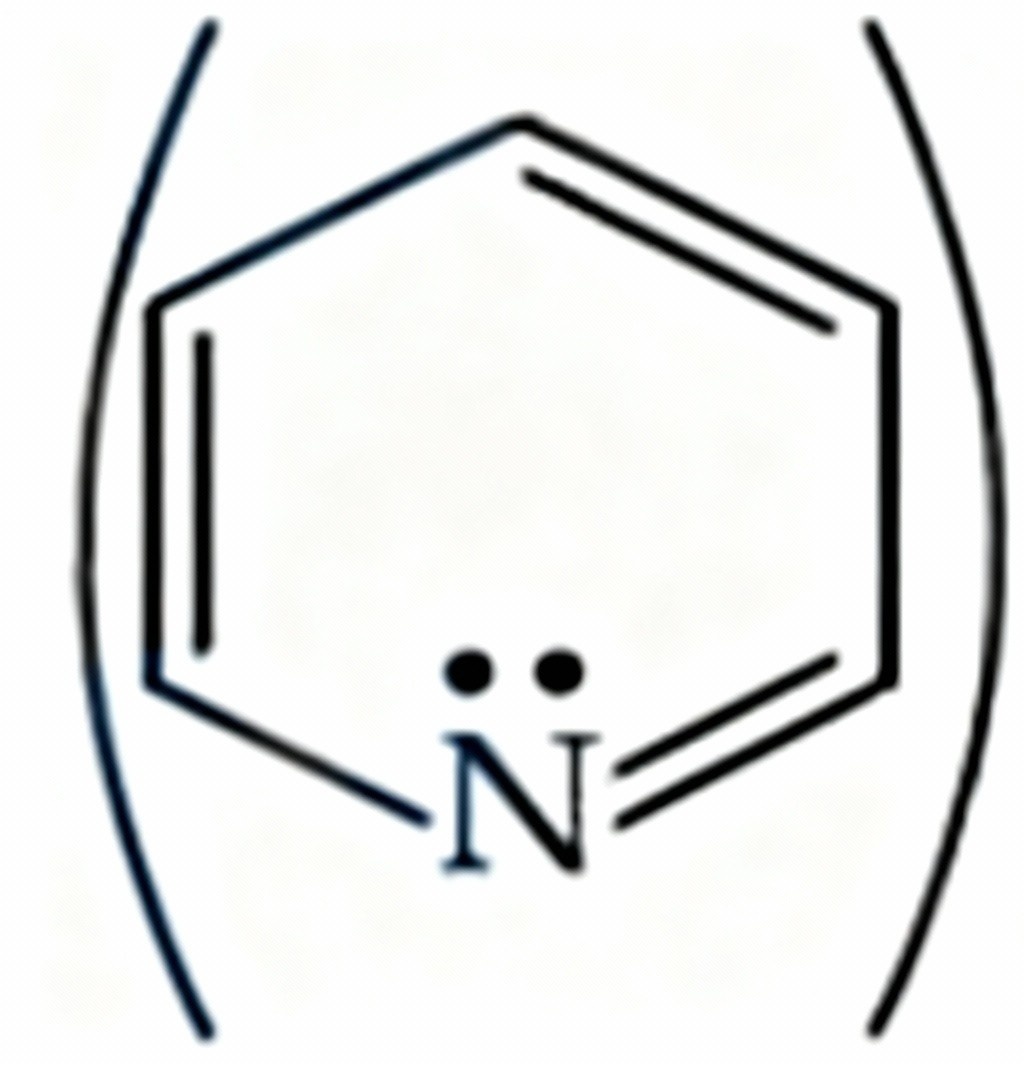 ,and Piperidine
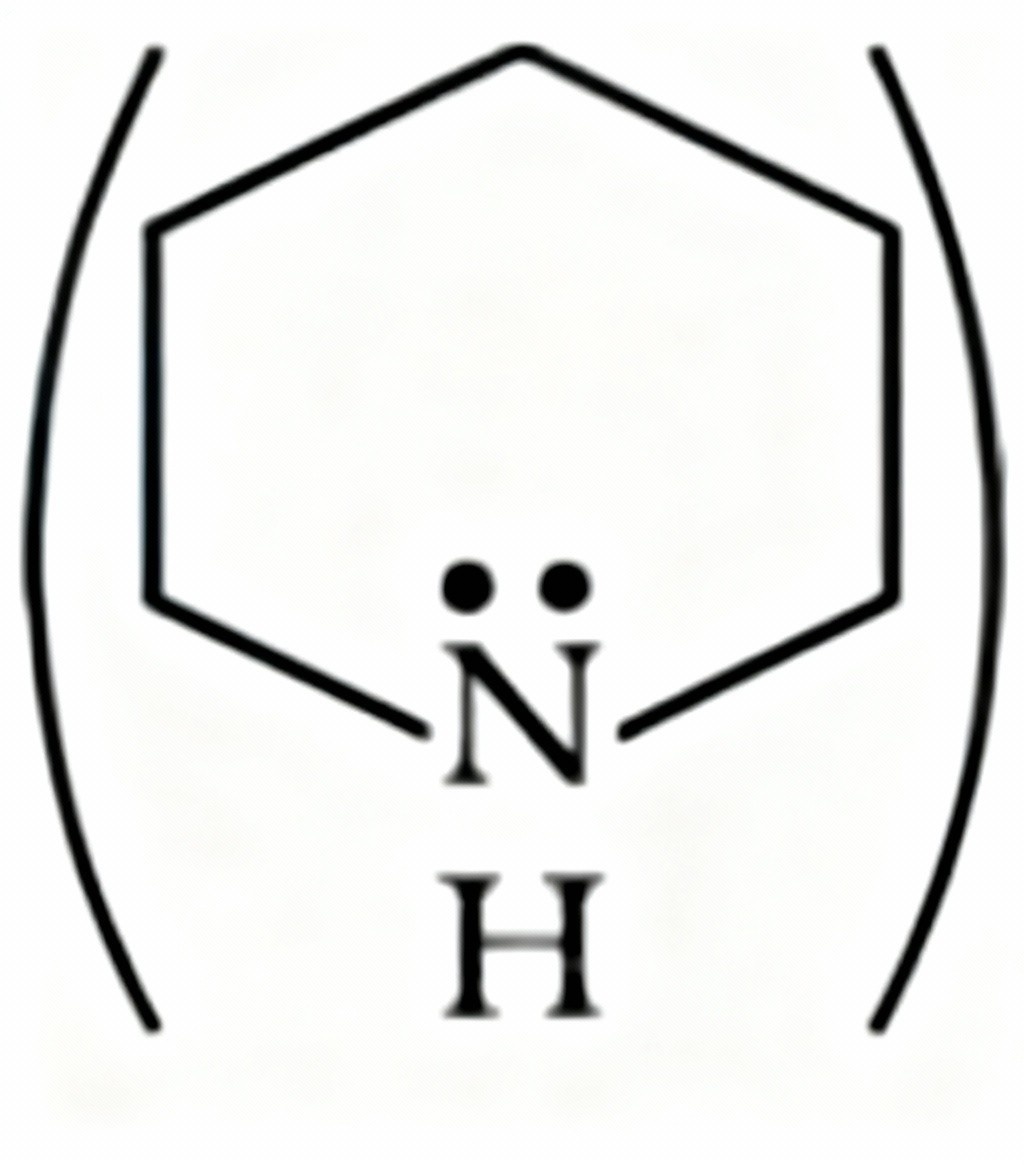 is _______.


No questions on this page match these filters.