


Questions
Newest firstShowing 1–9 of 9 questions
-
- (A) B and C only
- (B) B and D only
- (C) A and B only
- (D) A and C only
Show answer and solution
Correct Answer: (B)
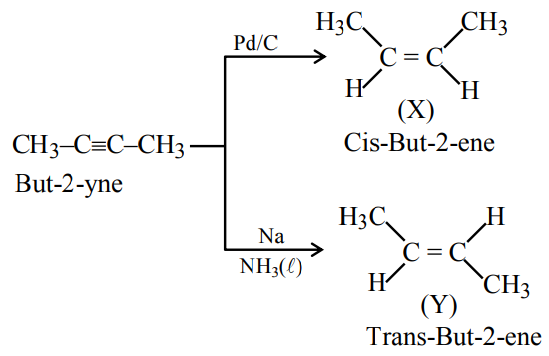
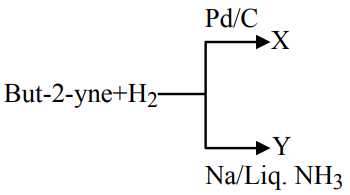
Dipole moment \(x \neq 0\)
-
- (A) \(90\)
- (B) \(118\)
- (C) \(160\)
- (D) \(125\)
Show answer and solution
Correct Answer: (B)
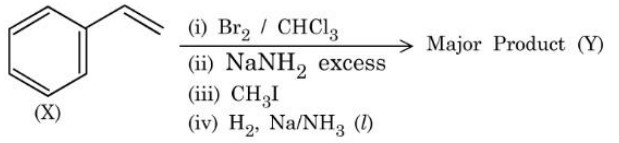
Addition of \(Br_2\) to styrene (X) yields 1,2-dibromoethylbenzene.
\(C_6H_5-CH=CH_2 \xrightarrow{Br_2/CHCl_3} C_6H_5-CH(Br)-CH_2(Br)\)
Reaction with excess \(NaNH_2\) causes double dehydrohalogenation followed by deprotonation of the terminal alkyne, forming sodium phenylacetylide.
\(C_6H_5-CH(Br)-CH_2(Br) \xrightarrow{NaNH_2 \text{ (excess)}} C_6H_5-C \equiv C^- Na^+\)
Nucleophilic substitution with \(CH_3I\) yields 1-phenylpropyne.
\(C_6H_5-C \equiv C^- Na^+ \xrightarrow{CH_3I} C_6H_5-C \equiv C-CH_3\)
Reduction with \(Na/NH_3(l)\) reduces the internal alkyne to a trans-alkene without affecting the benzene ring.
\(C_6H_5-C \equiv C-CH_3 \xrightarrow{Na/NH_3(l)} C_6H_5-CH=CH-CH_3\)
The major product (Y) is trans-1-phenylpropene, which has the molecular formula \(C_9H_{10}\).
Molar mass of \(C_9H_{10} = (9 \times 12) + (10 \times 1) = 108 + 10 = 118 \text{ g mol}^{-1}\).
Answer: \(118\) - 3. The sum of sigma \((\sigma)\) and pi \((\pi)\) bonds in Hex-1,3-dien-5-yne is _______. 2025 Medium
- (A) 10
- (B) 15
- (C) 20
- (D) 25
Show answer and solution
Correct Answer: (B)
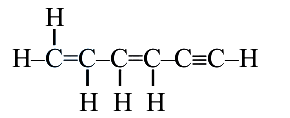
Number of \(\sigma\) bond \(=11\)
Number of \(\pi\) bond \(=4\)
\(\sigma+\pi=11+4=15\) - 4. Total number of sigma (\(\sigma\)) and \(\mathrm{pi}(\pi)\) bonds respectively present in hex-1-en-4-yne are : 2025 Medium
- (A) 3 and 13
- (B) 11 and 3
- (C) 13 and 3
- (D) 14 and 3
Show answer and solution
Correct Answer: (C)
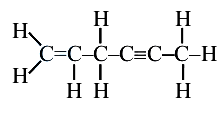
\(\begin{aligned} \sigma \text { bonds } & =13 \\ \pi \text { bonds } & =3\end{aligned}\) -
- (A) \(0\)
- (B) \(1\)
- (C) \(2\)
- (D) \(3\)
Show answer and solution
Correct Answer: (D)
\(=\frac{1}{160} \times \frac{1}{2} \times 360 \times 0.27\)\(=0.30375\)
\(=3.0375 \times 10^{-1}\)
Ans \(=3\)
-
- (A) tert\(-\)butyl al cohol
- (B) But\(-2-\)yne
- (C) Ethyne
- (D) gaseous ammonia
Show answer and solution
Correct Answer: (B)
Metallic sodium do not react with \(2-\)butyne because \(2-\)butyne does not have acidic hydrogen -
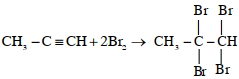
- (A) \(CH_3CD(I)CHD(Cl)\)
- (B) \(CH_3C(I)(Cl)CHD_2\)
- (C) \(CH_3CD_2CH(Cl)(I)\)
- (D) \(CH_3CD(Cl)CHD(I)\)
Show answer and solution
Correct Answer: (B)
\(C{{H}_{3}}C\equiv CH\xrightarrow{DCl}\begin{matrix}
Cl\,\,\, \\
|\,\,\, \\
C{{H}_{3}}-C=CHD \\
\end{matrix}\) \(\xrightarrow{DI}\begin{matrix}
Cl\,\, \\
|\,\,\, \\
C{{H}_{3}}-C-CH{{D}_{2}} \\
\,|\,\,\,\, \\
I\,\,\, \\
\end{matrix}\) -
- (A) Cat. Hydrogenation
- (B) \(H_2/\) Lindlar Cat.
- (C) \(Li/NH_3\)
- (D) \(LiAlH_4\)
Show answer and solution
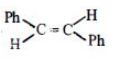
Correct Answer: (C)
With Lithium in liquid ammonia, trans-alkene is almost an exclusive product.\(Ph-C\equiv C-Ph\xrightarrow[Brich\,reduction]{Li\,in\,liq.N{{H}_{3}}}\begin{matrix}
^{Ph} \\
_{H} \\
\end{matrix}\begin{matrix}
\text{ }\!\!\backslash\!\!\text{ } \\
/ \\
\end{matrix}C=C\begin{matrix}
/ \\
\text{ }\!\!\backslash\!\!\text{ } \\
\end{matrix}_{Ph}^{H}\) - 9. Which one of the following class of compounds is obtained by polymerization of acetylene? 2014 Hard
- (A) Poly-yne
- (B) Poly-ene
- (C) Poly-ester
- (D) Poly-amine
Show answer and solution
Correct Answer: (B)
Poly-ene. e.g\(\mathop {3CH \equiv CH}\limits_{acetylene} \to \mathop {{C_6}{H_6}}\limits_{Benzene} \)
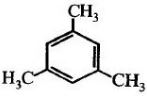
\(\mathop {3C{H_3} - C \equiv CH}\limits_{\Pr opyne} \to \) (figure)
No questions on this page match these filters.
Other STD 11 - Hydricarbon topics
Frequently asked
How many Alkyne questions came in JEE Mains?
9 questions from 2014–2026, each with the correct answer and a full solution.
How difficult are Alkyne questions?
11% are easy, 44% medium and 44% hard.