


Questions
Newest firstShowing 1–15 of 15 questions
-
- (A) Statement-I is false but Statement-II is true
- (B) Both Statement-I and Statement-II are true.
- (C) Both Statement-I and Statement-II are false.
- (D) Statement-I is true but Statement-II is false.
Show answer and solution
Correct Answer: (B)
\(\xrightarrow[Z_{\text {eff }} \uparrow I . E . \uparrow]{\begin{array}{l}C<O<N<F \\ 2 p^2 2 p^4 2 p^3 2 p^5\end{array}}\)
Statement-I is correct
\(S > Se > Te > Po > O\)
\(
\left|\Delta_{eg} H\right| \quad \begin{array}{lllll}
200 & 195 & 190 & 174 & 141(in kJ / mol)
\end{array}
\)
Statement-II is correct. -
- (A) Both Statement I and Statement II are false
- (B) Statement I is false but Statement II is true
- (C) Statement I is true but Statement II is false
- (D) Both Statement I and Statement II are true
Show answer and solution
Correct Answer: (B)
Correct order of size is \(Mg > Al > Mg ^{2+}> Al ^{3+}\)
Atomic size depends mainly upon \(Z _{\text {effective }}\) and shell number.
Generally on moving down the group electron affinity decreases and on moving across the period electron affinity increase.
In the periodic table Cl has maximum electron affinity. Halogen has higher electron affinity than Chalcogen.
\(Cl > Br > S > O\) -
- (A) Statement I is incorrect but Statement II is correct
- (B) Statement I is correct but Statement II is incorrect
- (C) Both Statement I and Statement II are incorrect
- (D) Both Statement I and Statement II are correct
Show answer and solution
Correct Answer: (D)
\(\mathrm{r} \propto \mathrm{q}^{-}\)(for isoelectronic species)
\(\propto \frac{1}{q^{+}}\)
\(\therefore\) Statement I is correct
Magnitude of electron gain enthalpy
\(\mathrm{Cl}>\mathrm{F}>\mathrm{Br}>\mathrm{I}\) -
- (A) B & C only
- (B) A, C and d only
- (C) B and D only
- (D) B,C and E only
Show answer and solution
Correct Answer: (A)
(A) The process of adding an \(\mathrm{e}^{-}\)to a neutral gaseous atom is not always exothermic it may be exothermic or endothermic.
(C) \(\mathrm{Be} \quad \mathrm{B}\)
\(1 s^2 2 s^2 \quad 1 s^2 2 s^2 2 p^1\)
In Be 2 s subshell in fully filled
So, need high energy to remove \(\mathrm{e}^{-}\)as compared to B.
(D)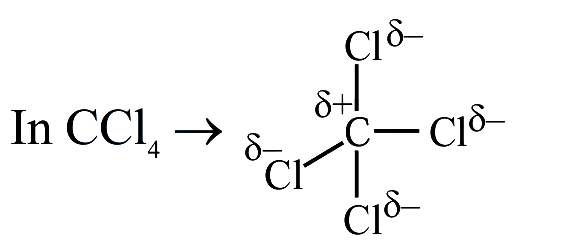
due to partially positive charge \(z_{\text {eff }} \uparrow, \mathrm{EN} \uparrow\)
So, EN of \(\mathrm{C} \Rightarrow \mathrm{CCl}_4 \gt \mathrm{CH}_4\)
(E) Cs is most electropositive. -
- (A) Both Statement \(I\) and Statement \(II\) are true
- (B) Statement \(I\) is true but Statement \(II\) is false
- (C) Both Statement \(I\) and Statement \(II\) are false
- (D) Statement \(I\) is false but Statement \(II\) is true
Show answer and solution
Correct Answer: (D)
Explanation:
Let us evaluate both statements according to the periodic trends of electron gain enthalpy:
1. Analysis of Statement I: In Group 17 (halogens), electron gain enthalpy generally becomes less negative down the group. However, Fluorine (\( \text{F} \)) has an exceptionally small atomic size and high electron density in its compact \( 2p \) subshell. This creates significant inter-electronic repulsion when an extra electron is added. Consequently, Chlorine (\( \text{Cl} \)) releases more energy and has a more negative electron gain enthalpy (\( -349\text{ kJ/mol} \)) than Fluorine (\( -328\text{ kJ/mol} \)). Thus, Chlorine has the most negative electron gain enthalpy in its group, making Statement I false.
2. Analysis of Statement II: In Group 16 (chalcogens), due to the very compact size of the Oxygen (\( \text{O} \)) atom, an incoming electron experiences severe repulsion from the valence electrons already present in the \( 2p \) subshell. Therefore, less energy is released upon electron addition compared to its heavier congeners. The electron gain enthalpy values across the group are: \( \text{O} = -141\text{ kJ/mol} \), \( \text{S} = -200\text{ kJ/mol} \), \( \text{Se} = -195\text{ kJ/mol} \), \( \text{Te} = -190\text{ kJ/mol} \), and \( \text{Po} = -174\text{ kJ/mol} \). Since \( -141\text{ kJ/mol} \) represents the smallest absolute magnitude of energy released, Oxygen has the least negative electron gain enthalpy in its group, making Statement II true.
Hence, Option D is the correct choice. -
- (A) \(C \) > \( B \) > \( D \) > \( A\)
- (B) \(A \) > \( D \) > \( B \) > \( C\)
- (C) \(A \) > \( D \) > \( C \) > \( B\)
- (D) \(D \) > \( C \) > \( B \) > \( A\)
Show answer and solution
Correct Answer: (B)
Element ΔegH (kJ/mol) F −333 S −200 Br −325 Ar +96 -
- (A) \(D\) and \(E\) only
- (B) \(A\), B, \(D\) and E only
- (C) \(A\) and \(D\) only
- (D) \(A\), \(B\) and \(C\) only
Show answer and solution
Correct Answer: (D)
\((A)\) \(\mathrm{Be}+\mathrm{e}^{-} \rightarrow \mathrm{Be}^{-}, \quad\) E.A \(=\)-ive\((B)\) \(\mathrm{N}+\mathrm{e}^{-} \rightarrow \mathrm{N}^{-} \quad\) E.A \(=-\) ive
\((C)\) \(\mathrm{O}+\mathrm{e}^{-} \rightarrow \mathrm{O}^{-}\)
\(\mathrm{O}^{-}+\mathrm{e}^{-} \rightarrow \mathrm{O}^{-2} \quad\) E.A \(=-\) ive
\((D)\) \(\mathrm{Na}+\mathrm{e}^{-} \rightarrow \mathrm{Na}^{-} \quad\) E.A \(=+\) ive
\((E)\) \(\mathrm{A} \ell+\mathrm{e}^{-} \rightarrow \mathrm{A} \ell^{-} \quad\) E.A \(=+\) ive
Ans. \(A,B\) and \(C\) only
-
- (A) \(Ne\) and \(F\)
- (B) \(Ne\) and \(Cl\)
- (C) \(Ar\) and \(Cl\)
- (D) \(Ar\) and \(F\)
Show answer and solution
Correct Answer: (B)
\(Cl\) has the most negative \(\Delta H _{\text {eg }}\) among all the elements and \(Ne\) has the most positive \(\Delta H _{ eg }\). -
- (A) \((A)\) and \((B)\) only
- (B) \((B)\) and \((C)\) only
- (C) \((A)\) and \((C)\) only
- (D) \((C)\) and \((D)\) only
Show answer and solution
Correct Answer: (C)
\(Rb\) and \(Cs\) have nearly same electron gain enthalpy electron gain enthalpy \(=-46\,kj / ml\)\(Ar\) and \(Kr\) have same \(\Delta H _{ eq }\). Value is \(+96\,kj / ml\)
- 10. The correct order of electron gain enthalpies of \(Cl\), \(F , Te\) and \(Po\) is ..... 2022 Easy
- (A) \(F < Cl < Te < Po\)
- (B) \(Cl < F < Te < Po\)
- (C) \(Te < Po < Cl < F\)
- (D) \(Po < Te < F < Cl\)
Show answer and solution
Correct Answer: (D)
As \(Cl\) has maximum electron affinity among all elements.Element \(\quad \Delta _{ eg } H ( k J / m o l )\)
\(F \quad\quad\quad\quad -328\)
\(Cl \quad\quad\quad\quad -349\)
\(Te \quad\quad\quad\quad -190\)
\(Po \quad\quad\quad\quad -174\)
-
- (A) \(3\)
- (B) \(4\)
- (C) \(5\)
- (D) \(6\)
Show answer and solution
Correct Answer: (A)
Sublimation enthalpy, Ionisation enthalpy and hydration enthalpy affect the reduction potential. - 12. When the first electron gain enthalpy \((\Delta _{eg}H)\) of oxygen is \(-141\,kJ/mol,\) its second electron gain enthalpy is 2019 Medium
- (A) a more negative value than the first
- (B) almost the same as that of the first
- (C) negative, but less negative than the first
- (D) a positive value
Show answer and solution
Correct Answer: (D)
\(2^{nd}\) electron gain enthalpy of oxygen is positive. -
- (A) \(O> F > Cl\)
- (B) \(F > O > Cl\)
- (C) \(F > Cl > O\)
- (D) \(Cl> F > O\)
Show answer and solution
Correct Answer: (D)
On moving from left to right across a period, the electron affinity becomes more negative. On moving from top to bottom in a group, the electron affinity becomes less negative. Chlorine has more negative electron affinity than fluorine, Because adding an electron to fluorine (\(2p\) orbital) causes greater repulsion than adding an electron to chlorine (\(3p\) orbital) which is larger in size - 14. Electron gain enthalpy with negative sign of fluorine is less than that of chlorine due to 2013 Medium
- (A) High ionization enthalpy of fluorine
- (B) Smaller size of chlorine atom
- (C) Smaller size of fluorine atom
- (D) Bigger size of \(2p\) orbital of fluorine
Show answer and solution
Correct Answer: (C)
The electron gain enthalpy order for halogens is
\(Cl >F>Br>I\)
Due to small size of fluorine the extra electron to be added feels more electron-electron repulsion. Therefore fluorine has less value for electron affinity than chlorine -
- (A) \(-2.55\)
- (B) \(-5.1\)
- (C) \(-10.2\)
- (D) \(+2.55\)
Show answer and solution
Correct Answer: (B)
\(\mathrm{Na} \rightarrow \mathrm{Na}^{+}+\mathrm{e}^{-} \quad \mathrm{IE}=5.1 \mathrm{eV} \ldots \ldots\)\(\mathrm{Na}^{+}+\mathrm{e}^{-} \rightarrow \mathrm{Na}\)
Second reaction is inverse of first reaction,
therefore electron goes enthalapy of \(N a^{+}\)
is reverse of ionization energy
\(\therefore \Delta H_{e g}=-5.1 \mathrm{eV}\)
No questions on this page match these filters.
Other STD 11 - Classification of elements and periodicity in properties topics
Frequently asked
How many Electron affinity questions came in JEE Mains?
15 questions from 2013–2026, each with the correct answer and a full solution.
How difficult are Electron affinity questions?
33% are easy, 33% medium and 33% hard.