


All Structure of atom questions
Newest firstShowing 151–179 of 179 questions
-
- (A) \(Li^, Na^+, O^{2-}\) and \(F^-\)
- (B) \(F^-, Li^+, Na^+\) and \(Mg^{2+}\)
- (C) \(N^{3-}, O^{2-}, F^-\) and \(Na^+\)
- (D) \(N^{3-}, Li^+, Mg^{2+}\) and \(O^{2-}\)
Show answer and solution
Correct Answer: (C)
In this we have to choose isoelectronic set of ions: Isoelectronic species are those which have same no. of electron in total, so option \(3\) is correct -
- (A) \(I < III < II < IV\)
- (B) \(I < II < III < IV\)
- (C) \(IV < II < III < I\)
- (D) \(IV < III < II < I\)
Show answer and solution
Correct Answer: (C)
According to Aufbau principle, the energy sequence is
\(3p < 3d < 4p < 4d\) - 153. The ratio of the shortest wavelength of two spectral series of hydrogen spectrum is found to be about \(9\). The spectral series are 2019 Medium
- (A) Lyman and Paschen
- (B) Brackett and Pfund
- (C) Paschen and Pfund
- (D) Balmer and Brackett
Show answer and solution
Correct Answer: (A)
\(\frac{{\frac{1}{{{\lambda _2}}} = {R_H}\left( {\frac{1}{{n_1^2}} - \frac{1}{{n_2^2}}} \right){Z^2}}}{{\frac{1}{{{\lambda _1}}} = {R_H}\left( {\frac{1}{{n_1^2}} - \frac{1}{{n_2^2}}} \right){Z^2}}}\)As for shortest wavelength both \(n_1\) and \(n_2^1\) are \(\infty \)
\(\therefore \,\frac{{{\lambda _1}}}{{{\lambda _2}}} = \frac{9}{1} = \frac{{n_1^1}}{{n_1^2}}\)
Now if \(n_1^1=3\) and \(n_1\) is \(1\) it will justify the statement hence Lyman and Paschen is correct.
-
- (A) \(0.9\)
- (B) \(3.1\)
- (C) \(2.1\)
- (D) \(4\)
Show answer and solution
Correct Answer: (C)
\(hv = \phi + h{v^o}\)\(\frac{1}{2}m{v^2} = hc\left( {\frac{1}{\lambda } - \frac{1}{{{\lambda _0}}}} \right)\)
\(hv = \phi + \frac{1}{2}m{v^2}\)
\(\phi = \frac{{6.626 \times {{10}^{ - 34}} \times 3 \times {{10}^8}}}{{4000 \times {{10}^{ - 10}}}}\) \( - \frac{1}{2} \times 9 \times {10^{ - 31}} \times {(6 \times {10^5})^2}\)
\(\phi = 3.35 \times {10^{ - 19}}\,J\)
\( \Rightarrow \phi \simeq 2.1\,eV\)
-
- (A) \((1), (3)\)
- (B) \((1), (2)\)
- (C) \((1), (4)\)
- (D) \((2), (3)\)
Show answer and solution
Correct Answer: (C)
(1) True. Higher angular momentum orbitals (e.g., d vs s for the same n) are less penetrating and have their electron density further from the nucleus on average.
(2) False. The size of the orbit is primarily determined by n, not inversely proportional to l.
(3) False. According to wave mechanics, for the ground state (1s orbital, l=0), the angular momentum \(L = \sqrt{l(l+1)}\frac{h}{2\pi} = 0\).
(4) True. For a given n, as l increases, the most probable distance (peak of radial probability distribution) shifts to higher r values.
Statements (1) and (4) are true.
-
- (A) The electron can be found at a distance \(2a_0\) from the nucleus
- (B) The probability density of finding the electron is maximum at the nucleus
- (C) The magnitude of potential energy is double that of its kinetic energy on an average
- (D) The total energy of the electron is maximum when it is at a distance \(a_0\) from the nucleus
Show answer and solution
Correct Answer: (D)
\(T.E = - K.E = \frac{{PE}}{2}\)The energy of electrons increases as they are away from the nucleus. The probability of finding the \(1s\) electron may be higher at \(a_0\) but the energy is not. The probability density of finding the electron is not zero at any place in the atom. So, the energy may be higher when it is far from \(a_0\)
-
- (A) \(4\)
- (B) \(5.5\)
- (C) \(4.5\)
- (D) \(5\)
Show answer and solution
Correct Answer: (C)
\(\lambda = 250\,nm = 2500\,\mathop A\limits^o \)\(E = \frac{{hc}}{\lambda } = \frac{{12400}}{{2500}} = 4.96\,eV\)
\(KE = \) stopping potential \( = 0.5\,eV\)
\(E = {W_0} + K.E.\)
\(4.96 = {W_0} + 0.5\)
\({W_0} = 4.46 \approx 4.5\,eV\)
- 158. The de-Broglie's wavelength of electron present in first Bohr orbit of \('H'\) atom is 2018 Hard
- (A) \(4 \times 0.529\,\mathop A\limits^o \)
- (B) \(2\pi \times 0.529\,\mathop A\limits^o \)
- (C) \(\frac{{0.529}}{{2\pi }}\mathop A\limits^o \)
- (D) \(0.529\,\mathop A\limits^o \)
Show answer and solution
Correct Answer: (B)
First Bohr orbit of \(H\) atom has radius\(r = 0.529\,\mathop A\limits^o \)
Also, the angular momentum is quantised.
\(mvr = \frac{h}{{2\pi }}\)
\(2\pi r = \frac{h}{{mv}} = \lambda \)
\(\lambda = 2\pi \times 0.529\,\mathop A\limits^o \)
-
- (A) Splitting of spectral lines in electrical field is called Stark effect
- (B) Frequency of emitted radiation from a black body goes from a lower wavelength to higher wavelength as the temperature increases
- (C) Photon has momentum as well as wavelength
- (D) Rydberg constant has unit of energy
Show answer and solution
Correct Answer: (B)
When temperature is increased, black bodyemit high energy radiation, from higher wavelength to lower wavelength . Rydberg constant has unit of length i.e. \(cm^{-1}\) - 160. If the shortest wavelength in Lyman series of hydrogen atom is \(A\), then the longest wavelength in Paschen series of \(He^+\) is 2017 Hard
- (A) \(\frac{{5A}}{9}\)
- (B) \(\frac{{9A}}{5}\)
- (C) \(\frac{{36A}}{5}\)
- (D) \(\frac{{36A}}{7}\)
Show answer and solution
Correct Answer: (D)
For Lyman series (short wavelength)\({n_1} = 1,\,{n_2} = \infty \)
\(\frac{1}{\lambda } = R{z^2}\left( {\frac{1}{{n_1^2}} - \frac{1}{{n_2^2}}} \right)\)
\( \Rightarrow \frac{1}{A} = {1^2}\,R\left( {\frac{1}{1} - \frac{1}{\infty }} \right) \Rightarrow \frac{1}{A} = R\)
Longest wavelength \(= 1^{st}\) line
\({n_1} = 3,\,{n_2} = 4\)
\(\frac{1}{\lambda } = R{z^2}\left( {\frac{1}{{{3^2}}} - \frac{1}{{{4^2}}}} \right) \Rightarrow \frac{1}{\lambda } = \frac{{R7}}{{36}}\)
\(R = \frac{1}{A}\)
\(\frac{1}{\lambda } = \frac{{\frac{1}{A} \times 7}}{{36}} \Rightarrow \frac{1}{\lambda } = \frac{7}{{36\,A}} \Rightarrow \lambda = \frac{{36\,A}}{7}\)
- 161. The electron in the hydrogen atom undergoes transition from higher orbitals to orbital of radius \(211.6\, pm\). This transition is associated with 2017 Medium
- (A) Lyman series
- (B) Balmer series
- (C) Paschen series
- (D) Brackett series
Show answer and solution
Correct Answer: (B)
\(r = 0.529 \times \frac{{{n^2}}}{Z}\)\(r = 211.6\,pm = 2.11\,\mathop A\limits^o \)
\( \Rightarrow 0.529 \times \frac{{{n^2}}}{Z} = 2.11\,\mathop A\limits^o \)
\(n = 2\) (Balmer series)
-
- (A) \(15\)
- (B) \(37.5\)
- (C) \(7.5\)
- (D) \(10\)
Show answer and solution
Correct Answer: (C)
Mass of hydrogen in human body \(=\frac{10}{100} \times 75=7.5 \,\mathrm{kg}\)If all \(^{1} H\) atoms are replaced by \(^{2} H\) atoms, then, the mass will become \(7.5 \times 2=15\,kg\). Therefore, the weight gain will be \(7.5\, \mathrm{kg}\)
-
- (A) \(1.65\)
- (B) \(4.76\)
- (C) \(0.529\)
- (D) \(2.12\)
Show answer and solution
Correct Answer: (D)
According to Bohr's theory\(r =0.529 \times \frac{n^{2}}{Z} \mathop A\limits^o \)
\( = 0.529 \times \frac{{{2^2}}}{1} = 2.116{\mkern 1mu} \,\mathop A\limits^o \)
-
- (A) \(\sqrt {meV}\)
- (B) \(\sqrt {2meV}\)
- (C) \(meV\)
- (D) \(2meV\)
Show answer and solution
Correct Answer: (B)
Kinetic energy \(=e V=\frac{1}{2} m u^{2}\)\(u=\sqrt{\frac{2 e V}{m}}\)
Here, u is the velocity of the electron.
The de broglie wavelength is \(\lambda=\frac{h}{m u}\)
\(\frac{h}{\lambda}=m u\)
Substitute equation (1) in equation (2)
\(\frac{h}{\lambda}=m \sqrt{\frac{2 e V}{m}}=\sqrt{2 m e V}\)
-
- (A) \(20\)
- (B) \(25\)
- (C) \(10\)
- (D) \(5\)
Show answer and solution
Correct Answer: (B)
Number of orbitals in a shell \(= n^2 = (5)^2 = 25.\) - 166. At temperature \(T\), the average kinetic energy of any particle is \(\frac{3}{2} KT\) . The de Broglie wavelength follows the order 2015 Hard
- (A) Visible photon \(>\) Thermal neutron \(>\) Thermal electron
- (B) Thermal proton \(>\) Thermal electron \(>\) Visible photon
- (C) Thermal proton \(>\) Visible photon \(>\) Thermal electron
- (D) Visible photon \(>\) Thermal electron \(>\) Thermal neutron
Show answer and solution
Correct Answer: (D)
Kinetic energy of any particle \( = \frac{3}{2}\,KT\)Also \(K.E. = \frac{1}{2}\,m{v^2}\)
\(\frac{1}{2}m{v^2} = \frac{3}{2}KT \Rightarrow {v^2} = \frac{{3KT}}{m}\)
\(v = \sqrt {\frac{{3KT}}{m}} \)
De-broglie wavelength
\( = \lambda = \frac{h}{{mv}} = \frac{h}{{m\sqrt {\frac{{3KT}}{m}} }}\)
\(\lambda = \frac{h}{{\sqrt {3KTm} }}\,\lambda \propto \frac{1}{{\sqrt m }}\)
Mass of electron \(<\) mass of neutron
\(\lambda \) (electron) \(>\) \(\lambda \) (neutron)
- 167. If the principal quantam number \(n=6,\) the correct sequence of filling of electron will be 2015 Hard
- (A) \(ns \to (n - 2)f \to np \to (n - 1 )d\)
- (B) \(ns \to (n - 2)f\to (n -1 )d\to np\)
- (C) \(ns \to np \to (n - 1 )d \to (n-2)f\)
- (D) \(ns \to (n-1 )d \to (n-2)f \to np\)
Show answer and solution
Correct Answer: (B)
The sequence of filling electrons in sixth period\(6s -4f- 5d -6p \,\,i.e., (ns) \to (n-2)f\to (n- 1 )d \to np\)
- 168. Which of the following is the energy of a possible excited state of hydrogen ? ............ \(\mathrm{eV}\) 2015 Hard
- (A) \(-3.4\)
- (B) \(+6.8\)
- (C) \(+13.6\)
- (D) \(-6.8\)
Show answer and solution
Correct Answer: (A)
For \(1 ^{st}\) excited state, the value of \(n=2\)By putting the value of \(n,\) we get the value of energy.
Thus, the energy of electron in first excited state of hydrogen atom \(=-\frac{13.6}{n^{2}}=-\frac{13.6}{4}=-3.4 \mathrm{eV}\).
-
- (A) \(1.325\times10^{-7}\, m\)
- (B) \(1.325\times10^{-10}\, m\)
- (C) \(2.650\times10^{-7}\, m\)
- (D) \(5.300\times10^{-10}\, m\)
Show answer and solution
Correct Answer: (A)
\(\Delta E = - 2.0 \times {10^{ - 18}} \times \left( {\frac{1}{{{2^2}}} - \frac{1}{{{1^2}}}} \right)\)\( = - 2.0 \times {10^{ - 18}} \times \frac{{ - 3}}{4}\)
\( = 1.5 \times {10^{ - 18}}\)
\(\Delta E = \frac{{hc}}{\lambda }\)
\(\lambda = \frac{{hc}}{{\Delta E}} = \frac{{6.6 \times {{10}^{ - 34}} \times 3 \times {{10}^8}}}{{1.5 \times {{10}^{ - 18}}}}\)
\( = 1.325 \times {10^{ - 7}}\,m\)
-
- (A) \(8.041 \times 10^{-40}\,J\)
- (B) \(2.680 \times 10^{-19}\,J\)
- (C) \(1.640 \times 10^{-18}\,J\)
- (D) \(6.111 \times 10^{-17}\,J\)
Show answer and solution
Correct Answer: (C)
\(E = hv\)
\(= 6.63 \times 10^{-34} \times 2.47 \times 10^{15}\)
\(= 1 .640 \times 10^{-18}\,J\) -
- (A) \(\sqrt {\frac{{2h}}{m}\left( {{\lambda _0} - \lambda } \right)} \)
- (B) \(\sqrt {\frac{{2hc}}{m}\left( {{\lambda _0} - \lambda } \right)} \)
- (C) \(\sqrt {\frac{{2hc}}{m}\left( {\frac{{{\lambda _0} - \lambda }}{{\lambda {\lambda _0}}}} \right)} \)
- (D) \(\sqrt {\frac{{2h}}{m}\left( {\frac{1}{{{\lambda _0}}} - \frac{1}{\lambda }} \right)} \)
Show answer and solution
Correct Answer: (C)
The kinetic enegry of the ejected electron is given by the equation\(hv = h{v_0} + \frac{1}{2}m{v^2}\,\,\,\because \,v = \frac{c}{\lambda }\)
or \(\frac{{hc}}{\lambda } = \frac{{hc}}{{{\lambda _0}}} + \frac{1}{2}m{v^2}\)
\(\frac{1}{2}m{v^2} = \frac{{hc}}{\lambda } - \frac{{hc}}{{{\lambda _0}}}\)
\( = hc\left( {\frac{{{\lambda _0} - \lambda }}{{\lambda {\lambda _0}}}} \right)\)
\(\therefore \,\,{v^2} = \frac{{2hc}}{m}\left( {\frac{{{\lambda _0} - \lambda }}{{\lambda {\lambda _0}}}} \right)\)
or \(v = \sqrt {\frac{{2hc}}{m}\left( {\frac{{{\lambda _0} - \lambda }}{{\lambda {\lambda _0}}}} \right)} \)
-
- (A) \(\frac{1}{2}\,\frac{{{e^2}}}{r}\)
- (B) \( - \frac{{{e^2}}}{r}\)
- (C) \(\frac{{m{e^2}}}{r}\)
- (D) \(-\frac{1}{2}\,\frac{{{e^2}}}{r}\)
Show answer and solution
Correct Answer: (D)
Total energy of a revolving electron is the sum of its kinetic and potential energy. Total energy \(= K.E. + P. E.\)\( = \frac{{{e^2}}}{{2r}} + \left( { - \frac{{{e^2}}}{r}} \right) = - \frac{{{e^2}}}{{2r}}\)
-
- (A) \(7.50\times10^4\, s^{-1}\)
- (B) \(4.76\times10^{14}\, s^{-1}\)
- (C) \(3.15\times10^{15}\, s^{-1}\)
- (D) \(1.24\times10^{15}\, s^{-1}\)
Show answer and solution
Correct Answer: (D)
Energy \(= N_A\,hv\)\(495.5 = 6.023 \times 10^{23} \times 6.6 \times 10^{-34} \times v\)
\(v = \frac{{495.5 \times {{10}^3}\,J}}{{6.023 \times {{10}^{23}} \times 6.6 \times {{10}^{ - 34}}}} = 12.4 \times {10^{14}}\)
\( = 1.24 \times {10^{15}}\,{s^{ - 1}}\)
- 174. The de-Broglie wavelength of a particle of mass \(6.63\,g\) moving with a velocity of \(100\,ms^{-1}\) is 2014 Medium
- (A) \(10^{-33}\,m\)
- (B) \(10^{-35}\,m\)
- (C) \(10^{-31}\,m\)
- (D) \(10^{-25}\,m\)
Show answer and solution
Correct Answer: (A)
De Broglie wavelength \(\left( \lambda \right) = \frac{h}{{mv}}\)\(\frac{{6.63 \times {{10}^{ - 34}}}}{{6.63 \times {{10}^{ - 3}} \times 100}} = {10^{ - 33}}\,m\)
-
- (A) \(1.214 \times 10^{-7} \,m\)
- (B) \(2.816 \times 10^{-7}\, m\)
- (C) \(6.500 \times 10^{-7}\, m\)
- (D) \(8.500 \times 10^{-7}\, m\)
Show answer and solution
Correct Answer: (A)
Let \(\lambda\) is the wavelength of that photon then\(h c / \lambda=E_{2}-E_{1}\)
and using value of given E, \(E=\frac{h c}{\lambda}=2.178 \times 10^{-18} \times z^{2}\left[\frac{1}{1^{2}}-\frac{1}{2^{2}}\right](z=1)\)
\(\therefore \lambda=\frac{6.62 \times 10^{-34} \times 3 \times 10^{8}}{2.178 \times 10^{-18}} \times \frac{4}{3}=1.214 \times 10^{-7} \mathrm{m}\)
-
- (A) \(25\) and \(1\)
- (B) \(8\) and \(1\)
- (C) \(2\) and \(4\)
- (D) \(4\) and \(1\)
Show answer and solution
Correct Answer: (B)
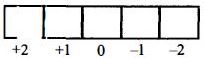
\((i)\) \(n=5\) means \(l=0,1,2,3,4\)since \(m= +1\)
hence total no. of electrons will be \(= 0\) (from \(s\)) \(+ 2\) (from \(p\)) \(+ 2\) (fron \(d\)) \(+ 2\) (from \(f\)) \(+ 2\) (from \(g\))
\(=0+2+2+2+2=8\)
\((ii)\) \(n=2,\,l=1,\,m_l=-1,\,m_s=-1/2\) represent \(2p\) orbital with one electron
- 177. In an atom how many orbital \((s)\) will have the quantum numbers; \(n = 3, l = 2\) and \(m_l = + 2\) ? 2013 Medium
- (A) \(5\)
- (B) \(3\)
- (C) \(1\)
- (D) \(7\)
Show answer and solution
Correct Answer: (C)
\(n=3,\,l=2\) means \(3d\) orbitali.e. in an atom only one orbital can have the value \(m_l = +2\)
- 178. The de Broglie wavelength of a car of mass \(1000\, kg\) and velocity \(36\, km/hr\) is 2013 Medium
- (A) \(6.626\times10^{-34}\, m\)
- (B) \(6.626\times10^{-38}\, m\)
- (C) \(6.626\times10^{-31}\, m\)
- (D) \(6.626\times10^{-30}\, m\)
Show answer and solution
Correct Answer: (B)
\(\lambda = \frac{h}{{mv}}\)\(h = 6.6 \times {10^{ - 34}}\,J - s\)
\(m = 1000\,kg\)
\(v = 36\,km/hr = \frac{{36 \times {{10}^3}}}{{60 \times 60}}\,m/\sec = 10\,m/\sec \)
\(\lambda = \frac{{6.6 \times {{10}^{ - 34}}}}{{{{10}^3} \times 10}} = 6.6 \times {10^{ - 38}}\,m\)
- 179. The wave number of the first emission line in the Balmer series of \(H-\) Spectrum is ( \(R =\) Rydberg constant) 2013 Medium
- (A) \(\frac {5}{36}\,\,R\)
- (B) \(\frac {9}{400}\,\,R\)
- (C) \(\frac {7}{6}\,\,R\)
- (D) \(\frac {3}{4}\,\,R\)
Show answer and solution
Correct Answer: (A)
\(\bar v = R{Z^2}\left( {\frac{1}{{{2^2}}} - \frac{1}{{{3^2}}}} \right)\)\( = R\left( {\frac{1}{4} - \frac{1}{9}} \right)\)
\( = \frac{{5R}}{{36}}\)
No questions on this page match these filters.