


Questions
21 questionsShowing 1–21 of 21 questions
-
- (A) \(200\)
- (B) \(300\)
- (C) \(50\)
- (D) \(100\)
Show answer and solution
Correct Answer: (D)
\(\underset{1\,gm }{ M _2 CO _3}+\underset{\text { Excess }}{2 HCl } \rightarrow \underset{0.02 \text { mole }}{2 MCl }+ H _2 O +\underset{0.01 \text { mole }}{ CO _2}\)From principle of atomic conservation of carbon atom,
Mole of \(M _2 CO _3 \times 1=\) Mole of \(CO _2 \times 1\)
\(\frac{1 gm }{\text { molar mass of } M _2 CO _3}=0.01 \times 1\)
\(\text { Molar mass of } M _2 CO _3=100\,gm / mole\)
-
- (A) \(2\)
- (B) \(3\)
- (C) \(1\)
- (D) \(4\)
Show answer and solution
Correct Answer: (C)
Reaction with \(HCl\)\(Ca ( OH )_2+2 HCl \rightarrow CaCl _2+2 H _2 O\)
Volume of \(Ca ( OH )_2=10 ml\)
Volume of \(HCl =20 ml\)
Concentration of \(HCl =0.5 M\).
No. of milli moles of \(HCl =10\)
No. of milli moles of \(Ca ( OH )_2=5\).
\(\text { i.e. }M _{ Ca ( OH )_2}=\frac{\text { no. of milli moles }}{ V ( ml )}=\frac{5}{10}\)
\(=0.5\,M.\)
Reaction with \(H _2 SO _4\)
\(Ca ( OH )_2+ H _2 SO _4 \rightarrow CaSO _4+2 H _2 O\)
No. of milli moles of \(Ca ( OH )_2=20 \times 0.5\)
\(=10\)
i.e. no. of milli moles of \(H _2 SO _4=10\)
\(\Rightarrow M _{ H _2 so }=\frac{\text { no. of mil lim oles }}{ V ( ml )}\)
\(=\frac{10}{10}\)
\(=1\,M\)
-
- (A) \(181\)
- (B) \(182\)
- (C) \(180\)
- (D) \(183\)
Show answer and solution
Correct Answer: (C)
\(M =\frac{5}{40} \times \frac{1000}{450}\)\(M _1 V _1= M _2 V _2\)
\(\left(\frac{5}{40} \times \frac{1000}{450}\right) \times V _1=0.1 \times 500\)
\(V _1=180\)
-
- (A) \(1361\)
- (B) \(1362\)
- (C) \(1360\)
- (D) \(1368\)
Show answer and solution
Correct Answer: (B)
Mole of \(CO _2=0.2\,M \times\left(300 \times 10^{-3}\right)\,L\)\(=0.06 Mole\)
Volume of \(0.06\) mole \(CO _2\) at S.T.P
\(=0.06 \times 22.7\)
\(=1.362\,L\)
-
- (A) \(MCl _2\)
- (B) \(MCl _4\)
- (C) \(MCl _3\)
- (D) \(MCl\)
Show answer and solution
Correct Answer: (A)
Molecular. weight of metal chloride\(=\frac{0.57}{100} \times 22700\)
\(=129.39\)
weight of \(Cl =129.39 \times 0.55\)
\(=71.1645\)
\(\therefore\) Mole of \(Cl =\frac{71.1645}{35.5} \cong 2\)
Hence \(MCl _2\)
-
- (A) \(51\)
- (B) \(52\)
- (C) \(56\)
- (D) \(53\)
Show answer and solution
Correct Answer: (C)
Moles of \(CO _2=\frac{0.22}{44}=\frac{1}{200}\)\(\therefore\) Moles of carbon
\(=\left(\text { Moles of } CO _2\right) \times 1\)
\(=\frac{1}{200}\)
\(\therefore\) wt. of \(C =\frac{1}{200} \times 12=0.06\)
\(\text { \% of } C =\frac{0.06}{ W } \times 100=24\)
\(( W = Wt \text {. of Organic Compound })\)
\(W =0.25\)
Moles of \(H _2 O =\frac{0.126}{18}=0.007\)
\(\therefore \text { Moles of } H \text { atom }=2 \times 0.007=0.014\)
\(\%\) of Hydrogen \(=\frac{0.014 \times 1}{ W } \times 100\)
\(=\frac{0.014 \times 1}{0.25} \times 100\)
\(=5.6\)
\(=56 \times 10^{-1}\)
-
- (A) \(226\)
- (B) \(223\)
- (C) \(227\)
- (D) \(229\)
Show answer and solution
Correct Answer: (C)
\(2 C ( s )+ O _2( g ) \rightarrow 2 CO ( g )\)\(1\,mol \qquad 1.5\,mol\)
Limiting reagent is carbon. One mole carbon produces one mole CO. Hence, volume at STP is \(227 \times 10^{-1}\) litre
-
- (A) \(2\)
- (B) \(3\)
- (C) \(4\)
- (D) \(1\)
Show answer and solution
Correct Answer: (D)
\(3 BaCl _2+2 Na _3 PO _4 \rightarrow Ba _3\left( PO _4\right)_2+6 NaCl\)\(Na _3 PO _4\) is limiting reagent.
\(2\) mole \(Na _3 PO _4\) gives \(1\) mole of \(Ba _3\left( PO _4\right)_2\)
-
- (A) \(4\)
- (B) \(5\)
- (C) \(3\)
- (D) \(2\)
Show answer and solution
Correct Answer: (B)
\(Na _2 O + H _2 O \rightarrow 2 NaOH\)\(Cl _2 O _7+ H _2 O \rightarrow 2 HClO _4\)
\(1+4=5\)
-
- (A) \(A-I, B-III, C-II, D-IV\)
- (B) \(A-II, B-III, C-IV, D-I\)
- (C) \(A-II, B-IV, C-III, D-I\)
- (D) \(A-II, B-IV, C-I, D-III\)
Show answer and solution
Correct Answer: (D)
\(16\,g\,CH _4=1\) mole \(CH _4\) contains \(10 \times 6.02 \times 10^{23}\) electrons\(=60.2 \times 10^{23}\)
\(1\,g\,H _2=0.5\) mole \(H _2\) gas occupy \(11.35\) litre volume at STP
\(1 \text { mole of } N _2=28\,g\)
\(0.5 \text { mole of } SO _2=32\,g\)
-
- (A) \(6\)
- (B) \(12\)
- (C) \(3\)
- (D) \(24\)
Show answer and solution
Correct Answer: (B)
millimole of \(NaOH =0.24 \times 25\)\(\therefore \quad \text { millimole of acid }=0.24 \times 25\)
\(\Rightarrow \quad \text { mass of acid }=0.24 \times 25 \times 24.2\,mg\)
\(\text { for pure acid, }\)
\(\qquad V =\frac{ w }{ d } ;( d =1.21\,kg / L =1.21\,g / ml )\)
\(\therefore V =\frac{0.24 \times 25 \times 24.2}{1.12} \times 10^{-3}\)
\(=120 \times 10^{-3}\,ml\)
\(=12 \times 10^{-2}\,ml\)
-
- (A) \(138\)
- (B) \(139\)
- (C) \(137\)
- (D) \(136\)
Show answer and solution
Correct Answer: (B)
\((10\,ml\) solute in \(90\,ml\) solvent\(\text { mass of solute }=10 \times 3.2=32\,g\)
\(\text { mass of solvent }=90 \times 1.6\,g\)
\(m =\frac{32 \times 1000}{160 \times 90 \times 1.6}=1.388\)
\(m =138.8 \times 10^{-2}=139\)
- 13. The number of molecules and moles in \(2.8375\) litres of \(O _2\) at STP are respectively 2023 Hard
- (A) \(7.527 \times 10^{22}\) and \(0.250\,mol\)
- (B) \(1.505 \times 10^{23}\) and \(0.250\,mol\)
- (C) \(7.527 \times 10^{23}\) and \(0.125\,mol\)
- (D) \(7.527 \times 10^{22}\) and \(0.125\,mol\)
Show answer and solution
Correct Answer: (D)
Number of moles of \(O _2=\frac{2.8375}{22.7}=0.125\)Number of molecules \(=0.125\,N _{ A }\)
\(=7.525 \times 10^{22}\)
-
- (A) \(4\)
- (B) \(3\)
- (C) \(2\)
- (D) \(1\)
Show answer and solution
Correct Answer: (A)
\(\left[ Cr \left( H _2 O \right)_5 Cl \right] Cl _2+2 AgNO _3 \rightarrow\)\(\begin{array}{ll}0.01\,M , 20\, mL & 0.1\, M \\ \text { For } 0.2 \text { milimole } & AgNO _3 \text { required }\end{array}\)
\(0.4=0.1 \times V ( ml )\)
\(V =4\,mL\)
-
- (A) \(14\)
- (B) \(12\)
- (C) \(15\)
- (D) \(13\)
Show answer and solution
Correct Answer: (C)
Mole of \(Na =\frac{0.69}{23}=3 \times 10^{-2}\)\(Na + H _2 O \longrightarrow NaOH +\frac{1}{2} H _2\)
By using \(POAC\)
Moles of \(NaOH =3 \times 10^{-2}\)
\(NaOH\) reacts with \(HCl\)
No. of equivalent of \(NaOH = No\). of equivalent of \(HCl\)
\(3 \times 10^{-2} \times 1=\frac{73}{36.5} \times V (\text { in L }) \times 1\)
\(V =1.5 \times 10^{-2}\,L\)
Volume of \(HCl =15\,ml\).
-
- (A) \(24\)
- (B) \(23\)
- (C) \(25\)
- (D) \(22\)
Show answer and solution
Correct Answer: (C)
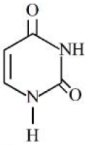
Mol. Wt of \(C _4 N _2 H _4 O _2=112\)\(\% N =\frac{28}{112} \times 100=25 \%\)
-
- (A) \(1: 1\)
- (B) \(3: 1\)
- (C) \(2: 1\)
- (D) \(1: 2\)
Show answer and solution
Correct Answer: (C)
Assume : Mass of solvent \(\approx\) Mass of solutionCase \(I:-\)
\(0.25=\frac{ W _1}{62} \times \frac{1000}{500}\)
Case \(II:-\)
\(0.25=\frac{ W _2}{62} \times \frac{1000}{250}\)
\(\frac{ W _1}{ W _2}=\frac{2}{1}\)
-
- (A) \(100\)
- (B) \(50\)
- (C) \(200\)
- (D) \(150\)
Show answer and solution
Correct Answer: (C)
Let \(M\) is the molar mass of the compound \(( g / mol )\) mass of compound \(=0.01\,M\,gm\)\(\text { mass of carbon }=0.01 M \times \frac{60}{100}\)
\(\text { moles of carbon }=\frac{0.01 M }{12} \times \frac{60}{100}\)
moles of \(CO _2\) from combustion \(=\frac{4.4}{44}=\) moles of carbon
\(\frac{0.01\,M }{12} \times \frac{60}{100}=\frac{4.4}{44}\)
\(M =\frac{4.4}{44} \times \frac{100}{60} \times \frac{12}{0.01}=200\, gm / mol\)
-
- (A) \(C _9 H _8\)
- (B) \(C _{11} H _4\)
- (C) \(C _5 H _8\)
- (D) \(C _{11} H _8\)
Show answer and solution
Correct Answer: (A)
\(C _{ x } H _{ y }+\left( x +\frac{ y }{4}\right) O _2 \rightarrow xCO _2+\frac{ y }{2} H _2 O\)\(\frac{ y }{2}=4 \therefore y =8\)
\(x +\frac{8}{4}=11\)
\(\therefore x =9\)
\(\therefore \text { Hydrocarbon will be }= C _9 H _8\)
-
- (A) \(A, B\) and \(C\) only
- (B) \(C\) and \(D\) only
- (C) \(A, C\) and \(D\) only
- (D) \(B\) and \(C\) only
Show answer and solution
Correct Answer: (C)
All non zero digits are significant.\(0.00253\)
\(\text { Significant figures }=3(2,5,3)\)
\(1.0003\)
Zeros between non-zero digit are significant.
Thus,\(1.0003\) has \(5\) significant figures.
\(15.0\)
Significant number \(=3\)
\(163\)
Significant number \(=3\)
Options (3) - \(A,C\) and \(D\)
-
- (A) \(2\)
- (B) \(6\)
- (C) \(8\)
- (D) \(4\)
Show answer and solution
Correct Answer: (D)
\(Zn +2 HCl \rightarrow ZnCl _2+ H _2 \uparrow\)Moles of \(Zn\) used \(=\frac{11.5}{65.4}=\) Moles of \(H _2\) evolved
Volume of \(H _2=\frac{11.5}{65.4} \times 22.7\,L =3.99\, L\)
No questions on this page match these filters.