


Questions
Newest firstShowing 51–61 of 61 questions
-
- (A) \(11\)
- (B) \(25\)
- (C) \(15\)
- (D) \(50\)
Show answer and solution
Correct Answer: (B)
No. of orbitals \(=n^{2}=5^{2}=25\)For \(n=5,\) no. of orbitals \(=n^{2}=25\)
Total number of orbitals is equal to no. of electrons having \(\mathrm{m}_{\mathrm{s}}=\frac{1}{2}\)
-
- (A) \(4\)
- (B) \(8\)
- (C) \(16\)
- (D) \(2\)
Show answer and solution
Correct Answer: (D)
For \(n=4\)
\(\ell=0,1,2,3\)
\(\therefore 4 d \& 4 f\) subshell associated with \(n =4, m =-2\)

-
- (A) \(K\)
- (B) \(Na\)
- (C) \(H\)
- (D) \(Li\)
Show answer and solution
Correct Answer: (A)
Greater the nuclear charge, stronger will be the attraction, hence lower will be energy of \(2s\) -
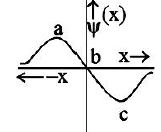
- (A) in the region \(a\) and \(b\)
- (B) in the region \(a\) and \(c\)
- (C) only in the region \(a\)
- (D) only in the region \(c\)
Show answer and solution
Correct Answer: (B)
At \(a\) & \(c\), probability of finding electron is maximum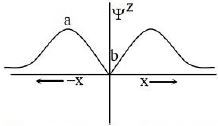
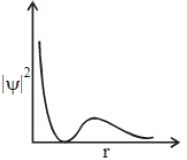
- 55. The graph between \({\left| \psi \right|^2}\) and \(r\)(radial distance) is shown below. This represents
 2019 Medium
- (A) \(1s\) orbital
- (B) \(3s\) orbital
- (C) \(2s\) orbital
- (D) \(2p\) orbital
Show answer and solution
Correct Answer: (C)
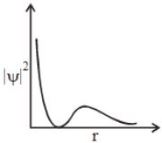
As we know that for \(s-\) orbital graph start from top and no. of radial node \(= n-l-1\) For \(2s\) orbital it will \(= 2-0-1=1\)\(\therefore \) The graph is of \(2s\)
-
- (A) \(I < III < II < IV\)
- (B) \(I < II < III < IV\)
- (C) \(IV < II < III < I\)
- (D) \(IV < III < II < I\)
Show answer and solution
Correct Answer: (C)
According to Aufbau principle, the energy sequence is
\(3p < 3d < 4p < 4d\) -
- (A) The electron can be found at a distance \(2a_0\) from the nucleus
- (B) The probability density of finding the electron is maximum at the nucleus
- (C) The magnitude of potential energy is double that of its kinetic energy on an average
- (D) The total energy of the electron is maximum when it is at a distance \(a_0\) from the nucleus
Show answer and solution
Correct Answer: (D)
\(T.E = - K.E = \frac{{PE}}{2}\)The energy of electrons increases as they are away from the nucleus. The probability of finding the \(1s\) electron may be higher at \(a_0\) but the energy is not. The probability density of finding the electron is not zero at any place in the atom. So, the energy may be higher when it is far from \(a_0\)
-
- (A) \(20\)
- (B) \(25\)
- (C) \(10\)
- (D) \(5\)
Show answer and solution
Correct Answer: (B)
Number of orbitals in a shell \(= n^2 = (5)^2 = 25.\) - 59. If the principal quantam number \(n=6,\) the correct sequence of filling of electron will be 2015 Hard
- (A) \(ns \to (n - 2)f \to np \to (n - 1 )d\)
- (B) \(ns \to (n - 2)f\to (n -1 )d\to np\)
- (C) \(ns \to np \to (n - 1 )d \to (n-2)f\)
- (D) \(ns \to (n-1 )d \to (n-2)f \to np\)
Show answer and solution
Correct Answer: (B)
The sequence of filling electrons in sixth period\(6s -4f- 5d -6p \,\,i.e., (ns) \to (n-2)f\to (n- 1 )d \to np\)
-
- (A) \(25\) and \(1\)
- (B) \(8\) and \(1\)
- (C) \(2\) and \(4\)
- (D) \(4\) and \(1\)
Show answer and solution
Correct Answer: (B)
\((i)\) \(n=5\) means \(l=0,1,2,3,4\)since \(m= +1\)
hence total no. of electrons will be \(= 0\) (from \(s\)) \(+ 2\) (from \(p\)) \(+ 2\) (fron \(d\)) \(+ 2\) (from \(f\)) \(+ 2\) (from \(g\))
\(=0+2+2+2+2=8\)
\((ii)\) \(n=2,\,l=1,\,m_l=-1,\,m_s=-1/2\) represent \(2p\) orbital with one electron
- 61. In an atom how many orbital \((s)\) will have the quantum numbers; \(n = 3, l = 2\) and \(m_l = + 2\) ? 2013 Medium
- (A) \(5\)
- (B) \(3\)
- (C) \(1\)
- (D) \(7\)
Show answer and solution
Correct Answer: (C)
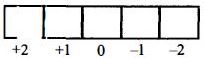
\(n=3,\,l=2\) means \(3d\) orbitali.e. in an atom only one orbital can have the value \(m_l = +2\)
No questions on this page match these filters.