


JEE Advanced · Chemistry · 4. Chemical Bonding
The bond energy (in \(\mathrm{kcal} \mathrm{mol}^{-1}\) ) of \(\mathrm{C}-\mathrm{C}\) single bond is approximately
- A 1
- B 10
- C 100
- D 1000
Answer & Solution
Correct Answer
(C) 100
Step-by-step Solution
Detailed explanation
The bond energy of a \(\mathrm{C}-\mathrm{C}\) single bond is approximately \(100 \mathrm{kcal} \mathrm{mol}^{-1}\).
Energetics
Factual (usually it is not expected to be learnt)
III
Energetics
Factual (usually it is not expected to be learnt)
III
See the Complete Solution
Get step-by-step explanations for this and 2.5 Lakh+ more JEE, NEET & CET questions.
- Unlock all solutions
- Practice the full chapter
- Track accuracy across PYQs
4.8 rated on Google Play · 14,000+ reviews
More questions from Chemistry
- The cyanide process of gold extraction involves leaching out gold from its ore with in the presence of in water to form . Subsequently, is treated with to obtain and . Choose the correct option(s).JEE Advanced 2019 Medium
- Which among the following statement(s) is (are) true for the extraction of aluminium from bauxite?JEE Advanced 2020 Medium
- The pair(s) of diamagnetic ions is(are)JEE Advanced 2025 Easy
- The wave function, is a mathematical function whose value depends upon spherical polar coordinates of the electron and characterized by the quantum numbers and . Here is the distance from the nucleus, is colatitude and is azimuth. In the mathematical functions given in the Table, is the atomic number and is Bohr radius
For the given orbital in column 1, the only correct combination for any hydrogen-like species isColumn 1 Column 2 Column 3 (I) 1s orbital \(\begin{array}{l}\text { (i) } \psi_{ n , 1, m_1} \\ \propto\left(\frac{ Z }{ a _{ o }}\right)^{\frac{3}{2}} e ^{-\left(\frac{ Zr }{ e _{ o }}\right)}\end{array}\) (P) 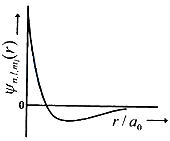
(II) 2s orbital (ii) One radial node (Q) Probability density at the nucleus \(\propto \frac{1}{ a _{ o }^3}\). (III) \(2 p _{ z }\) orbital \(\begin{array}{l}\text { (iii) } \psi_{ n }, 1, m_{ l } \\ \propto\left(\frac{ Z }{ a _{ o }}\right)^{\frac{5}{2}} re ^{-\left(\frac{ Zr }{2 a _{ o }}\right)} \cos \theta\end{array}\) (R) Probability density is maximum at the nucleus. (IV) \(3 d_{ z }^2\) orbital (iv) \(x y\)-plane is a nodal plane (S) Energy needed to excite an electron from \(n =2\) state to \(n =4\) state is \(\frac{27}{32}\) times the energy needed to excite are electron from \(n =2\) state to \(n =6\) state. JEE Advanced 2017 Hard - The desired product X can be prepared by reacting the major product of the reactions in LIST-I with one or more appropriate reagents in LIST-II.
(given, order of migratory aptitude: aryl > alkyl hydrogen)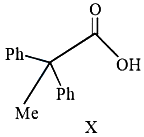
LIST-I LIST -II A) 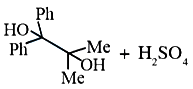
P) B) 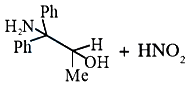
Q) C) 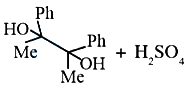
R) Fehling solution D) 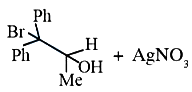
S) T) JEE Advanced 2018 Medium - Which of the given statement(s) about \(\mathbf{N}, \mathbf{O}, \mathbf{P}\) and \(\mathbf{Q}\) with respect to \(\mathbf{M}\) is (are) correct?
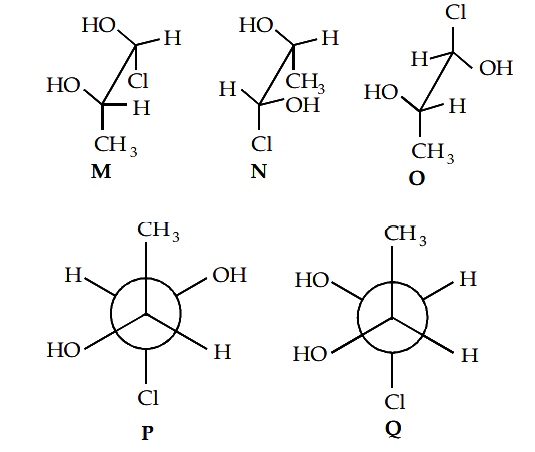 JEE Advanced 2012 Medium
More PYQs from JEE Advanced
- Two beams of red and violet colours are made to pass separately through a prism (angle of the prism is \(60^{\circ}\) ). In the position of minimum deviation, the angle of refraction will beJEE Advanced 2008 Easy
- An electron in a hydrogen atom undergoes a transition from an orbit with a quantum number to another quantum number . are the initial and final potential energies of the electron. If then the smallest isJEE Advanced 2017 Medium
- If then find equals____JEE Advanced 2019 Medium
- Let \(a\) and \(b\) be non-zero and real numbers. Then, the equation \(\left(a x^2+b y^2+c\right)\left(x^2-5 x y+6 y^2\right)=0\) representsJEE Advanced 2008 Medium
- Some laws/processes are given in Column I. Match these with the physical phenomena given in Column II and indicate your answer by darkening appropriate bubbles in the \(4 \times 4\) matrix given in the ORS.
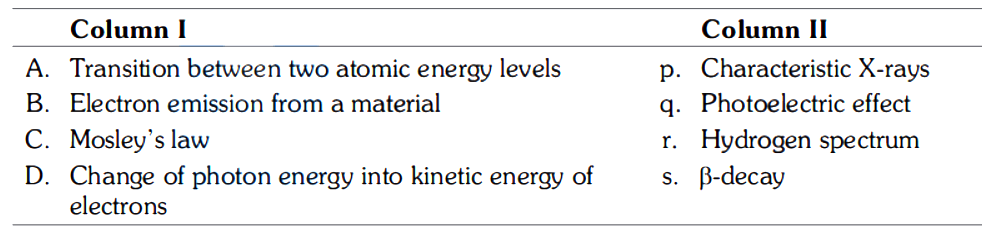 JEE Advanced 2007 Medium
 - A hydrogen atom, initially at rest in its ground state, absorbs a photon of frequency \(v_1\) and ejects the electron with a kinetic energy of 10 eV . The electron then combines with a positron at rest to form a positronium atom in its ground state and simultaneously emits a photon of frequency \(v_2\). The center of mass of the resulting positronium atom moves with a kinetic energy of 5 eV . It is given that positron has the same mass as that of electron and the positronium atom can be considered as a Bohr atom, in which the electron and the positron orbit around their center of mass. Considering no other energy loss during the whole process, the difference between the two photon energies (in eV ) is \(\qquad\)JEE Advanced 2025 Hard