


enEnglishguગુજરાતી
JEE Mains · Chemistry · STD 12 - 2. Electrochemistry
The product obtained from the electrolytic oxidation of acidified sulphate solution, is:
- A \(\mathrm{HO}_{2} \mathrm{SOSO}_{2} \mathrm{H}\)
- B \(\mathrm{HO}_{3} \mathrm{SOOSO}_{3} \mathrm{H}\)
- C \(\mathrm{HSO}_{4}^{-}\)
- D \(\mathrm{HO}_{3} \mathrm{SOSO}_{3} \mathrm{H}\)
Answer & Solution
Correct Answer
(B) \(\mathrm{HO}_{3} \mathrm{SOOSO}_{3} \mathrm{H}\)
Step-by-step Solution
Detailed explanation
anode: \(2 \mathrm{SO}_{4}^{-2}(\mathrm{aq}) \rightarrow\left(\mathrm{S}_{2} \mathrm{O}_{8}\right)^{-2}+2 \mathrm{e}^{-}\) Cathode : \(2 \mathrm{H}^{2}+2 \mathrm{e}^{-} \rightarrow \mathrm{H}_{2}(\mathrm{~g})\) Electrolysis of concentrated solution of acidified sulphate solution…
See the Complete Solution
Get step-by-step explanations for this and 2.5 Lakh+ more JEE, NEET & CET questions.
- Unlock all solutions
- Practice the full chapter
- Track accuracy across PYQs
4.8 rated on Google Play · 14,000+ reviews
More questions from Chemistry
- The electron gain enthalpy (in \(kJ/mol\)) of fluorine, chlorine, bromine and iodine, respectively areJEE Mains 2020 Medium
- Outermost electronic configuration of a group \(13\) element, \(E\), is \(4 \,\mathrm{~s}^{2}, 4 p^{1}\). The electronic configuration of an element of \(p\)-block period-five placed diagonally to element, \(E\) is :JEE Mains 2021 Easy
- Which of the following is not formed when \(H_2S\) reacts with acidic \(K_2Cr_2O_7\) solution ?JEE Mains 2014 Medium
- For the following Friedel Craft's alkylation reaction, which of the statements are correct?

A. Major product is n-propyl benzene.
B. iso-propyl carbocation intermediate is also generated.
C. Multiple substitution is inevitable.
D. Introducing electron-donating substituent on benzene will not produce any alkyl benzene.
Choose the correct answer from the options given below:JEE Mains 2026 Medium - The number of significant figures in \(50000.020 \times 10^{-3}\) is ..... .JEE Mains 2021 Medium
- Arrange the following bonds according to their average bond energies in descending order \(\mathrm{C}-\mathrm{Cl}, \mathrm{C}-\mathrm{Br}, \mathrm{C}-\mathrm{F}, \mathrm{C}-\mathrm{I}\)JEE Mains 2020 Hard
More PYQs from JEE Mains
- Let \(P(4, -4)\) and \(Q(9, 6)\) be two points on the parabola, \(y^2 = 4x\) and let \(X\) be any point on the arc \(POQ\) of this parabola, where \(O\) is the vertex of this parabola, such that the area of \(\Delta PXQ\) is maximum. Then this maximum Area (in sq. units) isJEE Mains 2019 Hard
- For a first order reaction, \(A\to P\), \(t_{1/2}\) (half-life) is\(10\,days\). The time required for \(\frac{{{1^{th}}}}{4}\) conversion of \(A\) (in days) is: \((\ln\, 2\, = 0.693,\, \ln\, 3\, = 1.1)\).JEE Mains 2018 Hard
-
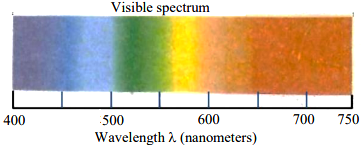
Which of the following statements are correct, if the threshold frequency of caesium is \(5.16 \times 10^{14} \mathrm{~Hz}\) ?
A. When Cs is placed inside a vacuum chamber with an ammeter connected to it and yellow light is focused on Cs the ammeter shows the presence of current.
B. When the brightness of the yellow light is dimmed, the value of the current in the ammeter is reduced.
C. When a red light is used instead to the yellow light, the current produced is higher with respect to the yellow light.
D. When a blue light is used, the ammeter shows the formation of current.
E. When a white light is used, the ammeter shows formation of current.
Choose the correct answer from the options given below :JEE Mains 2025 Medium - If the shortest distance between the straight lines \(3(x-1)=6(y-2)=2(z-1)\) and \(4(\mathrm{x}-2)=2(\mathrm{y}-\lambda)=(\mathrm{z}-3), \lambda \in \mathrm{R}\) is \(\frac{1}{\sqrt{38}}\), then the integral value of \(\lambda\) is equal to :JEE Mains 2021 Medium
- If \(0<\theta, \phi<\frac{\pi}{2}, x =\sum_{ n =0}^{\infty} \cos ^{2 n } \theta, y =\sum_{ n =0}^{\infty} \sin ^{2 n } \phi\) and \(z =\sum_{ n =0}^{\infty} \cos ^{2 n } \theta \cdot \sin ^{2 n } \phi\) thenJEE Mains 2021 Hard
- Which of the following are correct expression for torque acting on a body?
A. \(\vec{\tau}=\vec{r}\times\vec{L}\)
B. \(\vec{\tau}=\frac{\mathrm{d}}{\mathrm{dt}}(\overrightarrow{\mathrm{r}} \times \overrightarrow{\mathrm{p}})\)
C. \(\vec{\tau}=\overrightarrow{\mathrm{r}} \times \frac{\mathrm{d} \mathrm{p}}{\mathrm{dt}}\)
D. \(\vec{\tau}=\mathrm{I} \vec{\alpha}\)
E. \(\vec{\tau}=\overrightarrow{\mathrm{r}} \times \overrightarrow{\mathrm{F}}\)
( \(\overrightarrow{\mathrm{r}}=\) position vector; \(\overrightarrow{\mathrm{p}}=\) linear momentum;
\(\overrightarrow{\mathrm{L}}=\) angular momentum; \(\vec{\alpha}=\) angular acceleration;
\(I=\) moment of inertia; \(\vec{F}=\) force; \(t=\) time)
Choose the correct answer from the options given below :JEE Mains 2025 Easy