


JEE Mains · Chemistry · STD 11 - Chemical bonding and molecular structure
- JEE Mains 2026
- Medium
- MCQ
Given below are two statements :
Statement (I) : The correct sequence of bond lengths in the following species is :
\(O_2^+ < O_2 < O_2^- < O_2^{2-}\)
Statement (II) : The correct sequence of number of unpaired electrons in the following species is :
\(O_2 > O_2^+ > O_2^- > O_2^{2-}\)
In the light of the above statements, choose the correct answer from the options given below :
Pick an option to check your answer.
Answer & Solution
Correct Answer
(C) Statement I is true but Statement II is false
Step-by-step Solution
Detailed explanation
The bond order of the given oxygen species can be calculated using molecular orbital theory:
For \(O_2\) (16 electrons), the configuration is Sigma 1s2, Sigma* 1s2, Sigma 2s2, Sigma* 2s2, Sigma 2pz2, (Pi 2px2, Pi 2py2), (Pi* 2px1, Pi* 2py1 .
Bond order = \(\dfrac{10 - 6}{2} = 2\). Number of unpaired electrons = \(2\).
For \(O_2^+\) (15 electrons), one electron is removed from a \(\pi^{*}\) orbital.
Bond order = \(\dfrac{10 - 5}{2} = 2.5\). Number of unpaired electrons = \(1\).
For \(O_2^-\) (17 electrons), one electron is added to a \(\pi^{*}\) orbital.
Bond order = \(\dfrac{10 - 7}{2} = 1.5\). Number of unpaired electrons = \(1\).
For \(O_2^{2-}\) (18 electrons), two electrons are added to the \(\pi^{*}\) orbitals.
Bond order = \(\dfrac{10 - 8}{2} = 1\). Number of unpaired electrons = \(0\).
Since bond length is inversely proportional to bond order, the correct sequence of bond lengths is \(O_2^+ < O_2 < O_2^- < O_2^{2-}\). Thus, Statement I is true.
The number of unpaired electrons for the species are \(2, 1, 1,\) and \(0\) respectively. The correct sequence is \(O_2 > O_2^+ = O_2^- > O_2^{2-}\). Thus, Statement II is false.
Answer: Statement I is true but Statement II is false
More questions from Chemistry
- The enthalpy of formation of ethane \(\left(\mathrm{C}_2 \mathrm{H}_6\right)\) from ethylene by addition of hydrogen where the bondenergies of \(\mathrm{C}-\mathrm{H}, \mathrm{C}-\mathrm{C}, \mathrm{H}-\mathrm{H}\) are \(414 \mathrm{~kJ}, 347 \mathrm{~kJ}\), \(615 \mathrm{~kJ}\) and \(435 \mathrm{~kJ}\) respectively is _______ \(\mathrm{kJ}\).JEE Mains 2024 Medium
- The increasing order of basicity for the following intermediates is (from weak to strong) \((i)\) \(\begin{array}{*{20}{c}}
{\,\,\,\,\,\,\,\,\,\,\,\,\,\,\,\,\,\,\,\,C{H_3}} \\
{\,\,\,\,\,\,\,\,\,\,\,\,\,\,\,|} \\
{C{H_3} - {C^ \mathbf{-} }} \\
{\,\,\,\,\,\,\,\,\,\,\,\,\,\,\,|} \\
{\,\,\,\,\,\,\,\,\,\,\,\,\,\,\,\,\,\,C{H_3}}
\end{array}\) \((ii)\) \(H _{2} C = CH - CH _{2}\) \((iii)\) \(HC \equiv \stackrel{\ominus}{ C }\) \((iv)\) \(\stackrel{\ominus}{ CH _{3}}\) \((v)\) \(\stackrel{\ominus}{{ }_{ CN }}\)JEE Mains 2020 Hard - The molar solubility(s) of zirconium phosphate with molecular formula \(\left(\mathrm{Zr}^{4+}\right)_3\left(\mathrm{PO}_4^{3-}\right)_4\) is given by relation :JEE Mains 2025 Hard
- Which one of the following molecules is polar ?JEE Mains 2013 Hard
- Addition of sodium hydroxide solution to a weak acid \((HA)\) results in a buffer of \(pH\, 6\). lf ionisation constant of \(HA\) is \(10^{-5}\) , the ratio of salt to acid concentration in the buffer solution will beJEE Mains 2017 Medium
- The cell potential for \(Zn \left| Zn ^{2+}( aq ) \| Sn ^{ x +}\right| Sn\) is \(0.801\) \(V\) at \(298\,K\). The reaction quotient for the above reaction is \(10^{-2}\). The number of electrons involved in the given electrochemical cell reaction is. .... (Given \(E _{ Zn ^{2+} \mid Zn }^{0}=-0.763\,V , E _{ Sn ^{ x +} \mid Sn }^{0}=+0.008\,V\) and \(\left.\frac{2.303\,RT }{ F }=0.06\,V \right)\)JEE Mains 2022 Medium
More PYQs from JEE Mains
- Two coaxial discs, having moments of inertia \(I_1\) and \(\frac{I_1}{2}\) are a rotating with respectively angular velocities \(\omega_1\) and \(\frac{\omega_1}{2}\), about their common axes. They are brought in contact with each other and thereafter they rotate with a common angular velocity. If \(E_f\) and \(E_i\) are the final and initial total energies, then \((E_f -E_i)\) isJEE Mains 2019 Hard
- The number of molecules and moles in \(2.8375\) litres of \(O _2\) at STP are respectivelyJEE Mains 2023 Hard
- Wavenumber for a radiation having \(5800 \mathring A\) wavelength is \(x \times 10 \mathrm{~cm}^{-1}\). The value of \(x\) is _______.JEE Mains 2024 Medium
- During estimation of nitrogen by Dumas' method of compound \(\mathrm{X}(0.42 \mathrm{~g})\) :
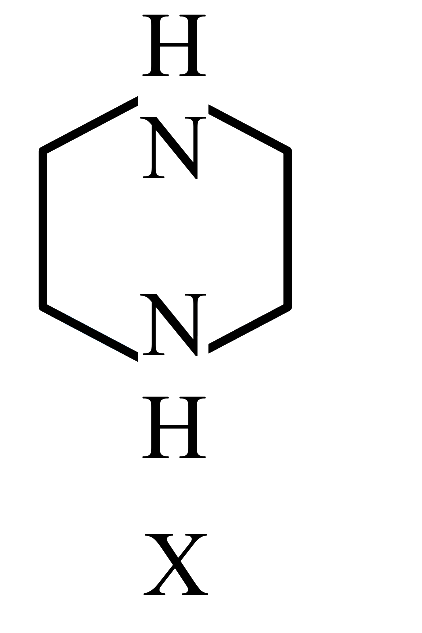
_____ mL of \(\mathrm{N}_2\) gas will be liberated at STP. (nearest integer)
(Given molar mass in \(\mathrm{g} \mathrm{mol}^{-1}: \mathrm{C}: 12, \mathrm{H}: 1\), \(\mathrm{N}: 14)\)JEE Mains 2025 Hard - Given below are two statements :
Statement I: Presence of large number of unpaired electrons in transition metal atoms results in higher enthalpies of their atomisation.
Statement II: \(d_{xy} = d_{xz} = d_{yz} < d_{x^2-y^2} = d_{z^2}\) and \(d_{x^2-y^2} = d_{z^2} < d_{xy} = d_{xz} = d_{yz}\) are the d-orbital splittings in \([Fe(H_2O)_6]^{3+}\) and \([Ni(Cl)_4]^{2-}\) complex ions respectively.
In the light of the above statements, choose the correct answer from the options given below :JEE Mains 2026 Medium - Mach List-\(I\) with List - \(II\) :
Choose the correct answer from the options given belowList - \(I\) List - \(II\) \((a)\) Ultraviolet rays \((a)\) Study crystal structure \((b)\) Microwaves \((b)\) Greenhouse \((c)\) Infrared waves \((c)\) sterilizing surgical instrument \((d)\) \(x\)-rays \((d)\) Radar system JEE Mains 2022 Medium