


JEE Advanced · Chemistry · 22. d & f Block
Paragraph:
The reaction of \(\mathrm{K}_{3}\left[\mathrm{Fe}(\mathrm{CN})_{6}\right]\) with freshly prepared \(\mathrm{FeSO}_{4}\) solution produces a dark blue precipitate called Turnbull's blue. Reaction of \(\mathrm{K}_{4}\left[\mathrm{Fe}(\mathrm{CN})_{6}\right]\) with the \(\mathrm{FeSO}_{4}\) solution in complete absence of air produces a white precipitate \(\mathbf{X}\), which turns blue in air. Mixing the \(\mathrm{FeSO}_{4}\) solution with \(\mathrm{NaNO}_{3}\), followed by a slow addition of concentrated \(\mathrm{H}_{2} \mathrm{SO}_{4}\) through the side of the test tube produces a brown ring.
Question:
Precipitate \(\mathbf{X}\) is
- A
- B
- C
- D
Answer & Solution
Correct Answer
(C)
Step-by-step Solution
Detailed explanation
See the Complete Solution
Get step-by-step explanations for this and 2.5 Lakh+ more JEE, NEET & CET questions.
- Unlock all solutions
- Practice the full chapter
- Track accuracy across PYQs
4.8 rated on Google Play · 14,000+ reviews
More questions from Chemistry
- The total number of lone pairs of electrons in isJEE Advanced 2015 Easy
- Scheme and describe the conversion of to and to respectively. Scheme describes the synthesis of from and The total number of atoms in a molecule of is
Scheme :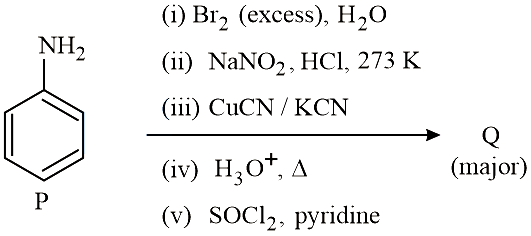
Scheme :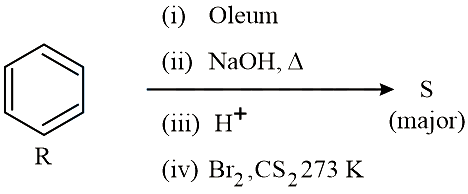
Scheme: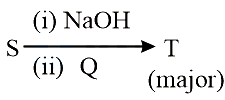 JEE Advanced 2019 Hard
 - A sample \((5.6 \mathrm{~g})\) containing iron is completely dissolved in cold dilute \(\mathrm{HCl}\) to prepare a \(250 \mathrm{~mL}\) of solution. Titration of \(25.0 \mathrm{~mL}\) of this solution requires \(12.5 \mathrm{~mL}\) of \(0.03 \mathrm{M} \mathrm{KMnO}_{4}\) solution to reach the end point. Number of moles of \(\mathrm{Fe}^{2+}\) present in \(250 \mathrm{~mL}\) solution is \(\mathbf{x} \times 10^{-2}\) (consider complete dissolution of \(\mathrm{FeCl}_{2}\) ). The amount of iron present in the sample is \(\mathbf{y} \%\) by weight.
(Assume: \(\mathrm{KMnO}_{4}\) reacts only with \(\mathrm{Fe}^{2+}\) in the solution Use: Molar mass of iron as \(56 \mathrm{~g} \mathrm{~mol}^{-1}\) )
The value of is________ .JEE Advanced 2021 Medium - Galena (an ore) is partially oxidized by passing air through it at high temperature. After some time, the passage of air is stopped, but the heating is continued in a closed furnace such that the contents undergo self-reduction. The weight (in ) of produced per of consumed is ____. (Atomic weights in )JEE Advanced 2018 Medium
- Aqueous solutions of \(\mathrm{HNO}_3, \mathrm{KOH}\), \(\mathrm{CH}_3 \mathrm{COOH}\), and \(\mathrm{CH}_3 \mathrm{COONa}\) of identical concentrations are provided. The pair(s) of solutions which form a buffer upon mixing is(are)JEE Advanced 2010 Medium
- List-I includes starting materials and reagents of selected chemical reactions. List-II gives structures of compounds that may be formed as intermediate products and/or final products from the reactions of List-I.
List-I List-II
(I)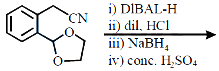
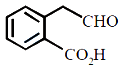
(II)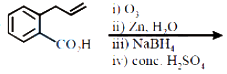
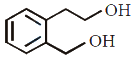
(III)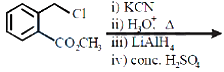

(IV)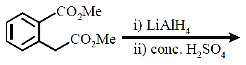
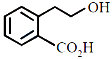
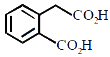

Which of the following options has correct combination considering List-I and List-II?JEE Advanced 2019 Hard
More PYQs from JEE Advanced
- The electrochemical cell shown below is a concentration cell. \(\mathrm{M} \mid \mathrm{M}^{2+}\) (saturated solution of a sparingly soluble salt, \(\left.\mathrm{MX}_{2}\right) \| \mathrm{M}^{2 \perp}\left(0.001 \mathrm{~mol} \mathrm{dm}^{-3}\right) \mid \mathrm{M}\).
The emf of the cell depends on the difference in concentrations of \(\mathrm{M}^{2+}\) ions at the two electrodes. The emf of the cell at \(298 \mathrm{~K}\) is \(0.059 \mathrm{~V}\).
Question:
The solubility product \(\left(\mathrm{K}_{s p} ; \mathrm{mol}^{3} \mathrm{dm}^{-9}\right)\) of \(\mathrm{MX}_{2}\) at \(298 \mathrm{~K}\) based on the information available for the given concentration cell is (take \(2.303 \times \mathrm{R} \times 298 / \mathrm{F}=0.059 \mathrm{~V}\) )JEE Advanced 2012 Medium - An electron in a hydrogen atom undergoes a transition from an orbit with a quantum number to another quantum number . are the initial and final potential energies of the electron. If then the smallest isJEE Advanced 2017 Medium
- Let \(k\) be a positive real number and let \(\begin{aligned} A & =\left[\begin{array}{ccc}2 k-1 & 2 \sqrt{k} & 2 \sqrt{k} \\ 2 \sqrt{k} & 1 & -2 k \\ -2 \sqrt{k} & 2 k & -1\end{array}\right] \text { and } \\ B & =\left[\begin{array}{ccc}0 & 2 k-1 & \sqrt{k} \\ 1-2 k & 0 & 2 \sqrt{k} \\ -\sqrt{k} & -2 \sqrt{k} & 0\end{array}\right]\end{aligned}\)
If \(\operatorname{det}(\operatorname{adj} A)+\operatorname{det}(\operatorname{adj} B)=10^6\), then \([k]\) is equal to
[Note : adj \(M\) denotes the adjoint of a square matrix \(M\) and \([k]\) denotes the largest integer less than or equal to \(k\) ].JEE Advanced 2010 Easy - In the options given below, let \(E\) denote the rest mass energy of a nucleus and \(n\) a neutron. The correct option isJEE Advanced 2007 Hard
- Let \(y(x)\) be the solution of the differential equation
\(x^2 \frac{d y}{d x}+x y=x^2+y^2, x>\frac{1}{e}\)
satisfying \(y(1)=0\). Then the value of \(2 \frac{(y(e))^2}{y\left(e^2\right)}\) is _____ .JEE Advanced 2025 Easy - The tangent to the curve \(y=e^x\) drawn at the point \(\left(c, e^c\right)\) intersects the line joining the points \(\left(c-1, e^{c-1}\right)\) and \(\left(c+1, e^{c+1}\right)\)JEE Advanced 2007 Medium