


JEE Advanced · Chemistry · 12. p Block (G13-14)
Among the following, the correct statement(s) is(are)
- A has the three-centre two-electron bonds in its dimeric structure
- B has the three-centre two-electron bonds in its dimeric structure
- C has the three-centre two-electron bonds in its dimeric structure
- D The Lewis acidity of is greater than that of
Answer & Solution
Correct Answer
(A) has the three-centre two-electron bonds in its dimeric structure
Step-by-step Solution
Detailed explanation
(i)

(ii)

(iii)

(iv) Lewis acidic strength decreases down the group. The decrease in acid strength occurs because as size increases, the attraction between the incoming electron pair and the nucleus weakens.
Hence Lewis acidic strength of is more than
(ii)
(iii)
(iv) Lewis acidic strength decreases down the group. The decrease in acid strength occurs because as size increases, the attraction between the incoming electron pair and the nucleus weakens.
Hence Lewis acidic strength of is more than
See the Complete Solution
Get step-by-step explanations for this and 2.5 Lakh+ more JEE, NEET & CET questions.
- Unlock all solutions
- Practice the full chapter
- Track accuracy across PYQs
4.8 rated on Google Play · 14,000+ reviews
More questions from Chemistry
- Paragraph :
Redox reaction play a pivotal role in chemistry and biology. The values of standard redox potential \(\left(E^{\circ}\right)\) of two half-cell reactions decide which way the reaction is expected to proceed. A simple example is a Daniel cell in which zinc goes into solution and copper gets deposited. Given below are a set of half-cell reactions (acidic medium) along with their \(E^{\circ}(V\) with respect to normal hydrogen electrode) values. Using this data obtain the correct explanations to Questions 14-19.
\(\mathrm{I}_2+2 e^{-} \longrightarrow 2 \mathrm{I}^{-} E^{\circ}=0.54 \)
\( \mathrm{Cl}_2+2 e^{-} \longrightarrow 2 \mathrm{Cl}^{-} E^{\circ}=1.36 \)
\( \mathrm{Mn}^{3+}+e^{-} \longrightarrow \mathrm{Mn}^{2+} E^{\circ}=1.50 \)
\( \mathrm{Fe}^{3+}+e^{-} \longrightarrow \mathrm{Fe}^{2+} E^{\circ}=0.77 \)
\( \mathrm{O}_2+4 \mathrm{H}^{+}+4 e^{-} \longrightarrow 2 \mathrm{H}_2 \mathrm{O} E^{\circ}=1.23\)
Question :
Sodium fusion extract, obtained from aniline, on treatment with iron (II) sulphate and \(\mathrm{H}_2 \mathrm{SO}_4\) in presence of air gives a prussian blue precipitate. The blue colour is due to the formation ofJEE Advanced 2007 Medium - At \(298 \mathrm{~K}\), the limiting molar conductivity of a weak monobasic acid is \(4 \times 10^{2} \mathrm{~S} \mathrm{~cm}^{2} \mathrm{~mol}^{-1}\). At \(298 \mathrm{~K}\), for an aqueous solution of the acid the degree of dissociation is \(\boldsymbol{\alpha}\) and the molar conductivity is \(\mathbf{y} \times 10^{2} \mathrm{~S} \mathrm{~cm}^{2} \mathrm{~mol}^{-1}\). At \(298 \mathrm{~K}\), upon 20 times dilution with water, the molar conductivity of the solution becomes \(3 \mathbf{y} \times 10^{2} \mathrm{~S} \mathrm{~cm}^{2} \mathrm{~mol}^{-1}\)
The value of is _______ .JEE Advanced 2021 Hard - The correct order of acid strength of the following carboxylic acids is -
 JEE Advanced 2019 Medium
 - The wave function, is a mathematical function whose value depends upon spherical polar coordinates of the electron and characterized by the quantum numbers and . Here is the distance from the nucleus, is colatitude and is azimuth. In the mathematical functions given in the Table, is the atomic number and is Bohr radius
For the given orbital in column 1, the only correct combination for any hydrogen-like species isColumn 1 Column 2 Column 3 (I) 1s orbital \(\begin{array}{l}\text { (i) } \psi_{ n , 1, m_1} \\ \propto\left(\frac{ Z }{ a _{ o }}\right)^{\frac{3}{2}} e ^{-\left(\frac{ Zr }{ e _{ o }}\right)}\end{array}\) (P) 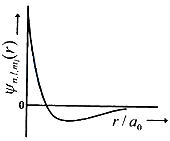
(II) 2s orbital (ii) One radial node (Q) Probability density at the nucleus \(\propto \frac{1}{ a _{ o }^3}\). (III) \(2 p _{ z }\) orbital \(\begin{array}{l}\text { (iii) } \psi_{ n }, 1, m_{ l } \\ \propto\left(\frac{ Z }{ a _{ o }}\right)^{\frac{5}{2}} re ^{-\left(\frac{ Zr }{2 a _{ o }}\right)} \cos \theta\end{array}\) (R) Probability density is maximum at the nucleus. (IV) \(3 d_{ z }^2\) orbital (iv) \(x y\)-plane is a nodal plane (S) Energy needed to excite an electron from \(n =2\) state to \(n =4\) state is \(\frac{27}{32}\) times the energy needed to excite are electron from \(n =2\) state to \(n =6\) state. JEE Advanced 2017 Hard - For the reaction, \(2 \mathrm{CO}+\mathrm{O}_2 \rightarrow 2 \mathrm{CO}_2 ; \Delta H=-560 \mathrm{~kJ}\). Two moles of \(\mathrm{CO}\) and one mole of \(\mathrm{O}_2\) are taken in a container of volume \(1 \mathrm{~L}\). They completely form two moles of \(\mathrm{CO}_2\), the gases deviate appreciably from ideal behaviour. If the pressure in the vessel changes from 70 to \(40 \mathrm{~atm}\), find the magnitude (absolute value) of \(\Delta U\) at \(500 \mathrm{~K} .(1 \mathrm{~L}-\mathrm{atm}=0.1 \mathrm{~kJ})\)JEE Advanced 2006 Easy
- Statement \(\mathbf{1}\left[\mathrm{Fe}\left(\mathrm{H}_2 \mathrm{O}\right)_5 \mathrm{NO}\right] \mathrm{SO}_4\) is paramagnetic.
Statement 2 The \(\mathrm{Fe}\) in \(\left[\mathrm{Fe}\left(\mathrm{H}_2 \mathrm{O}\right)_5 \mathrm{NO}\right] \mathrm{SO}_4\) has three unpaired electrons.JEE Advanced 2008 Medium
More PYQs from JEE Advanced
- A biconvex lens of focal length \(f\) forms a circular image of radius \(r\) of sun in focal plane. Then, which option is correct?JEE Advanced 2006 Medium
- Match the chemical conversions in List I with the appropriate reagents in List II and select the correct answer using the code given below the lists :
List - I List - II (A) 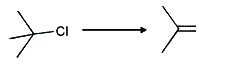
(P) (B) 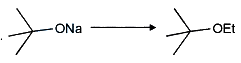
(Q) (C) 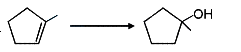
(R) (D) 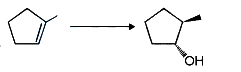
(S) JEE Advanced 2013 Hard - Let \(P\left(x_1, y_1\right)\) and \(Q\left(x_2, y_2\right), y_1 < 0, y_2 < 0\), be the end points of the latusrectum of the ellipse \(x^2+4 y^2=4\). The equations of parabolas with latusrectum \(P Q\) areJEE Advanced 2008 Hard
- For the given compound X, the total number of optically active stereoisomers is ____.
 JEE Advanced 2018 Medium
 - Let be two non-constant differentiable functions. If , and then which of the following statement(s) is (are) TRUE?JEE Advanced 2018 Medium
- Paragraph:
The reactions of \(\mathrm{Cl}_{2}\) gas with cold-dilute and hot-concentrated \(\mathrm{NaOH}\) in water give sodium salts of two (different) oxoacids of chlorine, \(\boldsymbol{P}\) and \(\boldsymbol{Q}\), respectively. The \(\mathrm{Cl}_{2}\) gas reacts with \(\mathrm{SO}_{2}\) gas, in presence of charcoal, to give a product \(\boldsymbol{R}\). \(\boldsymbol{R}\) reacts with white phosphorus to give a compound \(\boldsymbol{S}\). On hydrolysis, \(\boldsymbol{S}\) gives an oxoacid of phosphorus, \(\boldsymbol{T}\).
Question:
\(R, S\) and \(T\), respectively, areJEE Advanced 2013 Medium