


JEE Advanced · Mathematics · 14. Ellipse
Let \(P\left(x_1, y_1\right)\) and \(Q\left(x_2, y_2\right), y_1 < 0, y_2 < 0\), be the end points of the latusrectum of the ellipse \(x^2+4 y^2=4\). The equations of parabolas with latusrectum \(P Q\) are
- A
\(x^2+2 \sqrt{3} y=3+\sqrt{3}\)
- B
\(x^2-2 \sqrt{3} y=3+\sqrt{3}\)
- C
\(x^2+2 \sqrt{3} y=3-\sqrt{3}\)
- D
\(x^2-2 \sqrt{3} y=3-\sqrt{3}\)
Answer & Solution
Correct Answer
(C)
\(x^2+2 \sqrt{3} y=3-\sqrt{3}\)
Step-by-step Solution
Detailed explanation
The equation \(x^2+4 y^2=4\) represents an ellipse with 2 and 1 as semi-major and semi-minor axes and eccentricity \(\frac{\sqrt{3}}{2}\). Thus, the ends of latusrect are \(\left(\sqrt{3}, \frac{1}{2}\right)\) and \(\left(\sqrt{3},-\frac{1}{2}\right),\left(-\sqrt{3},-\frac{1}{2}\right)\) and \(\left(\sqrt{3},-\frac{1}{2}\right)\).
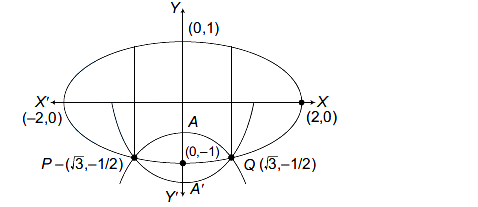
According to the question, we consider only \(P\left(-\sqrt{3},-\frac{1}{2}\right)\) and \(Q\left(\sqrt{3},-\frac{1}{2}\right)\).
Now, \(\quad P Q=2 \sqrt{3}\)
Thus, the coordinates of the vertex of the parabolas are \(A\left(0, \frac{-1+\sqrt{3}}{2}\right)\) and \(A^{\prime}\left(0, \frac{-1-\sqrt{3}}{2}\right)\) and corresponding equations are and
\[
(x-0)^2=-4 \cdot \frac{\sqrt{3}}{2}\left(y+\frac{1-\sqrt{3}}{2}\right)
\]
i.e., \((x-0)^2=4 \cdot \frac{\sqrt{3}}{2}\left(y-\frac{-1-\sqrt{3}}{2}\right)\) and
\[
\begin{aligned}
& x^2+2 \sqrt{3} y=3-\sqrt{3} \\
& x^2-2 \sqrt{3} y=3+\sqrt{3}
\end{aligned}
\]
According to the question, we consider only \(P\left(-\sqrt{3},-\frac{1}{2}\right)\) and \(Q\left(\sqrt{3},-\frac{1}{2}\right)\).
Now, \(\quad P Q=2 \sqrt{3}\)
Thus, the coordinates of the vertex of the parabolas are \(A\left(0, \frac{-1+\sqrt{3}}{2}\right)\) and \(A^{\prime}\left(0, \frac{-1-\sqrt{3}}{2}\right)\) and corresponding equations are and
\[
(x-0)^2=-4 \cdot \frac{\sqrt{3}}{2}\left(y+\frac{1-\sqrt{3}}{2}\right)
\]
i.e., \((x-0)^2=4 \cdot \frac{\sqrt{3}}{2}\left(y-\frac{-1-\sqrt{3}}{2}\right)\) and
\[
\begin{aligned}
& x^2+2 \sqrt{3} y=3-\sqrt{3} \\
& x^2-2 \sqrt{3} y=3+\sqrt{3}
\end{aligned}
\]
See the Complete Solution
Get step-by-step explanations for this and 2.5 Lakh+ more JEE, NEET & CET questions.
- Unlock all solutions
- Practice the full chapter
- Track accuracy across PYQs
4.8 rated on Google Play · 14,000+ reviews
More questions from Mathematics
- Let the function \(f:[1, \infty) \rightarrow \mathbb{R}\) be defined by
\(f(t)=\left\{\begin{array}{cc}(-1)^{n+1} 2, & \text { if } t=2 n-1, n \in \mathbb{N}, \\ \frac{(2 n+1-t)}{2} f(2 n-1)+\frac{(t-(2 n-1))}{2} f(2 n+1), & \text { if } 2 n-1 < t < 2 n+1, n \in \mathbb{N} .\end{array}\right.\)
Define \(g(x)=\int_1^x f(t) d t, x \in(1, \infty)\). Let \(\alpha\) denote the number of solutions of the equation \(g(x)=0\) in the interval \((1,8]\) and \(\beta=\lim _{x \rightarrow 1^+} \frac{g(x)}{x-1}\). Then the value of \(\alpha+\beta\) is equal to ________.JEE Advanced 2024 Medium - Paragraph:
Consider the polynomial \(f(x)=1+2 x+3 x^2+4 x^3\). Let \(s\) be the sum of all distinct real roots of \(f(x)\) and let \(t=|s|\).Question:
The real number \(s\) lies in the intervalJEE Advanced 2010 Medium - Paragraph:
Let \(f:[0,1] \rightarrow \mathbb{R}\) (the set of all real numbers) be a function. Suppose the function \(f\) is twice differentiable, \(f(0)=f(1)=0\) and satisfies \(f^{\prime \prime}(x)-2 f^{\prime}(x)+f(x) \geq e^{x}, x \in[0,1] .\)
Question:
If the function \(\mathrm{e}^{-x} f(x)\) assumes its minimum in the interval \([0,1]\) at \(x=\frac{1}{4}\), which of the following is true?JEE Advanced 2013 Hard - Paragraph:
Tangents are drawn from the point \(P(3,4)\) to the ellipse \(\frac{x^2}{9}+\frac{y^2}{4}=1\) touching the ellipse at points \(A\) and \(B\).Question:
The coordinates of \(A\) and \(B\) areJEE Advanced 2010 Medium - For any real number \(x\), let \([x]\) denotes the largest integer less than or equal to \(x\). Let \(f\) be a real valued function defined on the interval \([-10,10]\) by \(f(x)=\left\{\begin{array}{cc}x-[x] & \text { if }[x] \text { is odd } \\ 1+[x]-x & \text { if }[x] \text { is even }\end{array}\right.\).
Then the value of \(\frac{\pi^2}{10} \int_{-10}^{10} f(x) \cos \pi x d x\) isJEE Advanced 2010 Hard - Let \(f_{1}:(0, \infty) \rightarrow \mathbb{R}\) and \(f_{2}:(0, \infty) \rightarrow \mathbb{R}\) be defined by
\[
f_{1}(x)=\int_{0}^{x} \prod_{j=1}^{21}(t-j)^{j} d t, \quad x>0
\]
and
\(
f_{2}(x)=98(x-1)^{50}-600(x-1)^{49}+2450, \quad x>0
\)
where, for any positive integer \(n\) and real numbers \(a_{1}, a_{2}, \ldots, a_{n}, \prod_{i=1}^{n} a_{i}\) denotes the product of \(a_{1}, a_{2}, \ldots, a_{n} .\) Let \(m_{i}\) and \(n_{i}\), respectively, denote the number of points of local minima and the number of points of local maxima of function \(f_{i}, i=1,2\), in the interval \((0, \infty)\).
The value of is _____.JEE Advanced 2021 Medium
More PYQs from JEE Advanced
- Let and be the respective electric fields at a distance r from a point charge Q, an infinitely long wire with constant linear charge density , and an infinite plane with uniform surface charge density . If at a given distance , thenJEE Advanced 2014 Medium
- A student performed the experiment to measure the speed of sound in air using resonance air-column method. Two resonances in the air-column were obtained by lowering the water level. The resonance with the shorter air-column is the first resonance and that with the longer air column is the second resonance. Then,JEE Advanced 2009 Medium
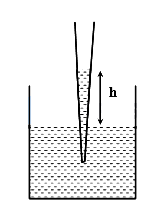
- A glass capillary tube is of the shape of a truncated cone with an apex angle so that its two ends have cross-sections of different radii. When dipped in water vertically, the water rises in it to a height , where the radius of its cross-section is . If the surface tension of water is , its density is , and its contact angle with glass is , then the value of will be ( is the acceleration due to gravity)
 JEE Advanced 2014 Hard
 - Paragraph :
\(P_{14-16}\) : Paragraph for Questions Nos. 14 to 16 A fixed thermally conducting cylinder has a radius \(R\) and height \(L_0\). The cylinder is open at its bottom and has a small hole at its top. A piston of mass \(M\) is held at a distance \(L\) from the top surface as shown in the figure. The atmospheric pressure is \(p_0\).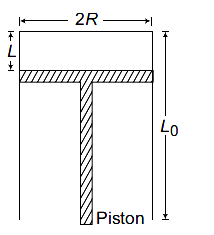
Question :
The piston is taken completely out of the cylinder. The hole at the top is sealed. A water tank is brought below the cylinder and put in a position so that the water surface in the tank is at the same level as the top of the cylinder as shown in the figure. The density of the water is \(\rho\). In equilibrium, the height \(H\) of the water column in the cylinder satisfies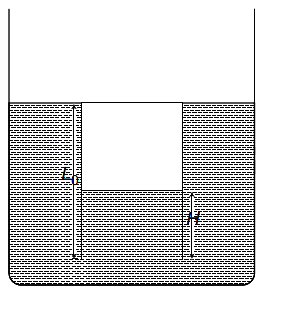 JEE Advanced 2007 Medium
 - Two bodies, each of mass , are kept fixed with a separation of . A particle of mass is projected from the midpoint of the line joining their centers, perpendicular to the line. The gravitational constant is . The correct statement (s) is (are) :JEE Advanced 2013 Medium
- List includes starting materials and reagents of selected chemical reactions. Listgives structures of compounds that may be formed as intermediate products and/or final products from the reactions of List.
List-I List-II
(I)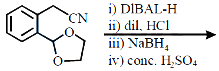
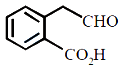
(II)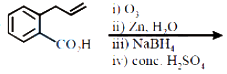
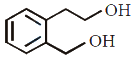
(III)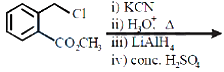

(IV)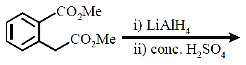
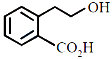
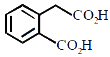

Which of the following options has the correct combination considering List and List?JEE Advanced 2019 Hard