


JEE Advanced · Chemistry · 19. Surface Chemistry
Adsorption of phenol from its aqueous solution on to fly ash obeys Freundlich isotherm. At a given temperature, from \(10 \mathrm{mg} \mathrm{g}^{-1}\) and \(16 \mathrm{mg} \mathrm{g}^{-1}\) aqueous phenol solutions, the concentrations of adsorbed phenol are measured to be \(4 \mathrm{mg} \mathrm{g}^{-1}\) and \(10 \mathrm{mg} \mathrm{g}^{-1}\), respectively. At this temperature, the concentration (in \(\mathrm{mg} \mathrm{g}^{-1}\) ) of adsorbed phenol from \(20 \mathrm{mg} \mathrm{g}^{-1}\) aqueous solution of phenol will be \(\qquad\) .
Use : \(\log _{10} 2=0.3\)
- A 15.63
- B 15.66
- C 15.48
- D 14.15
Answer & Solution
Correct Answer
(A) 15.63
Step-by-step Solution
Detailed explanation
\(\begin{aligned}
& \frac{x}{m}=K \times C^{1 / n} \\
& \log \left(\frac{x}{m}\right)=\log K+\frac{1}{n} \log C \\
& \log 4=\log K+\frac{1}{n} \log 10 \\
& 0.6=\log K+\frac{1}{n} .....(1) \\
& \log 10=\log K+\frac{1}{n} \log 16 \\
& 1=\log K+\frac{1}{n} \times 1.2 ....(2) \end{aligned}\)
Equation (2) - equation (1)
\(0.4=\frac{1}{\mathrm{n}} \times(0.2) \Rightarrow \mathrm{n}=0.5\)
and \(\log \mathrm{K}=-1.4\)
\(\begin{aligned}
& \log \frac{x}{m}=\log K+\frac{1}{n} \times \log C \\
& =-1.4+2 \times \log 20
\end{aligned}\)
\(\begin{aligned} & =-1.4+2.6=1.2 \\ & \frac{\mathrm{x}}{\mathrm{m}}=10^{+1.2}=16 \\ & \left(\log 2=0.3,4 \log 2=1.2,16=10^{+1.2}\right)\end{aligned}\)
\(\begin{aligned}
& \frac{x}{m}=K \times C^{1 / n} \\
& 4=K(10)^{1 / n}....(1) \\
& 10=K(16)^{1 / n}....(2) \\
& X=K(20)^{1 / n}....(3)
\end{aligned}\)
On solving equation (1) and (2)
\(\frac{1}{n}=2\)
On solving equation (1) and (3)
\(\frac{4}{X}=\left(\frac{10}{20}\right)^2\)
\(X=16\)
On solving equation (2) and (3)
\(\begin{aligned}
& \frac{10}{X}=\left(\frac{16}{20}\right)^2 \\
& X=15.625
\end{aligned}\)
& \frac{x}{m}=K \times C^{1 / n} \\
& \log \left(\frac{x}{m}\right)=\log K+\frac{1}{n} \log C \\
& \log 4=\log K+\frac{1}{n} \log 10 \\
& 0.6=\log K+\frac{1}{n} .....(1) \\
& \log 10=\log K+\frac{1}{n} \log 16 \\
& 1=\log K+\frac{1}{n} \times 1.2 ....(2) \end{aligned}\)
Equation (2) - equation (1)
\(0.4=\frac{1}{\mathrm{n}} \times(0.2) \Rightarrow \mathrm{n}=0.5\)
and \(\log \mathrm{K}=-1.4\)
\(\begin{aligned}
& \log \frac{x}{m}=\log K+\frac{1}{n} \times \log C \\
& =-1.4+2 \times \log 20
\end{aligned}\)
\(\begin{aligned} & =-1.4+2.6=1.2 \\ & \frac{\mathrm{x}}{\mathrm{m}}=10^{+1.2}=16 \\ & \left(\log 2=0.3,4 \log 2=1.2,16=10^{+1.2}\right)\end{aligned}\)
\(\begin{aligned}
& \frac{x}{m}=K \times C^{1 / n} \\
& 4=K(10)^{1 / n}....(1) \\
& 10=K(16)^{1 / n}....(2) \\
& X=K(20)^{1 / n}....(3)
\end{aligned}\)
On solving equation (1) and (2)
\(\frac{1}{n}=2\)
On solving equation (1) and (3)
\(\frac{4}{X}=\left(\frac{10}{20}\right)^2\)
\(X=16\)
On solving equation (2) and (3)
\(\begin{aligned}
& \frac{10}{X}=\left(\frac{16}{20}\right)^2 \\
& X=15.625
\end{aligned}\)
See the Complete Solution
Get step-by-step explanations for this and 2.5 Lakh+ more JEE, NEET & CET questions.
- Unlock all solutions
- Practice the full chapter
- Track accuracy across PYQs
4.8 rated on Google Play · 14,000+ reviews
More questions from Chemistry
- The major products obtained from the reactions in List-II are the reactants for the named reactions mentioned in List-I. Match each entry in List-I with the appropriate entry in List-II and choose the correct options.
List - I List - II (P) Stephen reaction (1) 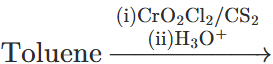
(Q) Sandmeyer reaction (2) 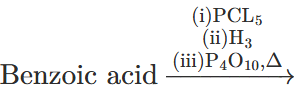
(R) Hoffmann bromamide degradation reaction (3) 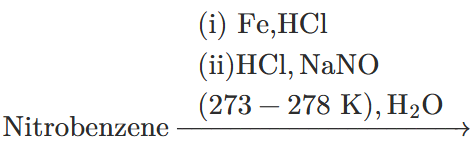
(S) Cannizzaro reaction (4) 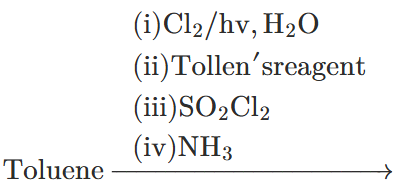
(5) 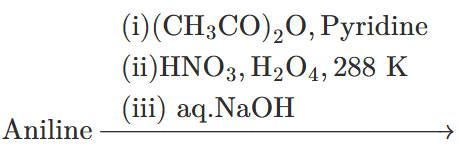 JEE Advanced 2025 Hard
 - For a solution formed by mixing liquids and , the vapour pressure of plotted against the mole fraction of in solution is shown in the following figure, Here, and represent mole fractions of and , respectively, in the solution. The correct statement(s) applicable to this system is(are) -
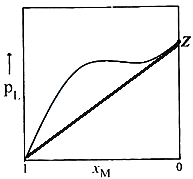 JEE Advanced 2017 Medium
 - In the complex acetylbromidodicarbonylbis(triethylphosphine)iron (II), the number of bond (s) isJEE Advanced 2015 Medium
- Reaction of \(\mathrm{Br}_2\) with \(\mathrm{Na}_2 \mathrm{CO}_3\) in aqueous solution gives sodium bromide and sodium bromate with evolution of \(\mathrm{CO}_2\) gas. The number of sodium bromide molecules involved in the balanced chemical equation isJEE Advanced 2011 Medium
- The nitrogen oxide(s) that contain(s) N.N bond(s) is (are)JEE Advanced 2009 Easy
- At \(25^{\circ} \mathrm{C}\), the concentration of \(\mathrm{H}^{+}\)ions in \(1.00 \times 10^{-3} \mathrm{M}\) aqueous solution of a weak monobasic acid having acid dissociation constant \(\left(K_a\right)=4.00 \times 10^{-11}\) is \(\boldsymbol{X} \times 10^{-7} \mathrm{M}\). The value of \(\boldsymbol{X}\) is _____ .
Use: Ionic product of water \(\left(K_w\right)=1.00 \times 10^{-14}\) at \(25^{\circ} \mathrm{C}\)JEE Advanced 2025 Medium
More PYQs from JEE Advanced
- A particle of mass \(m\) is moving in a circular orbit under the influence of the central force \(F(r)=-k r\), corresponding to the potential energy \(V(r)=k r^2 / 2\), where \(k\) is a positive force constant and \(r\) is the radial distance from the origin. According to the Bohr's quantization rule, the angular momentum of the particle is given by \(L=n \hbar\), where \(\hbar=h /(2 \pi), h\) is the Planck's constant, and \(n\) a positive integer. If \(v\) and \(E\) are the speed and total energy of the particle, respectively, then which of the following expression(s) is(are) correct?JEE Advanced 2024 Medium
- When 100 mL of 1.0 M HCl was mixed with 100 mL of 1.0 M NaOH in an insulated beaker at constant pressure, a temperature increase of was measured for the beaker and its contents (Expt.1). Because the enthalpy of neutralization of a strong acid with a strong base is a constant , this experiment could be used to measure the calorimeter constant. In a second experiment (Expt. 2), 100 mL of 2.0 M acetic acid was mixed with 100 mL of 1.0 M NaOH (under identical conditions to Expt. 1) where a temperature rise of was measured. (Consider heat capacity of all solutions as and density of all solutions as )
Enthalpy of dissociation of acetic acid obtained from the Expt. 2 isJEE Advanced 2015 Medium - Let \(\omega \neq 1\) be a cube root of unity and \(S\) be the set of all non-singular matrices of the form \(\left[\begin{array}{ccc}1 & a & b \\ \omega & 1 & c \\ \omega^2 & \omega & 1\end{array}\right]\), where each of \(a, b\) and \(c\) is either \(\omega\) or \(\omega^2\). Then, the number of distinct matrices in the set \(S\) isJEE Advanced 2011 Easy
- Let \(P(3,2,6)\) be a point in space and \(Q\) be a point on the line \(\mathbf{r}=(\hat{\mathbf{i}}-\hat{\mathbf{j}}+2 \hat{\mathbf{k}})+\mu(-3 \hat{\mathbf{i}}+\hat{\mathbf{j}}+5 \hat{\mathbf{k}})\).
Then, the value of \(\mu\) for which the vector \(\mathbf{P Q}\) is parallel to the plane \(x-4 y+3 z=1\) isJEE Advanced 2009 Medium - The pair(s) of coordination complexes/ions exhibiting the same kind of isomerism is (are)JEE Advanced 2013 Medium
- Let , for all and , for all . Let denote and denote . Then which of the following is (are) true?JEE Advanced 2015 Medium