


KCET · Physics · Electrostatics
Consider three point charges \(-2Q, Q\) and \(-Q\) and three surfaces \(S_1, S_2\) and \(S_3\) as shown in the figure. Match the entries of List-I with that of List-II.

| List-I | List-II |
|---|---|
| (a) Net flux through \(S_1\) | (i) \(\dfrac{-2Q}{\varepsilon_0}\) |
| (b) Net flux through \(S_2\) | (ii) \(\dfrac{-Q}{\varepsilon_0}\) |
| (c) Net flux through \(S_3\) | (iii) Zero |
- A a - ii, b - i, c – iii
- B a - iii, b - ii, c – i
- C a - i, b - ii, c – iii
- D a - ii, b - iii, c – i
Answer & Solution
Correct Answer
(D) a - ii, b - iii, c – i
Step-by-step Solution
Detailed explanation
According to Gauss's Law, the net electric flux through any closed surface is given by \(\Phi = \dfrac{Q_{\text{enclosed}}}{\varepsilon_0}\).
For surface \(S_1\), the enclosed charges are \(-2Q\) and \(Q\).
Net charge enclosed by \(S_1 = -2Q + Q = -Q\).
Net flux through \(S_1 = \dfrac{-Q}{\varepsilon_0}\).
Thus, (a) matches with (ii).
For surface \(S_2\), the enclosed charges are \(Q\) and \(-Q\).
Net charge enclosed by \(S_2 = Q + (-Q) = 0\).
Net flux through \(S_2 = 0\).
Thus, (b) matches with (iii).
For surface \(S_3\), the enclosed charges are \(-2Q\), \(Q\), and \(-Q\).
Net charge enclosed by \(S_3 = -2Q + Q + (-Q) = -2Q\).
Net flux through \(S_3 = \dfrac{-2Q}{\varepsilon_0}\).
Thus, (c) matches with (i).
The correct matching is a - ii, b - iii, c - i.
Answer: a - ii, b - iii, c – i
For surface \(S_1\), the enclosed charges are \(-2Q\) and \(Q\).
Net charge enclosed by \(S_1 = -2Q + Q = -Q\).
Net flux through \(S_1 = \dfrac{-Q}{\varepsilon_0}\).
Thus, (a) matches with (ii).
For surface \(S_2\), the enclosed charges are \(Q\) and \(-Q\).
Net charge enclosed by \(S_2 = Q + (-Q) = 0\).
Net flux through \(S_2 = 0\).
Thus, (b) matches with (iii).
For surface \(S_3\), the enclosed charges are \(-2Q\), \(Q\), and \(-Q\).
Net charge enclosed by \(S_3 = -2Q + Q + (-Q) = -2Q\).
Net flux through \(S_3 = \dfrac{-2Q}{\varepsilon_0}\).
Thus, (c) matches with (i).
The correct matching is a - ii, b - iii, c - i.
Answer: a - ii, b - iii, c – i
See the Complete Solution
Get step-by-step explanations for this and 2.5 Lakh+ more JEE, NEET & CET questions.
- Unlock all solutions
- Practice the full chapter
- Track accuracy across PYQs
4.8 rated on Google Play · 14,000+ reviews
More questions from Physics
- A particle of mass 500 g is at rest. It is free to move along a straight line. The power delivered to the particle varies with time according to the following graph
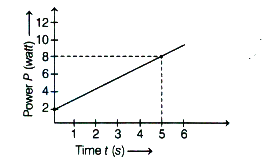
The momentum of the particle at \(t=5 \mathrm{~s}\) isKCET 2024 Medium - The resistivity of a semiconductor at room temperature is in betweenKCET 2022 Easy
- In a potentiometer experiment, the balancing point with a cell is at a length \( 240 \mathrm{~cm} \). On
shunting the cell with a resistance of \( 2 \Omega \), the balancing length becomes \( 120 \mathrm{~cm} \). The internal
resistance of the cell isKCET 2019 Medium - A conductor wire having \(10^{29}\) free electrons \(/ \mathrm{m}^{3}\) carries a current of \(20 \mathrm{~A}\). If the cross-section of the wire is \(1 \mathrm{~mm}^{2}\), then the drift velocity of electrons will be
\(\left(e=1.6 \times 10^{-19} \mathrm{C}\right)\)KCET 2011 Medium - In a nuclear reactor heavy nuclei is not used as moderators becauseKCET 2021 Hard
- 10 identical cells each potential \(E\) and internal resistance \(r\) are connected in series to form a closed circuitKCET 2022 Easy
More PYQs from KCET
- From the Ellingham graphs on carbon, which of the following statements is false?KCET 2012 Easy
- Two dice are thrown simultaneously, the probability of obtaining a total score of \( 5 \) isKCET 2016 Medium
- A metal rod of length \(10 \mathrm{~cm}\) and a rectangular cross-section of \(1 \mathrm{~cm} \times \frac{1}{2} \mathrm{~cm}\) is connected to a battery across opposite faces. The resistance will beKCET 2020 Hard
- If the function \( g(x) \) is defined by
\[
g(x)=\frac{\chi^{200}}{200}+\frac{\chi^{199}}{199}+\frac{\chi^{198}}{198}+\ldots \ldots+\frac{\chi^{2}}{2}+\chi+5, \text { then } g^{\prime}(0)=
\]KCET 2015 Easy - Three conductors draw currents of \(1 \mathrm{~A}, 2 \mathrm{~A}\) and 3 A respectively, when connected in turn across a battery. If they are connected in series and the combination is connected across the same battery, the current drawn will beKCET 2013 Medium
- Two parallel wires in free space are \(10 \mathrm{~cm}\) apart and each carries a current of \(10 \mathrm{~A}\) in the same direction. The force exerted by one wire on the other [per unit length] isKCET 2021 Medium