


KCET · Chemistry · Structure of Atom
Which of the following represents de Broglie equation?
- A \(\lambda = \dfrac{h}{\sqrt{mv}}\)
- B \(\lambda = \dfrac{h}{mv}\)
- C \(\lambda = \dfrac{h}{mp}\)
- D \(\lambda = \dfrac{\mu}{p}\)
Answer & Solution
Correct Answer
(B) \(\lambda = \dfrac{h}{mv}\)
Step-by-step Solution
Detailed explanation
According to de Broglie's hypothesis, every moving particle is associated with a wave. The wavelength \(\lambda\) of the matter wave is inversely proportional to the momentum \(p\) of the particle.
\(\lambda = \dfrac{h}{p}\)
Since momentum \(p = mv\), where \(m\) is the mass and \(v\) is the velocity of the particle, the equation can be written as:
\(\lambda = \dfrac{h}{mv}\)
Answer: \(\lambda = \dfrac{h}{mv}\)
\(\lambda = \dfrac{h}{p}\)
Since momentum \(p = mv\), where \(m\) is the mass and \(v\) is the velocity of the particle, the equation can be written as:
\(\lambda = \dfrac{h}{mv}\)
Answer: \(\lambda = \dfrac{h}{mv}\)
See the Complete Solution
Get step-by-step explanations for this and 2.5 Lakh+ more JEE, NEET & CET questions.
- Unlock all solutions
- Practice the full chapter
- Track accuracy across PYQs
4.8 rated on Google Play · 14,000+ reviews
More questions from Chemistry
- The energy associated with first orbit of \(\mathrm{He}^{+}\) isKCET 2024 Medium
- Select the correct statement :KCET 2024 Easy
- The reaction involved in the oil of winter green test is salicylic acid \(\mathrm{} \underset{\text { Conc. } \mathrm{H}_{2} \mathrm{SO}_{4}}{\stackrel{\Delta}{\longrightarrow}}\) product. The product is treated with \(\mathrm{Na}_{2} \mathrm{CO}_{3}\) solution. The missing reagent in the above reaction isKCET 2009 Medium
- The vitamin that helps in clotting of blood isKCET 2019 Easy
- Match the following.
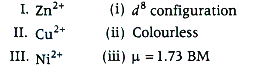
CodesKCET 2024 Hard - n-Propyl chloride reacts with sodium metal in dry ether to giveKCET 2018 Medium
More PYQs from KCET
- Suppose that the number of elements in set \(A\) is \(p\), the number of elements in set \(B\) is \(q\) and the number of elements in \(A \times B\) is 7 , then \(p^2+q^2=\)KCET 2022 Easy
- The derivative of \(e^{a x} \cos b x\) with respect \(x\) is \(r^{a x} \cos b x \tan ^{-1} \frac{b}{a}\). When \(a>0, b>0\), then value of \(r\), isKCET 2010 Hard
- Which one of the following shows highest magnetic moment?KCET 2013 Easy
- Which of the following is not related to drug-enzyme interaction?KCET 2020 Easy
- A \(0.15\) mole of pyridinium chloride has been added to \(500\text{ cm}^3\) of \(0.2\) M pyridine solution (a base). Assuming there is no change in volume upon mixing(Given: \(pK_b\) of pyridine = 8.82), the pH of the resulting solution isKCET 2026 Medium
- Which one of the following is a covalent crystal?KCET 2011 Easy