


JEE Mains · Chemistry · STD 12 - 5. Co-ordination chemistry
The number of optical isomers possible for \(\left[\mathrm{Cr}\left(\mathrm{C}_{2} \mathrm{O}_{4}\right)_{3}\right]^{3-}\) is ..... .
- A \(2\)
- B \(1\)
- C \(4\)
- D \(3\)
Answer & Solution
Correct Answer
(A) \(2\)
Step-by-step Solution
Detailed explanation
The number of optical isomers for \(\left[\mathrm{Cr}\left(\mathrm{C}_{2} \mathrm{O}_{4}\right)_{3}\right]^{3-}\) is two.
See the Complete Solution
Get step-by-step explanations for this and 2.5 Lakh+ more JEE, NEET & CET questions.
- Unlock all solutions
- Practice the full chapter
- Track accuracy across PYQs
4.8 rated on Google Play · 14,000+ reviews
More questions from Chemistry
- In the hydrocarboration - oxidation reaction of propene with diborane, \(H_2O_2\) and \(NaOH\), the organic compound formed isJEE Mains 2014 Hard
-
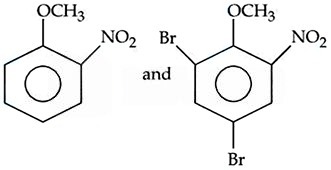
The incorrect statements regarding enzymes are:
(A) Enzymes are biocatalysts.
(B) Enzymes are non-specific and can catalyse different kinds of reactions.
(C) Most Enzymes are globular proteins.
(D) Enzyme - oxidase catalyses the hydrolysis of maltose into glucose.
Choose the correct answer from the option given below:JEE Mains 2024 Medium - The correct order of reactivity of \(CH_{3}Br\) in methanol with the following nucleophiles is:
\(F^{-}, I^{-}, C_{2}H_{5}O^{-}\) and \(C_{6}H_{5}O^{-}\)JEE Mains 2026 Easy - Given :
\(\begin{aligned}
& \Delta \mathrm{H}_{\text {sub }}^{\ominus}[\mathrm{C}(\text { graphite })]=710 \mathrm{~kJ} \mathrm{~mol}^{-1} \\
& \Delta_{\mathrm{C}-\mathrm{H}} \mathrm{H}^{\ominus}=414 \mathrm{~kJ} \mathrm{~mol}^{-1} \\
& \Delta_{\mathrm{H}-\mathrm{H}} \mathrm{H}^{\Theta}=436 \mathrm{~kJ} \mathrm{~mol}^{-1} \\
& \Delta_{\mathrm{C}=\mathrm{C}} \mathrm{H}^{\Theta}=611 \mathrm{~kJ} \mathrm{~mol}^{-1}
\end{aligned}\)
The \(\Delta \mathrm{H}_{\mathrm{f}}^{\ominus}\) for \(\mathrm{CH}_2=\mathrm{CH}_2\) is _____ \(\mathrm{kJ} \mathrm{mol}^{-1}\) (nearest integer value)JEE Mains 2025 Medium - Match List \(I\) with List \(II\).
Choose the correct answer from the options given below :-List \(I\) Isomeric pairs List \(II\) Type of isomers \(A\) Propanamine and \(N-\)Methylethanamine \(I\) Metamers \(B\) Hexan\(-2-\)one and Hexan\(-3-\)one \(II\) Positional isomers \(C\) Ethanamide and Hydroxyethanimine \(III\) Functional isomers \(D\) \(o-\)nitrophenol and \(p-\)nitrophenol \(IV\) Tautomers JEE Mains 2023 Hard - If the work function of a metal is \(6.63 \times 10^{-19}\, J\), the maximum wavelength of the photon required to remove a photoelectron from the metal is \(....\,nm.\) (Nearest integer) [Given : \(h =6.63 \times 10^{-34}\, J \,s\), and \(c =3 \times 10^{8} \,m\, s ^{-1}\) ]JEE Mains 2022 Medium
More PYQs from JEE Mains
- Vectors \(a \hat{i}+b \hat{j}+\hat{k}\) and \(2 \hat{i}-3 \hat{j}+4 \hat{k}\) are perpendicular to each other when \(3 a+2 b=7\), the ratio of a to \(b\) is \(\frac{x}{2}\). The value of \(x\) is \(..............\)JEE Mains 2023 Hard
- The correct IUPAC nomenclature for the following compound is
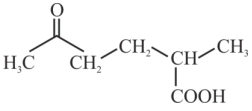 JEE Mains 2023 Medium
 - \(UV\) light of \(4.13 \mathrm{eV}\) is incident on a photosensitive metal surface having work function \(3.13 \mathrm{eV}\). The maximum kinetic energy of ejected photoelectrons will be _______.JEE Mains 2024 Hard
- A solid sphere (\(A\)) of mass \(5m\) and a spherical shell (\(B\)) of mass \(m\), both having same radius, are placed on a rough surface. When a force of same magnitude is applied tangentially at the highest points of \(A\) and \(B\), they start rolling without slipping with an acceleration of \(a_A\) and \(a_B\), respectively. The ratio of \(a_A\) and \(a_B\) is __________.JEE Mains 2026 Hard
- Match \(List-I\) with \(List-II\)
Choose the correct answer from the options given below.\(List-I\) \(List-II\) \(A.\) Benzenesulphonyl chloride \(I.\) Test for primary amines \(B.\) Hoffmann bromamide reaction \(II.\) Anti Saytzeff \(C.\) Carbylamine reaction \(III.\) Hinsberg reagent \(D.\) Hoffmann orientation \(IV.\) Known reaction of Isocyanates. JEE Mains 2022 Medium - Let \(A =\left(\begin{array}{cc}2 & -1 \\ 0 & 2\end{array}\right)\). If \(B = I -{ }^{5} C _{1} (\operatorname{adj} A )+{ }^{5} C _{2}\) \((\operatorname{adjA})^{2}-\ldots-{ }^{5} C _{5} (\operatorname{adj} A )^{5}\), then the sum of all elements of the matrix \(B\) isJEE Mains 2022 Medium