


JEE Advanced · Mathematics · 25. AOD
If \(f(x)\) is twice differentiable function such that \(f(a)=0, f(b)=2, f(c)=1, f(d)=2\), \(f(e)=0\), where \(a < b < c < d < e\), then the minimum number of zeros of \(g(x)=\left\{f^{\prime}(x)\right\}^2+f^{\prime \prime}(x) \cdot f(x)\) in the interval \([a, e]\) is
- A 10
- B 15
- C 6
- D 9
Answer & Solution
Correct Answer
(C) 6
Step-by-step Solution
Detailed explanation
Let, \(g(x)=\frac{d}{d x}\left[f(x) \cdot f^{\prime}(x)\right]\) to get the zero of \(g(x)\) we take function \(h(x)=f(x) \cdot f^{\prime}(x)\) between any two roots of \(h(x)\) there lies atleast one root of \(h^{\prime}(x)=0\)
\[
\begin{aligned}
& \Rightarrow \quad g(x)=0 \\
& \Rightarrow \quad h(x)=0 \\
& \Rightarrow \quad f(x)=0 \text { or } f^{\prime}(x)=0 \\
& \text { If } f(x)=0 \text { has } 4 \text { minimum solutions, } \\
& f^{\prime}(x)=0 \text { has } 3 \text { minimum solutions, } \\
& h(x)=0 \text { has } 7 \text { minimum solutions, then } \\
& h^{\prime}(x)=g(x)=0 \text { has } 6 \text { minimum solutions. } \\
&
\end{aligned}
\]
\[
\begin{aligned}
& \Rightarrow \quad g(x)=0 \\
& \Rightarrow \quad h(x)=0 \\
& \Rightarrow \quad f(x)=0 \text { or } f^{\prime}(x)=0 \\
& \text { If } f(x)=0 \text { has } 4 \text { minimum solutions, } \\
& f^{\prime}(x)=0 \text { has } 3 \text { minimum solutions, } \\
& h(x)=0 \text { has } 7 \text { minimum solutions, then } \\
& h^{\prime}(x)=g(x)=0 \text { has } 6 \text { minimum solutions. } \\
&
\end{aligned}
\]
See the Complete Solution
Get step-by-step explanations for this and 2.5 Lakh+ more JEE, NEET & CET questions.
- Unlock all solutions
- Practice the full chapter
- Track accuracy across PYQs
4.8 rated on Google Play · 14,000+ reviews
More questions from Mathematics
- Let n be the number of ways in which 5 boys and 5 girls can stand in a queue in such a way that all the girls stand consecutively in the queue. Let m be the number of ways in which 5 boys and 5 girls can stand in queue in such a way that exactly four girls stand consecutively in the queue. Then the value of isJEE Advanced 2015 Medium
- Let \(\mathbb{R}\) denote the set of all real numbers. Define the function \(f: \mathbb{R \rightarrow \mathbb { R }}\) by
\(f(\mathrm{x})=\left\{\begin{array}{cc}2-2 x^2-x^2 \sin \frac{1}{x} & \text { if } x \neq 0 \\ 2 & \text { if } x=0\end{array}\right.\)
Then which one of the following statements is TRUE ?JEE Advanced 2025 Hard - If \(\lim _{x \rightarrow 0}\left[1+x \log \left(1+b^2\right)\right]^{1 / x}=2 b \sin ^2 \theta b>0\) and \(\theta \in(-\pi, \pi]\), then the value of \(\theta\) isJEE Advanced 2011 Medium
- If , then which of the following matrices is equal to ?JEE Advanced 2022 Easy
- Paragraph:
Let \(\psi_{1}:[0, \infty) \rightarrow \mathbb{R}, \psi_{2}:[0, \infty) \rightarrow \mathbb{R}, f:[0, \infty) \rightarrow \mathbb{R}\) and \(g:[0, \infty) \rightarrow \mathbb{R}\) be functions such that \(f(0)=g(0)=0\),
\(\psi_{1}(x)=e^{-x}+x, \quad x \geq 0\),
\(\psi_{2}(x)=x^{2}-2 x-2 e^{-x}+2, \quad x \geq 0\),
\(f(x)=\int_{-x}^{x}\left(|t|-t^{2}\right) e^{-t^{2}} d t, \quad x>0\)
and \(g(x)=\int_{0}^{x^{2}} \sqrt{t} e^{-t} d t, \quad x>0\)
Question:
Which of the following statements is TRUE ?JEE Advanced 2021 Hard - Let and be two planes given by . Which of the following straight lines can be an edge of some tetrahedron whose two faces lie on and ?JEE Advanced 2022 Hard
More PYQs from JEE Advanced
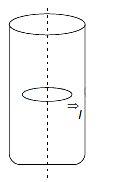
- A long circular tube of length \(10 \mathrm{~m}\) and radius \(0.3 \mathrm{~m}\) carries a current I along its curved surface as shown. A wire loop of resistance \(0.005 \Omega\) and of radius \(0.1 \mathrm{~m}\) is placed inside the tube with its axis coinciding with the axis of the tube. The current varies as \(I=I_0 \cos 300 t\), where \(I_0\) is constant. If the magnetic moment of the loop is \(N \mu_0 I_0 \sin 300 t\), then \(N\) is
 JEE Advanced 2011 Hard
 - Choose the reaction(s) from the following options, for which the standard enthalpy of reaction is equal to the standard enthalpy of formation.JEE Advanced 2019 Medium
- Paragraph:
There are some deposits of nitrates and phosphates in earth's crust. Nitrates are more soluble in water. Nitrates are difficult to reduce under the laboratory conditions but microbes do it easily. Ammonia forms large number of complexes with transition metal ions. Hybridisation easily explains the ease of sigma donation capability of \(\mathrm{NH}_3\) and \(\mathrm{PH}_3\). Phosphine is a flammable gas and is prepared from white phosphorus.
Question:
Among the following, the correct statement isJEE Advanced 2008 Medium - Among the triatomic molecules/ions, and , the total number of linear molecule(s)/ion(s) where the hybridization of the central atom does not have contribution from the d-orbital(s) is
[Atomic number: S = 16, Cl = 17, I = 53 and Xe = 54]JEE Advanced 2015 Medium - Two infinitely long straight wires lie in the xy - plane along the lines . The wire located at carries a constant current and the wire located at carries a constant current . A circular loop of radius R is suspended with its centre at and in a plane parallel to the xy - plane. This loop carries a constant current in the clockwise direction as seen from above the loop. The current in the wire is taken to be positive if it is in the direction. Which of the following statements regarding the magnetic field is (are) true?JEE Advanced 2018 Medium
- The pair(s) of reagents that yield paramagnetic species is/areJEE Advanced 2014 Medium