


JEE Advanced · Chemistry · 6. Thermodynamics (C)
Match the transformation in Column I with appropriate options in Column II.
| Column I | Column II |
| A. \(CO _2(s) \rightarrow CO _2(g)\) | p. Phase transition |
| B. \(CaCO _3(s) \rightarrow CaO (s)\) \(+~ CO _2(g)\) | q. Allotropic change |
| C. \(2 H \rightarrow H _2(g)\) | r. \(\Delta\text{H}\) is positive |
| D. \(P _{\text {(white, solid) }} \rightarrow P _{\text {(red, solid) }}\) | s. \(\Delta\text{S}\) is positive |
| t. \(\Delta\text{S}\) is negative |
- A (A) p,q,r,s, (B) r,s, (C) t, (D) p,q
- B (A) p,s, (B) p,s, (C) s, (D) p,q,s
- C (A) p,s, (B) q,r, (C) s, (D) p,q
- D (A) p,r,s, (B) r,s, (C) t, (D) p,q,t
Answer & Solution
Correct Answer
(D) (A) p,r,s, (B) r,s, (C) t, (D) p,q,t
Step-by-step Solution
Detailed explanation
(A) \(\mathrm{CO}_2(\mathrm{~s}) \longrightarrow \mathrm{CO}_2(\mathrm{~g})\)
It is just a phase transition (sublimation) as no chemical change has occurred. Sublimation is always endothermic. Product is gas, more disordered, hence \(\Delta s\) is positive.
(B) \(\mathrm{CaCO}_3(\mathrm{~s}) \longrightarrow \mathrm{CaO}(\mathrm{s})+\mathrm{CO}_2(\mathrm{~g})\)
It is a chemical decomposition, not a phase change. Thermal decomposition occur at the expense of energy, hence endothermic. Product contain a gaseous species, hence, \(\Delta S>0\).
(C) \(2 \mathrm{H} \longrightarrow \mathrm{H}_2(\mathrm{~g})\)
A new \(\mathrm{H}-\mathrm{H}\) covalent bond is being formed, hence, \(\Delta H < 0\).
Also, product is less disordered than reactant, \(\Delta S < 0\).
(D) Allotropes are considered as different phase, hence \(\mathrm{P}_{\text {(white, solid) }} \rightarrow \mathrm{P}_{\text {(red, solid) }}\) is a phase transition as well as allotropic change.
Also, red phosphorus is more ordered than white phosphorus, \(\Delta S < 0\).
It is just a phase transition (sublimation) as no chemical change has occurred. Sublimation is always endothermic. Product is gas, more disordered, hence \(\Delta s\) is positive.
(B) \(\mathrm{CaCO}_3(\mathrm{~s}) \longrightarrow \mathrm{CaO}(\mathrm{s})+\mathrm{CO}_2(\mathrm{~g})\)
It is a chemical decomposition, not a phase change. Thermal decomposition occur at the expense of energy, hence endothermic. Product contain a gaseous species, hence, \(\Delta S>0\).
(C) \(2 \mathrm{H} \longrightarrow \mathrm{H}_2(\mathrm{~g})\)
A new \(\mathrm{H}-\mathrm{H}\) covalent bond is being formed, hence, \(\Delta H < 0\).
Also, product is less disordered than reactant, \(\Delta S < 0\).
(D) Allotropes are considered as different phase, hence \(\mathrm{P}_{\text {(white, solid) }} \rightarrow \mathrm{P}_{\text {(red, solid) }}\) is a phase transition as well as allotropic change.
Also, red phosphorus is more ordered than white phosphorus, \(\Delta S < 0\).
See the Complete Solution
Get step-by-step explanations for this and 2.5 Lakh+ more JEE, NEET & CET questions.
- Unlock all solutions
- Practice the full chapter
- Track accuracy across PYQs
4.8 rated on Google Play · 14,000+ reviews
More questions from Chemistry
- Paragraph:
Tollen's reagent is used for the detection of aldehyde when a solution of \(\mathrm{AgNO}_3\) is added to glucose with \(\mathrm{NH}_4 \mathrm{OH}\) then gluconic acid is formed
\(\mathrm{Ag}^{+}+e^{-} \rightarrow \mathrm{Ag} E_{\text {red }}^{\circ}=0.8 \mathrm{~V} \)
\( \mathrm{C}_6 \mathrm{H}_{12} \mathrm{O}_6+\mathrm{H}_2 \mathrm{O} \rightarrow \text { Gluconic acid }\)\(\left(\mathrm{C}_6 \mathrm{H}_{12} \mathrm{O}_7\right)+2 \mathrm{H}^{+}+2 e^{-} ; -E_{\mathrm{red}}^{\circ}=\) \(-0.05 \mathrm{~V} \)
\( \mathrm{Ag}\left(\mathrm{NH}_3\right)_2^{+}+e^{-} \rightarrow \mathrm{Ag}(s)+2 \mathrm{NH}_3 ;\) \(E_{\mathrm{red}}^{\circ}=0.337 \mathrm{~V}\)
[Use \(2.303 \times \frac{R T}{F}=0.0592\) and \(\frac{F}{R T}=38.92\) at \(298 \mathrm{~K}\) ]
Question:
Ammonia is always added in this reaction. Which of the following must be incorrect?JEE Advanced 2006 Medium - Among the following, intensive property is (properties are)JEE Advanced 2010 Medium
- The correct statement(s) about O3 is(are)JEE Advanced 2013 Medium
- The number of hexagonal faces that are present in a truncated octahedron isJEE Advanced 2011 Hard
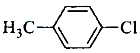
- The IUPAC name(s) of the following compound is(are)
 JEE Advanced 2017 Easy
 - Paragraph:
There are some deposits of nitrates and phosphates in earth's crust. Nitrates are more soluble in water. Nitrates are difficult to reduce under the laboratory conditions but microbes do it easily. Ammonia forms large number of complexes with transition metal ions. Hybridisation easily explains the ease of sigma donation capability of \(\mathrm{NH}_3\) and \(\mathrm{PH}_3\). Phosphine is a flammable gas and is prepared from white phosphorus.
Question:
Among the following, the correct statement isJEE Advanced 2008 Medium
More PYQs from JEE Advanced
- Paragraph:
When a particle is restricted to move along \(x\)-axis between \(x=0\) and \(x=a\), where \(a\) is of nanometer dimension, its energy can take only certain specific values. The allowed energies of the particle moving in such a restricted region, correspond to the formation of standing waves with nodes at its ends \(x=0\) and \(x=a\). The wavelength of this standing wave is related to the liner momentum \(p\) of the particle according to the de Broglie relation. The energy of the particle of mass \(m\) is related to its linear momentum as \(E=\frac{p^2}{2 m}\). Thus, the energy of the particle can be denoted by a quantum number \(n\) taking values \(1,2,3, \ldots(n=1\), called the ground state) corresponding to the number of loops in the standing wave.
Use the model described above to answer the following three questions for a particle moving in the line \(x=0\) to \(x=a\) [Take \(h=6.6 \times 10^{-34} \mathrm{Js}\) and \(e=1.6 \times 10^{-19} \mathrm{C}\) ]
Question:
The speed of the particle that can take discrete values is proportional toJEE Advanced 2009 Easy - A number is chosen at random from the set . Let be the probability that the chosen number is a multiple of 3 or . Then the value of is ____.JEE Advanced 2021 Easy
- The volume (in \(\mathrm{mL}\) ) of \(0.1 \mathrm{M} \mathrm{AgNO}_3\) required for complete precipitation of chloride ions present in \(30 \mathrm{~mL}\) of \(0.01 \mathrm{M}\) solution of \(\left[\mathrm{Cr}\left(\mathrm{H}_2 \mathrm{O}_{)_5} \mathrm{Cl}\right] \mathrm{Cl}_2\right.\), as silver chloride is close toJEE Advanced 2011 Easy
- The difference in the oxidation numbers of the two types of sulphur atoms in \(\mathrm{Na}_2 \mathrm{~S}_4 \mathrm{O}_6\) isJEE Advanced 2011 Medium
- When benzene sulphonic acid and \(p\)-nitrophenol are treated with \(\mathrm{NaHCO}_3\), the gases released respectively areJEE Advanced 2006 Hard
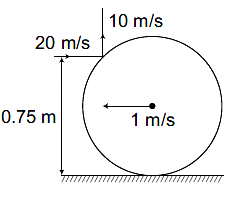
- A thin ring of mass \(2 \mathrm{~kg}\) and radius \(0.5 \mathrm{~m}\) is rolling without slipping on a horizontal plane with velocity 1 \(\mathrm{m} / \mathrm{s}\). A small ball of mass \(0.1 \mathrm{~kg}\), moving with velocity \(20 \mathrm{~m} / \mathrm{s}\) in the opposite directions, hits the ring at a height of \(0.75 \mathrm{~m}\) and goes vertically up with velocity 10 \(\mathrm{m} / \mathrm{s}\). Immediately after the collision
 JEE Advanced 2011 Medium