


WBJEE · Maths · Application of Derivatives
Let \(f(x)=x^3 e^{-3 x}, x > 0\). Then the maximum value of \(f(x)\) is
- A \(\mathrm{e}^{-3}\)
- B \(3 \mathrm{e}^{-3}\)
- C \(27 \mathrm{e}^{-9}\)
- D \(\infty\)
Answer & Solution
Correct Answer
(A) \(\mathrm{e}^{-3}\)
Step-by-step Solution
Detailed explanation
\(\begin{aligned} & \text { Hints: } f(x)=x^3 \cdot e^{-3 x} \\ & =f^{\prime}(x)=3 x^2 e^{-3 x}+x^3 e^{-3 x}(-3) \\ & =x^2 3 e^{-3 x}[1-x]=0, x=1 \\ & \text { Maximum at } x=1 \\ & f(1)=e^{-3} \end{aligned}\)
See the Complete Solution
Get step-by-step explanations for this and 2.5 Lakh+ more JEE, NEET & CET questions.
- Unlock all solutions
- Practice the full chapter
- Track accuracy across PYQs
4.8 rated on Google Play · 14,000+ reviews
More questions from Maths
- If \(0 \leq a, b \leq 3\) and the equation \(x^2+4+3 \cos (a x+b)=2 x\) has real solution, then the value of \((a+b)\) isWBJEE 2025 Hard
- If \(\cot \frac{2 x}{3}+\tan \frac{x}{3}=\operatorname{cosec} \frac{k x}{3},\) then the value of \(k\) isWBJEE 2015 Medium
- Let \(X_{n}=\left\{z=x+i y:|z|^{2} \leq \frac{1}{n}\right\}\) for all integers \(n \geq 1 .\) Then, \(\underset{n=1}{\cap} X_{n}\) isWBJEE 2014 Medium
- If \(\theta \in\left(\frac{\pi}{2}, \frac{3 \pi}{2}\right)\) then the value of \(\sqrt{4 \cos ^{4} \theta+\sin ^{2} 2 \theta}+4 \cot \theta \cos ^{2}\left(\frac{\pi}{4}-\frac{\theta}{2}\right)\) isWBJEE 2015 Hard
- If the vectors \(\vec{\alpha}=\hat{\mathbf{i}}+a \hat{\mathbf{j}}+\mathbf{a}^{2} \hat{\mathbf{k}}, \vec{\beta}=\hat{\mathbf{i}}+b \hat{\mathbf{j}}+\mathbf{b}^{2} \hat{\mathbf{k}}\), and \(\vec{\gamma}=\hat{\mathbf{i}}+c \hat{\mathbf{j}}+c^{2} \hat{k}\) are three non-coplanar vectors and \(\left|\begin{array}{lll}\mathbf{a} & \mathbf{a}^{2} & 1+\mathrm{a}^{3} \\ \mathbf{b} & \mathbf{b}^{2} & 1+\mathrm{b}^{3} \\ \mathrm{c} & \mathrm{c}^{2} & 1+\mathrm{c}^{3}\end{array}\right|=0\),
then the value of abc isWBJEE 2020 Easy - Let \(f(x)=x^{13}+x^{11}+x^{9}+x^{7}+x^{5}\)
\(+x^{3}+x+19 .\) Then, \(f(x)=0\) hasWBJEE 2017 Easy
More PYQs from WBJEE
- The number of lone pair of electrons and the hybridization of Xenon \((\mathrm{Xe})\) in \(\mathrm{XeOF}_2\) areWBJEE 2025 Easy
- \[
\text { Dipole moment of }
\]
is \(1.5 \mathrm{D}\). The dipole moment of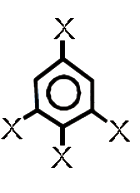
isWBJEE 2010 Easy - The normality of 30 volume \(\mathrm{H}_2 \mathrm{O}_2\) isWBJEE 2011 Easy
- A positive charge \(Q\) is situated at the centre of a cube. The electric flux through any face of the cube is (in SI units)WBJEE 2017 Easy
- For \(0 \leq P, Q \leq \frac{\pi}{2},\) if \(\sin P+\cos Q=2\), then the
value of \(\tan \left(\frac{\vec{P}+Q}{2}\right)\) is equal toWBJEE 2013 Medium - Which of the following carbocations will be most stable?WBJEE 2009 Medium