


WBJEE · Maths · Application of Derivatives
If \(f\) is a real-valued differentiable function such that \(f(x) f^{\prime}(x) < 0\) for all real \(x,\) then
- A \(f(x)\) must be an increasing function
- B \(f(x)\) must be a decreasing function
- C \(|f(x)|\) must be an increasing function
- D \(|f(x)|\) must be a decreasing function
Answer & Solution
Correct Answer
(D) \(|f(x)|\) must be a decreasing function
Step-by-step Solution
Detailed explanation
Given, \(f(x) f^{\prime}(x) 0\) and \(f^{\prime}(x) 0, \forall x \in R\) But \(|f(x)|=\left|\pm e^{-x}\right|=e^{-x}\) in both cases \(\therefore \frac{d}{d x}|f(x)|=-e^{-x} < 0\) in both case, \(\forall x \in R\) \(\Rightarrow|f(x)|\) must be a decreasing function
See the Complete Solution
Get step-by-step explanations for this and 2.5 Lakh+ more JEE, NEET & CET questions.
- Unlock all solutions
- Practice the full chapter
- Track accuracy across PYQs
4.8 rated on Google Play · 14,000+ reviews
More questions from Maths
- Let \(a_1, a_2, a_3, \ldots, a_n\) be positive real numbers. Then the minimum value of \(\frac{a_1}{a_2}+\frac{a_2}{a_3}+\ldots .+\frac{a_n}{a_1}\) isWBJEE 2023 Medium
- If \(x+\frac{1}{x}=2 \cos \theta\), then for any integer \(n, x^n+\frac{1}{x^n}=\)WBJEE 2011 Hard
- Let \(f: D \rightarrow R\) where \(D=[0,1] \cup[2,4]\) be defined by \(f(x)=\left\{\begin{array}{ll}x, & \text { if } x \in[0,1] \\ 4-x, & \text { if } x \in[2,4]\end{array}\right.\). Then,WBJEE 2021 Easy
- The value of \(\frac{\sin 55^0-\cos 55^{\circ}}{\sin 10^0}\) isWBJEE 2010 Easy
- Let \(P\) be the foot of the perpendicular from focus \(S\) of hyperbola \(\frac{x^{2}}{a^{2}}-\frac{y^{2}}{b^{2}}=1\) on the line \(b x-a y=0\) and let \(C\) be the centre of the hyperbola. Then, the area of the rectangle whose sides are equal to that of \(S P\) and \(C P\) isWBJEE 2017 Medium
- The eccentricity of the hyperbola \(4 x^2-9 y^2=36\) isWBJEE 2011 Easy
More PYQs from WBJEE
- The correct statement(s) about \(\mathrm{B}_2 \mathrm{H}_6\) is / are :WBJEE 2022 Easy
-
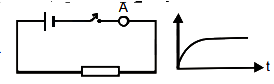
When a DC voltage is applied at the two ends of a circuit kept in closed box, it is observed that the current gradually increases from zero to a certain value and then remains constant. What do you think that the circuit contains?WBJEE 2020 Easy - Let \(\mathrm{A}=\left(\begin{array}{ccc}12 & 24 & 5 \\ \mathrm{x} & 6 & 2 \\ -1 & -2 & 3\end{array}\right) .\) The value of \(\mathrm{x}\) for which the matrix \(\mathrm{A}\) is not invertible isWBJEE 2020 Easy
- Cards are drawn one-by-one without replacement from a well shuffled pack of 52 cards. Then, the probability that a face card (jack, queen or king) will appear for the first time on the third turn is equal toWBJEE 2013 Medium
- Which one is not a constituent of nucleic acid?WBJEE 2011 Easy
- Let \(A=\left(\begin{array}{cc}x+2 & 3 x \\ 3 & x+2\end{array}\right), B=\left(\begin{array}{cc}x & 0 \\ 5 & x+2\end{array}\right)\). Then
all solutions of the equation det \((A B)=0\) isWBJEE 2017 Easy