


TS EAMCET · Maths · Pair of Lines
Area of the triangle formed by the lines \(3 x^2-4 x y+y^2=0,2 x-y=6\) is
- A 16 sq units
- B 25 sq units
- C 36 sq units
- D 49 sq units
Answer & Solution
Correct Answer
(C) 36 sq units
Step-by-step Solution
Detailed explanation
Given lines are \[ \begin{aligned} & 3 x^2-4 x y+y^2=0 \\ & \Rightarrow 3 x^2-3 x y-x y+y^2=0 \\ &(3 x-y)(x-y)=0 \\ & \Rightarrow 3 x-y=0, x-y=0 \\ & \text { and } 2 x-y=6 \end{aligned} \] The point of intersection of these lines are \((0,0),(-6,-18)\) and \((6,6)\).…
See the Complete Solution
Get step-by-step explanations for this and 2.5 Lakh+ more JEE, NEET & CET questions.
- Unlock all solutions
- Practice the full chapter
- Track accuracy across PYQs
4.8 rated on Google Play · 14,000+ reviews
More questions from Maths
- If \(\sin \theta \cosh \alpha=\tan x, \cos \theta \sinh \alpha=\sec x\), then \(\cos 2 \theta \cosh 2 \alpha=\)TS EAMCET 2020 Easy
- If \(A\) and \(B\) are events of a sample space such that \(P(A \cup B)=\frac{3}{4}, P(A \cap B)=\frac{1}{4}\) and \(P(\bar{A})=\frac{2}{3}\), then \(P(\bar{A} \cap B)\) isTS EAMCET 2020 Easy
- If \(|\mathbf{a}|=1,|\mathbf{b}|=2\) and the angle between \(\mathbf{a}\) and \(\mathbf{b}\) is \(120^{\circ}\), then \(\{(\mathbf{a}+3 \mathbf{b}) \times(3 \mathbf{a}-\mathbf{b})\}^2\) is equal toTS EAMCET 2011 Easy
- \(\left\{x \in R: \cos 2 x+2 \cos ^2 x=2\right\}\) is equal toTS EAMCET 2008 Easy
- If the perimeter of the triangle \(A B C\) is \(50 \mathrm{~cm}\), then \(b \cos ^2 \frac{C}{2}+c \cos ^2 \frac{B}{2}=\)TS EAMCET 2019 Easy
- \(\int_0^{\pi / 4} \frac{\sin x+\cos x}{7+9 \sin 2 x} d x\) is equal toTS EAMCET 2016 Hard
More PYQs from TS EAMCET
- If \(\alpha, \beta, 2 \beta\) are the real roots of the equation \(x^3-9 x^2+k=0\) and \(k \in \mathbb{R}-\{0\}\), then \(14 \beta=\)TS EAMCET 2022 Medium
- Among the following compounds, the one with the highest lactice energy isTS EAMCET 2021 Medium
- At 298 K, the enthalpy change (in kJ ) for the reaction given below is
\(\mathrm{CH}_4(g)+\mathrm{O}_2(g) \rightarrow \mathrm{C}(s)+2 \mathrm{H}_2 \mathrm{O}(l)\)
(Given): \(\mathrm{H}_2(g)+\frac{1}{2} \mathrm{O}_2(g) \rightarrow \mathrm{H}_2 \mathrm{O}(l) ; \Delta H^{\ominus}=-286 \mathrm{~kJ}\)
\(\mathrm{C}(s)+\mathrm{O}_2(g) \rightarrow \mathrm{CO}_2(g) ; \Delta H^{\ominus}=-394 \mathrm{~kJ}\)
\(\mathrm{CH}_4(g)+2 \mathrm{O}_2(g) \rightarrow \mathrm{CO}_2(g)+2 \mathrm{H}_2 \mathrm{O}(l) ; \Delta H^{\ominus}=-890 \mathrm{~kJ}\)TS EAMCET 2025 Medium - The formal charges of \(\mathrm{N}_{(1)}, \mathrm{N}_{(2)}\) and \(\mathrm{O}\) atoms in
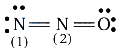
are respectivelyTS EAMCET 2011 Medium - A coil of resistance \(16 \Omega\) is placed with its plane perpendicular to a uniform magnetic field whose flux ( \(\phi\) in \(10^{-3}\) weber) changes with time ( t in second) as \(\phi=5 \mathrm{t}^2+4 \mathrm{t}+2\). The induced current at time \(t=6\) seconds isTS EAMCET 2025 Medium
- The major product ' \(Y\) ' in the given sequence of reactions is
\(\mathrm{C}_3 \mathrm{H}_7 \mathrm{OH} \xrightarrow[443 \mathrm{~K}]{\text { Conc. } \mathrm{H}_2 \mathrm{SO}_4} \mathrm{X} \xrightarrow[\left(\mathrm{C}_6 \mathrm{H}_5 \mathrm{CO}\right)_2 \mathrm{O}_2]{\mathrm{HBr}} \mathrm{Y}\)TS EAMCET 2024 Easy