


KCET · Maths · Application of Derivatives
The distance ' \(s\) ' in meters travelled by a particle in ' \(t\) ' seconds is given by \(s=\frac{2 t^3}{3}-18 t+\frac{5}{3}\). The acceleration when the particle comes to rest is
- A $10 \mathrm{~m}^2 / \mathrm{s}
- B \(12 \mathrm{~m}^2 / \mathrm{s}\)
- C \(18 \mathrm{~m}^2 / \mathrm{s}\)
- D \(3 \mathrm{~m}^2 / \mathrm{s}\)
Answer & Solution
Correct Answer
(B) \(12 \mathrm{~m}^2 / \mathrm{s}\)
Step-by-step Solution
Detailed explanation
Given,
\(\begin{aligned} & s=2 t^3-18 t+\frac{5}{3} \\ \Rightarrow \quad & \frac{d s}{d t}=6 t^2-18 \\ \Rightarrow \quad \frac{d^2 s}{d t^2} & =12 t\end{aligned}\)
We know that
\(\begin{array}{ll}\because \quad & v=u+a t \\ \Rightarrow \quad & 0=6 t^2-18+12 t^2 \\ \Rightarrow \quad 18 t^2 & =18 \\ \Rightarrow \quad & t=1 \mathrm{~s}\end{array}\)
After \(1 \mathrm{~s}\), particles comes to rest
So,
\(a=12 t\)
[From Eq. (i)]
\(\begin{aligned} & a=-12 \times 1 \mathrm{~m}^2 / \mathrm{s} \\ & a=12 \mathrm{~m}^2 / \mathrm{s}\end{aligned}\)
\(\begin{aligned} & s=2 t^3-18 t+\frac{5}{3} \\ \Rightarrow \quad & \frac{d s}{d t}=6 t^2-18 \\ \Rightarrow \quad \frac{d^2 s}{d t^2} & =12 t\end{aligned}\)
We know that
\(\begin{array}{ll}\because \quad & v=u+a t \\ \Rightarrow \quad & 0=6 t^2-18+12 t^2 \\ \Rightarrow \quad 18 t^2 & =18 \\ \Rightarrow \quad & t=1 \mathrm{~s}\end{array}\)
After \(1 \mathrm{~s}\), particles comes to rest
So,
\(a=12 t\)
[From Eq. (i)]
\(\begin{aligned} & a=-12 \times 1 \mathrm{~m}^2 / \mathrm{s} \\ & a=12 \mathrm{~m}^2 / \mathrm{s}\end{aligned}\)
See the Complete Solution
Get step-by-step explanations for this and 2.5 Lakh+ more JEE, NEET & CET questions.
- Unlock all solutions
- Practice the full chapter
- Track accuracy across PYQs
4.8 rated on Google Play · 14,000+ reviews
More questions from Maths
- Area of the region bounded by two parabolas \( y=x^{2} \) and \( x=y^{2} \) isKCET 2014 Hard
- Two dice are thrown simultaneously, the probability of obtaining a total score of \( 5 \) isKCET 2016 Medium
- The number of diagonals that can be drawn in an octagon isKCET 2025 Easy
- The equations of the two tangents from \((-5,-4)\) to the circle \(x^{2}+y^{2}+4 x+6 y+8=0\) areKCET 2012 Hard
- \(\lim _{n \rightarrow \infty}\left(\frac{n}{n^2+1^2}+\frac{n}{n^2+2^2}+\frac{n}{n^2+3^2}+\ldots+\frac{1}{5 n}\right)=\)KCET 2024 Hard
- Area of the region bounded by the curve \(y=\tan x\), the \(X\)-axis and line \(x=\frac{\pi}{3}\) isKCET 2022 Medium
More PYQs from KCET
- If the volume of the parallelopiped with \(\overrightarrow{\mathbf{a}}, \overrightarrow{\mathbf{b}}\) and \(\overrightarrow{\mathbf{c}}\) as coterminous edges is \(40 \mathrm{cu}\) unit, then the volume of the parallelopiped having \(\overrightarrow{\mathbf{b}}+\overrightarrow{\mathbf{c}}, \overrightarrow{\mathbf{c}}+\overrightarrow{\mathbf{a}}\) and \(\overrightarrow{\mathbf{a}}+\overrightarrow{\mathbf{b}}\) as coterminous edges in cubic unit isKCET 2009 Easy
- If \(f(x)\) and \(g(x)\) are two functions with \(g(x)=x-\frac{1}{x}\) and \(f \circ g(x)=x^3-\frac{1}{x^3}\), then \(f^{\prime}(x)\) is equals toKCET 2023 Medium
- If \(\mathbf{a}+2 \mathbf{b}+3 \mathbf{c}=0\) and \((\mathbf{a} \times \mathbf{b})+(\mathbf{b} \times \mathbf{c})+(\mathbf{c} \times \mathbf{a})=\lambda(\mathbf{b} \times \mathbf{c})\), then the value of \(\lambda\) is equal toKCET 2023 Easy
- For alkali metals, which one of the following trends is incorrect?KCET 2010 Medium
- Coersivity of a magnet where the ferromagnet gets completely demagnetized is \( 3 \times 10^{3} \mathrm{Am}^{-1} \)
The minimum current required to be passed in a solenoid having \( 1000 \) turns per metre, so
that the magnet gets completely demagnetized when placed inside the solenoid isKCET 2019 Hard - The IUPAC name of
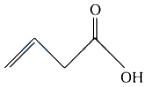
isKCET 2011 Easy