


KCET · Chemistry · Coordination Compounds
Which of the following is the most stable complex ion?
- A \([\text{Fe(CO)}_5]\)
- B \([\text{Fe(CN)}_6]^{3-}\)
- C \([\text{Fe}(\text{C}_2\text{O}_4)_3]^{3-}\)
- D \([\text{Fe}(\text{H}_2\text{O})_6]^{3+}\)
Answer & Solution
Correct Answer
(B) \([\text{Fe(CN)}_6]^{3-}\)
Step-by-step Solution
Detailed explanation
The stability of a complex ion depends primarily on the strength of the metal-ligand bonds.
The complex \([Fe(CO)_5]\) is a neutral coordination entity, not a complex ion.
For the ions \([Fe(CN)_6]^{3-}\), \([Fe(C_2O_4)_3]^{3-}\), and \([Fe(H_2O)_6]^{3+}\), the central metal ion is \(Fe^{3+}\) in all cases. The stability is thus determined by the nature of the ligands.
According to the spectrochemical series, the field strength of the ligands follows the order \(H_2O < C_2O_4^{2-} < CN^-\).
The cyanide ligand (\(CN^-\)) is a very strong field ligand. It acts as an excellent \(\sigma\)-donor and \(\pi\)-acceptor. The resulting synergic bonding creates an exceptionally strong bond between the iron ion and the cyanide ligands.
While the oxalate ion (\(C_2O_4^{2-}\)) is a bidentate chelating ligand and provides stability via the chelate effect, the thermodynamic stability constant for the cyanide complex is significantly higher than that for the oxalate complex due to the overwhelming strength of the \(Fe-CN\) bonds.
Therefore, \([Fe(CN)_6]^{3-}\) is the most stable complex ion among the given options.
The complex \([Fe(CO)_5]\) is a neutral coordination entity, not a complex ion.
For the ions \([Fe(CN)_6]^{3-}\), \([Fe(C_2O_4)_3]^{3-}\), and \([Fe(H_2O)_6]^{3+}\), the central metal ion is \(Fe^{3+}\) in all cases. The stability is thus determined by the nature of the ligands.
According to the spectrochemical series, the field strength of the ligands follows the order \(H_2O < C_2O_4^{2-} < CN^-\).
The cyanide ligand (\(CN^-\)) is a very strong field ligand. It acts as an excellent \(\sigma\)-donor and \(\pi\)-acceptor. The resulting synergic bonding creates an exceptionally strong bond between the iron ion and the cyanide ligands.
While the oxalate ion (\(C_2O_4^{2-}\)) is a bidentate chelating ligand and provides stability via the chelate effect, the thermodynamic stability constant for the cyanide complex is significantly higher than that for the oxalate complex due to the overwhelming strength of the \(Fe-CN\) bonds.
Therefore, \([Fe(CN)_6]^{3-}\) is the most stable complex ion among the given options.
See the Complete Solution
Get step-by-step explanations for this and 2.5 Lakh+ more JEE, NEET & CET questions.
- Unlock all solutions
- Practice the full chapter
- Track accuracy across PYQs
4.8 rated on Google Play · 14,000+ reviews
More questions from Chemistry
- IUPAC name of the compound is
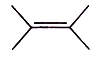 KCET 2023 Easy
 - The correct order in which the first ionisation potential increases isKCET 2008 Medium
- Catalysts are used to increase the rate of a chemical reaction. Because itKCET 2025 Easy
- Which of the following represents de Broglie equation?KCET 2026 Easy
- What is the oxidation number of \(S\) in \(\mathrm{H}_2 \mathrm{~S}_2 \mathrm{O}_8\) ?KCET 2023 Easy
- If the energies of the two photons in the ratio of \(3: 2\), their wavelength will be in the ratio ofKCET 2011 Medium
More PYQs from KCET
- Among the following, the compound that contains ionic, covalent and coordinate linkage isKCET 2009 Easy
- The value of \(\mid \frac{1+i \sqrt{3}}{\left(1+\frac{1}{i+1}\right)^{2}}\) isKCET 2011 Medium
- Read the following statements carefully and choose the correct statements.
(A) In a transcription unit, the promoter is located at the 5' end of coding strand.
(B) The single strand DNA having the polarity 5'→ 3' is the template strand.
(C) RNA polymerase binds to the operator during transcription.
(D) Single base DNA differences occur in humans are called Single Nucleotide Polymorphism (SNPs).KCET 2016 Hard - Higher order \((>3)\) reactions are rare due toKCET 2021 Easy
- A copper wire of length \(1 \mathrm{~m}\) and uniform cross-sectional area \(5 \times 10^{-7} \mathrm{~m}^{2}\) carries a current of \(1 \mathrm{~A}\). Assuming that, there are \(8 \times 10^{28}\) free electrons per \(\mathrm{m}^{3}\) in copper, how long will an electron take to drift from one end of the wire to the other?KCET 2021 Hard
- lodoform can be prepared from all, exceptKCET 2015 Easy