


KCET · Chemistry · Chemical Equilibrium
Consider the following gaseous equilibria with equilibrium constants \(K_{1}\) and \(K_{2}\) respectively,
\[
\begin{aligned}
&\mathrm{SO}_{2}(g)+\frac{1}{2} \mathrm{O}_{2}(g) \rightleftharpoons \mathrm{SO}_{3}(g) \\
&2 \mathrm{SO}_{3}(g) \rightleftharpoons 2 \mathrm{SO}_{2}(g)+\mathrm{O}_{2}(g)
\end{aligned}
\]
The equilibrium constants are related as
- A \(2 K_{1}=K_{2}^{2}\)
- B \(K_{1}^{2}=\frac{1}{K_{2}}\)
- C \(K_{2}^{2}=\frac{1}{K_{1}}\)
- D \(K_{2}=\frac{2}{K_{1}^{2}}\)
Answer & Solution
Correct Answer
(B) \(K_{1}^{2}=\frac{1}{K_{2}}\)
Step-by-step Solution
Detailed explanation
\(\mathrm{SO}_{2}(g)+\frac{1}{2} \mathrm{O}_{2}(g) \rightleftharpoons \mathrm{SO}_{3}(g)\)
... (i) \(K_{1}\) Equation (i) is reversed and multiplied by 2 \(2 \mathrm{SO}_{3}(g) \rightleftharpoons 2 \mathrm{SO}_{2}(g)+\mathrm{O}_{2}(g) \quad\) (i) \(\frac{1}{K_{1}^{2}}\) \(2 \mathrm{SO}_{3}(g) \rightleftharpoons 2 \mathrm{SO}_{2}(g)+\mathrm{O}_{2}(g)\)
(ii) \(K_{2}\) \(\therefore \quad K_{2}=\frac{1}{K_{1}^{2}}\)
\[
K_{1}^{2}=\frac{1}{K_{2}}
\]
... (i) \(K_{1}\) Equation (i) is reversed and multiplied by 2 \(2 \mathrm{SO}_{3}(g) \rightleftharpoons 2 \mathrm{SO}_{2}(g)+\mathrm{O}_{2}(g) \quad\) (i) \(\frac{1}{K_{1}^{2}}\) \(2 \mathrm{SO}_{3}(g) \rightleftharpoons 2 \mathrm{SO}_{2}(g)+\mathrm{O}_{2}(g)\)
(ii) \(K_{2}\) \(\therefore \quad K_{2}=\frac{1}{K_{1}^{2}}\)
\[
K_{1}^{2}=\frac{1}{K_{2}}
\]
See the Complete Solution
Get step-by-step explanations for this and 2.5 Lakh+ more JEE, NEET & CET questions.
- Unlock all solutions
- Practice the full chapter
- Track accuracy across PYQs
4.8 rated on Google Play · 14,000+ reviews
More questions from Chemistry
- The coordination number of \(F e\) and \(C o\) in the complex ions, \(\left.\mathrm{Fe}\left(\mathrm{C}_{2} \mathrm{O}_{4}\right)_{3}\right]^{3-}\) and \(\left[\mathrm{Co}(\mathrm{SCN})_{4}\right]^{2-}\) are respectivelyKCET 2020 Easy
- Consider the following 4 electrodes
\(\begin{aligned} & \mathrm{A}: \mathrm{Ag}^{+}(0.0001 \mathrm{M}) / \mathrm{Ag}(s) \\ & \mathrm{B}: \mathrm{Ag}^{+}(0.1 \mathrm{M}) / \mathrm{Ag}(s) \\ & \mathrm{C}: \mathrm{Ag}^{+}(0.01 \mathrm{M}) / \mathrm{Ag}(s) \\ & \mathrm{D}: \mathrm{Ag}^{+}(0.001 \mathrm{M}) / \mathrm{Ag}(s) ; E^{\circ}{ }_{\mathrm{Ag}^{+} / \mathrm{Ag}}=+0.80 \mathrm{~V}\end{aligned}\)
Then reduction potential in volts of the electrodes in the order.KCET 2023 Easy - Solubility product of \(\mathrm{CaC}_2 \mathrm{O}_4\) at a given temperature in pure water is \(4 \times 10^{-9}\left(\mathrm{~mol} \mathrm{~L}^{-1}\right)^2\). Solubility of \(\mathrm{CaC}_2 \mathrm{O}_4\) at the same temperature isKCET 2024 Medium
- A metal present in vitamin \(B_{12}\) isKCET 2007 Medium
- If the bond energies of \( \mathrm{H}-\mathrm{H}, \mathrm{Br}-\mathrm{Br} \) and \( \mathrm{H}-\mathrm{Br} \) are \( 433,192 \) and \( 364 \mathrm{~kJ} \mathrm{~mol}^{-1} \) respectively, then
\( \Delta \mathrm{H}^{\circ} \) for the reaction :
\( \mathrm{H}_{2}(g)+\mathrm{Br}_{2}(g) \rightarrow 2 \mathrm{HBr}(g) \)KCET 2016 Hard - The molar conductivity is maximum for the solution of concentrationKCET 2022 Medium
More PYQs from KCET
- Silicon doped with gallium formsKCET 2020 Easy
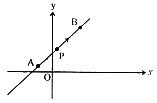
- A particle is moving uniformly along a straight line as shown in the figure. During the motion of the particle from A to B, the angular momentum of the particle about 'O'
 KCET 2019 Medium
 - The phenomenon called 'Apical dominance' in plants is due to a phytohormoneKCET 2016 Easy
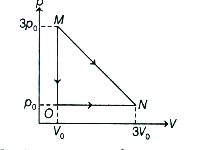
- One mole of an ideal monoatomic gas is taken round the cyclic process MNOM. The work done by the gas is
 KCET 2024 Easy
 - A circular plate of radius \(5 \mathrm{~cm}\) is heated. Due to expansion, its radius increase at the rate of \(0.05 \mathrm{~cm} / \mathrm{s}\). The rate at which its area is increasing when the radius is \(5.2 \mathrm{~cm}\) isKCET 2023 Easy
- In Young's double slit experiment, an electron beam is used to produce interference fringes of width \(\beta_1\). Now the electron beam is replaced by a beam of protons with the same experimental set-up and same speed. The fringe width obtained is \(\beta_2\). The correct relation between \(\beta_1\) and \(\beta_2\) isKCET 2024 Hard