


JEE Advanced · Physics · 28. Nuclear Physics
The \(\beta\)-decay process, discovered around 1900 , is basically the decay of a neutron \((n)\). In the laboratory, a proton \((p)\) and an electron \(\left(e^{-}\right)\)are observed as the decay products of the neutron. Therefore, considering the decay of a neutron as a two-body decay process, it was predicted theoretically that the kinetic energy of the electron should be a constant. But experimentally, it was observed that the electron kinetic energy has continuous spectrum. Considering a three-body decay process, i.e.
\(n \rightarrow p+e^{-}+\bar{v}_{e}\), around 1930, Pauli explained the observed electron energy spectrum. Assuming the anti-neutrino \(\left(\bar{v}_{e}\right)\) to be massless and possessing negligible energy, and the neutron to be at rest, momentum and energy conservation principles are applied. From this calculation, the maximum kinetic energy of the electron is \(0.8 \times 10^{6} \mathrm{eV}\). The kinetic energy carried by the proton is only the recoil energy.
Question:
What is the maximum energy of the anti-neutrino?
- A Zero
- B Much less than \(0.8 \times 10^{6} \mathrm{eV}\).
- C Nearly \(0.8 \times 10^{6} \mathrm{eV}\)
- D Much larger than \(0.8 \times 10^{6} \mathrm{eV}\)
Answer & Solution
Correct Answer
(C) Nearly \(0.8 \times 10^{6} \mathrm{eV}\)
Step-by-step Solution
Detailed explanation
\(\because K_{p}^{-}+K_{e}^{-}+K_{v}^{-}=0.8 \times 10^{6} \mathrm{eV}\)
When \(K_{e}^{-}=0\) then \(K_{p}^{-}+K_{v}^{-}=0.8 \times 10^{6} \mathrm{eV}\)
Mass of \(\bar{v}< < P \therefore\) maximum energy of anti-neutrino is nearly \(0.8 \times 10^{6} \mathrm{eV}\).
When \(K_{e}^{-}=0\) then \(K_{p}^{-}+K_{v}^{-}=0.8 \times 10^{6} \mathrm{eV}\)
Mass of \(\bar{v}< < P \therefore\) maximum energy of anti-neutrino is nearly \(0.8 \times 10^{6} \mathrm{eV}\).
See the Complete Solution
Get step-by-step explanations for this and 2.5 Lakh+ more JEE, NEET & CET questions.
- Unlock all solutions
- Practice the full chapter
- Track accuracy across PYQs
4.8 rated on Google Play · 14,000+ reviews
More questions from Physics
- A series \(R\) - \(C\) circuit is connected to \(A C\) voltage source. Consider two cases; \((A)\) when \(C\) is without a dielectric medium and \((B)\) when \(C\) is filled with dielectric of constant 4. The current \(I_R\) through the resistor and voltage \(V_C\) across the capacitor are compared in the two cases. Which of the following is/are true?JEE Advanced 2011 Easy
- A block is moving on an inclined plane making an angle \(45^{\circ}\) with the horizontal and the coefficient of friction is \(\mu\). The force required to just push it up the inclined plane is 3 times the force required to just prevent it from sliding down. If we define \(N=10 \mu\), then \(N\) isJEE Advanced 2011 Easy
- Two soap bubbles \(A\) and \(B\) are kept in a closed chamber where the air is maintained at pressure \(8 \mathrm{Nm}^{-2}\). The radii of bubbles \(A\) and \(B\) are \(2 \mathrm{~cm}\), respectively. Surface tension of the soap-water used to make bubbles is \(0.04\) \(\mathrm{Nm}^{-1}\). Find the ratio \(\frac{n_B}{n_A}\), where \(n_A\) and \(n_B\) are the number of moles of air in bubbles \(A\) and \(B\), respectively. [Neglect the effect of gravity]JEE Advanced 2009 Hard
- A silver sphere of radius \(1 \mathrm{~cm}\) and work function \(4.7 \mathrm{eV}\) is suspended from an insulating thread in free-space. It is under continuous illumination of \(200 \mathrm{~nm}\) wavelength light. As photoelectrons are emitted, the sphere gets charged and acquires a potential. The maximum number of photoelectrons emitted from the sphere is \(A \times 10^Z\) (where \(1 < A < 10\) ). The value of \(Z\) isJEE Advanced 2011 Medium
- A hot air balloon is carrying some passengers, and a few sandbags of mass each so that its total mass is . Its effective volume giving the balloon its buoyancy is . The balloon is floating at an equilibrium height of . When number of sandbags are thrown out, the balloon rises to a new equilibrium height close to with its volume remain unchanged. If the variation of the density of air with height from the ground is where and the value of is _________.JEE Advanced 2020 Hard
- Half-life of a radio active substance ' \(A\) ' is 4 days. The probability that a nucleus will decay in two half-lives isJEE Advanced 2006 Easy
More PYQs from JEE Advanced
- If \(r, s, t\) are prime numbers and \(p, q\) are the positive integers such that LCM of \(p, q\) is \(r^2 s^4 t^2\), then the number of ordered pairs \((p, q)\) isJEE Advanced 2006 Hard
- Let be the reflection of a point with respect to the plane given by
where are real parameters and are the unit vectors along the three positive coordinate axes. If the position vectors of and are and respectively, then which of the following is/are TRUE?JEE Advanced 2022 Easy - Paragraph :
Consider an evacuated cylindrical chamber of height \(h\) having rigid conducting plates at the ends and an insulating curved surface as shown in the figure. A number of spherical balls made of a light weight and soft material and coated with a conducting material are placed on the bottom plate. The balls have a radius \(r \ll h\). Now a high voltage source \((HV)\) is connected across the conducting plates such that the bottom plate is at \(+V_{0}\) and the top plate at \(-V_{0} .\) Due to their conducting surface, the balls will get charged, will become equipotential with the plate and are repelled by it. The balls will eventually collide with the top plate, where the coefficient of restitution can be taken to be zero due to the soft nature of the material of the balls. The electric field in the chamber can be considered to be that of a parallel plate capacitor. Assume that there are no collisions between the balls and the interaction between them is negligible. (Ignore gravity)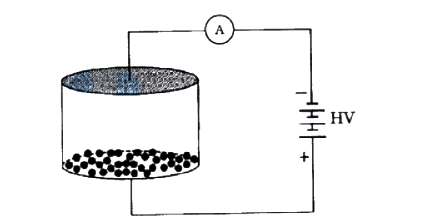
Question :
Which one of the following statements is correct?JEE Advanced 2016 Medium - Let \(\mathbb{N}\) denote the set of all natural numbers, and \(\mathbb{Z}\) denote the set of all integers. Consider the functions \(f: \mathbb{N} \rightarrow \mathbb{Z}\) and \(g: \mathbb{Z} \rightarrow \mathbb{N}\) defined by
\(f(n)= \begin{cases}(n+1) / 2 & \text { if } n \text { is odd } \\ (4-n) / 2 & \text { if } n \text { is even }\end{cases}\) And
\(g(n)=\left\{\begin{array}{cc}3+2 n & \text { if } n \geq 0 \\ -2 n & \text { if } n <0\end{array}\right.\)
Define \((g \circ f)(n)=g(f(n))\) for all \(n \in \mathbb{N}\), and \((f \circ g)(n)=f(g(n))\) for all \(n \in \mathbb{Z}\).
Then which of the following statements is (are) TRUE?JEE Advanced 2025 Hard - Coefficient of in the expansion of isJEE Advanced 2014 Hard
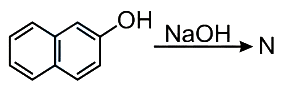
- The number of resonance structures for N is
 JEE Advanced 2015 Hard