


JEE Advanced · Physics · 15. Oscillations
A block with mass M is connected by a massless spring with stiffness constant k to a rigid wall and moves without friction on a horizontal surface. The block oscillates with small amplitude A about an equilibrium position . Consider two cases : (i) when the block is at and (ii) when the block is at In both the cases, a particle with mass m is softly placed on the block after which they stick to each other. Which of the following statement(s) is(are) true about the motion after the mass m is placed on the mass M?
- A The amplitude of oscillation in the first case changes by a factor of whereas in the second case it remains unchanged
- B The final time period of oscillation in both the cases is same
- C The total energy decreases in both the cases
- D The instantaneous speed at of the combined masses decreases in both the cases.
Answer & Solution
Correct Answer
(A) The amplitude of oscillation in the first case changes by a factor of whereas in the second case it remains unchanged
Step-by-step Solution
Detailed explanation
Case (i):
Velocity decreases at equilibrium position.
By energy conservation
Case (ii):
No energy loss, amplitude remains same
At equilibrium
In both cases decrease so velocity decreases in both cases
See the Complete Solution
Get step-by-step explanations for this and 2.5 Lakh+ more JEE, NEET & CET questions.
- Unlock all solutions
- Practice the full chapter
- Track accuracy across PYQs
4.8 rated on Google Play · 14,000+ reviews
More questions from Physics
- Match List I with List II and select the correct answer using the codes given below the lists:
\(\text{List I}\) \(\text{List II}\) a. Boltzmann constant p. \(\left[M L^2 T^{-1}\right]\) b. Coefficient of viscosity q. \(\left[M L^{-1} T^{-1}\right]\) c. Planck constant r. \(\left[M L T^{-3} K^{-1}\right]\) d. Thermal conductivity s. \(\left[M L^2 T^{-2} K^{-1}\right]\) JEE Advanced 2013 Easy - Paragraph:
Scientists are working hard to develop nuclear fusion reactor. Nuclei of heavy hydrogen, \({ }_1^2 \mathrm{H}\) known as deuteron and denoted by \(D\) can be thought of as a candidate for fusion reactor. The \(D\) - \(D\) reaction is \({ }_1^2 \mathrm{H}+{ }_1^2 \mathrm{H} \rightarrow{ }_2^3 \mathrm{He}+n+\) energy. In the core of fusion reactor. A gas of heavy hydrogen is fully ionized into deuteron nuclei and electrons. This collection of \({ }_1^4 \mathrm{H}\) nuclei and electrons is known as plasma. The nuclei move randomly in the reactor core and occasionally come close enough for nuclear fusion to take place. Usually, the temperatures in the reactor core are too high and no material wall can be used to confine the plasma. Special techniques are used which confine the plasma for a time \(t_0\) before the particles fly away from the core. If n is the density (number/volume) of deutrons, the product t \(_0\) is called Lawson number. In one of the criteria, \(a\) reactor is termed successful if Lawson number is greater than \(5 \times 10^{14} \mathrm{scm}^{-3}\).
It may be helpful to use the following : Boltzmann constant \(k=8.6 \times 10^{-5} \mathrm{eV} / \mathrm{K}\); \(\frac{e^2}{4 \pi \varepsilon_0}=1.44 \times 10^{-9} \mathrm{eVm}\)
Question:
In the core of nuclear fusion reactor, the gas becomes plasma because ofJEE Advanced 2009 Medium - A large spherical mass is fixed at one position and two identical point masses are kept on a line passing through the centre of (see figure). The point masses are connected by a rigid massless rod of length and this assembly is free to move along the line connecting them. All three masses interact only through their mutual gravitational interaction. When the point mass nearer to is at a distance from , the tension in the rod is zero for . The value of is
 JEE Advanced 2015 Medium
 - Paragraph:
The nuclear charge \((\mathrm{Ze})\) is non-uniformly distributed within a nucleus of radius \(R\). The charge density \(\rho(r)\) [charge per unit volume] is dependent only on the radial distance \(r\) from the centre of the nucleus as shown in figure. The electric field is only along the radial direction.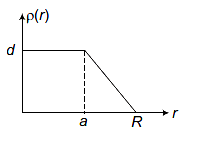
Question:
The electric field at \(r=R\) isJEE Advanced 2008 Medium - In the figure, a ladder of mass m is shown leaning against a wall. It is in static equilibrium making an angle with the horizontal floor. The coefficient of friction between the wall and the ladder is and that between the floor and the ladder is . The normal reaction of the wall on the ladder is and that of the floor is If the ladder is about to slip, then
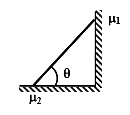 JEE Advanced 2014 Medium
 - The energy of a system as a function of time is given as , where . The measurement of has an error of 1.25%. If the error in the measurement of time is 1.50%, the percentage error in the value of at s isJEE Advanced 2015 Easy
More PYQs from JEE Advanced
- A radioactive sample \(S_1\) having an activity of \(5 \mu \mathrm{Ci}\) has twice the number of nuclei as another sample \(S_2\) which has an activity of \(10 \mu \mathrm{Ci}\). The half lives of \(S_1\) and \(S_2\) can beJEE Advanced 2008 Medium
- For all \(x>0\), let \(y_1(x), y_2(x)\), and \(y_3(x)\) be the functions satisfying
\(\begin{aligned} & \frac{d y_1}{d x}-(\sin x)^2 y_1=0, y_1(1)=5 \\ & \frac{d y_2}{d x}-(\cos x)^2 y_2=0, y_2(1)=\frac{1}{3} \\ & \frac{d y_3}{d x}-\left(\frac{2-x^3}{x^3}\right) y_3=0, y_3(1)=\frac{3}{5 e}\end{aligned}\)
respectively. Then \(\lim _{x \rightarrow 0^{+}} \frac{y_1(x) y_2(x) y_3(x)+2 x}{e^{3 x} \sin x}\) is equal to _____JEE Advanced 2025 Hard - A hyperbola, having the transverse axis of length \(2 \sin \theta\), is confocal with the ellipse \(3 x^2+4 y^2=12\). Then, its equation isJEE Advanced 2007 Medium
- Match the four starting materials (P, Q, R, S) given in List I with the corresponding reaction schemes (I, II, III, IV) provided in List II and select the correct answer using the code given below the lists.
List – I List – II A. 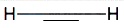
P. 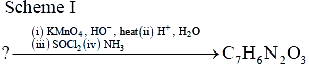
B. 
Q. 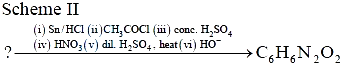
C. 
R. 
D. 
S.  JEE Advanced 2014 Hard
 - Suppose that are three non - coplanar vectors in . Let the components of a vector along \(p, q\) and \(r\) be 4,3 and 5 respectively. If the components of are x, y and z, respectively, then the value of isJEE Advanced 2015 Medium
- \(\mathrm{B}(\mathrm{OH})_3+\mathrm{NaOH} \rightleftharpoons \mathrm{NaBO}_2+\mathrm{Na}[\mathrm{B}\)\((\mathrm{OH})_4]+\mathrm{H}_2 \mathrm{O}\).
How can this reaction is made to proceed in forward direction?JEE Advanced 2006 Medium