


TS EAMCET · Maths · Probability
For \(k=1,2,3\) the box \(B_k\) contains \(k\) red balls and \((k+1)\) white balls. Let \(P\left(B_1\right)=\frac{1}{2}\), \(P\left(B_2\right)=\frac{1}{3}\) and \(P\left(B_3\right)=\frac{1}{6}\). A box is selected at random and a ball is drawn from it. If a red ball is drawn, then the probability that it has come from box \(B_2\), is
- A \(\frac{35}{78}\)
- B \(\frac{14}{39}\)
- C \(\frac{10}{13}\)
- D \(\frac{12}{13}\)
Answer & Solution
Correct Answer
(B) \(\frac{14}{39}\)
Step-by-step Solution
Detailed explanation
In a box, \[ \begin{aligned} B_1 & =1 R, 2 W \\ B_2 & =2 R, 3 W \\ \text { and } \quad B_3 & =3 R, 4 W \end{aligned} \] Also, given that,…
See the Complete Solution
Get step-by-step explanations for this and 2.5 Lakh+ more JEE, NEET & CET questions.
- Unlock all solutions
- Practice the full chapter
- Track accuracy across PYQs
4.8 rated on Google Play · 14,000+ reviews
More questions from Maths
- If the lines joining the origin to the points of intersection of the line \(x+y=k\) and the curve \(x^2+y^2-2 x-4 y+2=0\) are at right angles then the sum of all the possible values of \(k\) isTS EAMCET 2022 Medium
- Two points \(P(a, 2)\) and \(Q(1, b)\) lie on either side of the line \(2 x-3 y+1=0\). If \(P\) is the point of intersection of the lines \(4 x+3 y+k=0\) and \(3 x+4 y+k=0\), then the range of \(b\) isTS EAMCET 2023 Easy
- TS EAMCET 2021 Easy
- If \(\frac{x^5-5}{x^3+x^2}=f(x)+\frac{A}{x}+\frac{B}{x^2}+\frac{C}{x+1}\), then the larger value of \(K\) for which \(f(K)+A+B+C=1\), isTS EAMCET 2020 Medium
- If \(x=\sin 2 \theta \cos 3 \theta, y=\sin 3 \theta \cos 2 \theta\), then \(\frac{d y}{d x}=\)TS EAMCET 2025 Medium
- If \(A=\left[\begin{array}{lll}1 & 2 & 2 \\ 3 & 2 & 3 \\ 1 & 1 & 2\end{array}\right]\) and \(A^{-1}=\left[\begin{array}{lll}a_{11} & a_{12} & a_{13} \\ a_{21} & a_{22} & a_{23} \\ a_{31} & a_{32} & a_{33}\end{array}\right]\), then \(\sum_{\substack{1 \leq i \leq 3 \\ 1 \leq j \leq 3}} a_{i j}=\)TS EAMCET 2024 Medium
More PYQs from TS EAMCET
- A constant force of accelerates a stationary particle of mass through a displacement of The average power delivered isTS EAMCET 2021 Medium
- Arrange the following in decreasing order of their boiling points
(A) 2 -Methylbutane
(B) 2,2 - Dimethylpropane
(C) Pentane
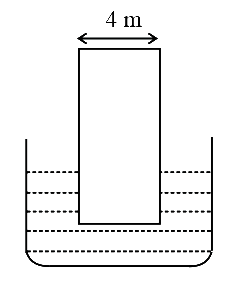
(D) HexaneTS EAMCET 2025 Medium - A metal sheet on a side and of negligible thickness is attached to a balance and inserted into container fluid. The balance to which metal sheet is attached reads and the contact angle is found to be zero. A small amount of oil is then spread over the metal sheet. The contact angle now becomes and the balance now reads The surface tension of the fluid is
 TS EAMCET 2021 Easy
 - Find the radius of \(\mathrm{Be}^{3+}\) ions in its ground state assuming Bohr's model to be valid \(\left(a_0=53 \mathrm{pm}\right)\).TS EAMCET 2021 Easy
- Consider the following electrode processes of a cell, \[ \mathrm{Cl}^{-} \rightarrow \frac{1}{2} \mathrm{Cl}_2+e^{-} \quad\left[\mathrm{MCl}+e^{-} \rightarrow M+\mathrm{Cl}^{-}\right] \] If EMF of this cell is \(-1.140 \mathrm{~V}\) and \(E^{\circ}\) value of the cell is \(-0.55 \mathrm{~V}\) at \(298 \mathrm{~K}\), the value of the equilibrium constant of the sparingly soluble salt \(M \mathrm{Cl}\) is in the order ofTS EAMCET 2017 Hard
- If \(\quad f: R \rightarrow R \quad\) is defined by \(f(x)=7+\cos (5 x+3)\) for \(x \in R\), then the period of \(f\) isTS EAMCET 2011 Easy