


TS EAMCET · Chemistry · s Block Elements
Match the following
| List-1(Chemical) | List-2(Use) | ||
|---|---|---|---|
| A | KOH | I | Coolant |
| B | Na(l) | II | Antacid |
| C | Li | III | Electrochemical Cells |
| D | \(\mathrm{Mg}(\mathrm{OH})_2\) | IV | Absorbent for \(\mathrm{CO}_2\) |
The correct answer is
- A \(\mathrm{A}-\mathrm{II}, \mathrm{B}-\mathrm{III}, \mathrm{C}-\mathrm{IV}, \mathrm{D}-\mathrm{I}\)
- B \(\mathrm{A}-\mathrm{IV}, \mathrm{B}-\mathrm{I}, \mathrm{C}-\mathrm{III}, \mathrm{D}-\mathrm{II}\)
- C \(\mathrm{A}-\mathrm{IV}, \mathrm{B}-\mathrm{III}, \mathrm{C}-\mathrm{II}, \mathrm{D}-\mathrm{I}\)
- D \(\mathrm{A}-\mathrm{III}, \mathrm{B}-\mathrm{IV}, \mathrm{C}-\mathrm{I}, \mathrm{D}-\mathrm{II}\)
Answer & Solution
Correct Answer
(B) \(\mathrm{A}-\mathrm{IV}, \mathrm{B}-\mathrm{I}, \mathrm{C}-\mathrm{III}, \mathrm{D}-\mathrm{II}\)
Step-by-step Solution
Detailed explanation
NO SOLUTION
See the Complete Solution
Get step-by-step explanations for this and 2.5 Lakh+ more JEE, NEET & CET questions.
- Unlock all solutions
- Practice the full chapter
- Track accuracy across PYQs
4.8 rated on Google Play · 14,000+ reviews
More questions from Chemistry
- The correct increasing order of ionisation enthalpy of \(\mathrm{He}, \mathrm{Li}^{+}, \mathrm{Be}^{2+}\) isTS EAMCET 2018 Medium
- Example of a biodegradable polymer pair isTS EAMCET 2013 Easy
- The delocalization of \(\sigma\) electrons of \(\mathrm{C}-\mathrm{H}\) bond of an alkyl group with the \(\pi\) electrons of benzene is observed inTS EAMCET 2023 Easy
- The hybridisation of \(\mathrm{N}\) in \(\mathrm{NO}_2^{+}, \mathrm{NO}_3\) and \(\mathrm{NH}_4^{+}\) respectively isTS EAMCET 2018 Medium
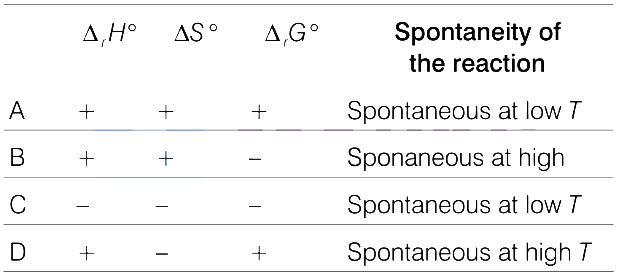
- Which of the following options are correct?
 TS EAMCET 2021 Medium
 - Identify \(X, Y\) and \(Z\) respectively in the following reaction sequence : Acetic acid \(\underset{\substack{\text { (iii) } \mathrm{C}_6 \mathrm{H}_5 \mathrm{SO}_2 \mathrm{Cl} \ \text { Pyridine } / 343 \mathrm{~K}}}{\stackrel{\left.\text { (i) } \mathrm{NH}_3, \mathrm{ii}\right)}{\longrightarrow}} X+Y+Z\)TS EAMCET 2019 Hard
More PYQs from TS EAMCET
- If \(\tan (\pi \cos \theta)=\cot (\pi \sin \theta)\), then a value of \(\cos \left(\theta-\frac{\pi}{4}\right)\) among the following isTS EAMCET 2013 Medium
- A particle of mass \(4 m\) explodes into three pieces of masses \(m, m\) and \(2 \mathrm{~m}\). The equal masses move along \(X\)-axis and \(Y\)-axis with velocities \(4 \mathrm{~ms}^{-1}\) and \(6 \mathrm{~ms}^{-1}\) respectively. The magnitude of the velocity of the heavier mass isTS EAMCET 2009 Medium
- When \(X\) amperes of current is passed through molten \(\mathrm{AlCl}_3\) for \(96.5 \mathrm{~s}, 0.09 \mathrm{~g}\) of aluminium is deposited. What is the value of \(X\) ?TS EAMCET 2003 Easy
- The formula of borax isTS EAMCET 2018 Easy
- When 54 g of ice at \(-20^{\circ} \mathrm{C}\) is mixed with 25 g of steam at \(100^{\circ} \mathrm{C}\), then the final mixture at thermal equilibrium containsTS EAMCET 2024 Easy
- A body cools from a temperature of \(60^{\circ} \mathrm{C}\) to \(50^{\circ} \mathrm{C}\) in 10 minutes and \(50^{\circ} \mathrm{C}\) to \(40^{\circ} \mathrm{C}\) in 15 minutes. The time taken in minutes for the body to cool from \(40^{\circ} \mathrm{C}\) to \(30^{\circ} \mathrm{C}\) isTS EAMCET 2025 Medium