


KCET · Maths · Differential Equations
The solution of the differential equation \(\frac{d y}{d x}=(x+y)^2\) is
- A \(\tan ^{-1}(x+y)=x+C\)
- B \(\tan ^{-1}(x+y)=0\)
- C \(\cot ^{-1}(x+y)=C\)
- D \(\cot ^{-1}(x+y)=x+C\)
Answer & Solution
Correct Answer
(A) \(\tan ^{-1}(x+y)=x+C\)
Step-by-step Solution
Detailed explanation
\(\frac{d y}{d x}=(x+y)^2\)
Let \(x+y=t \Rightarrow 1+\frac{d y}{d x}=\frac{d t}{d x}\)
Eq. (i) can be written as
\[
\begin{gathered}
\frac{d t}{d x}-1=t^2 \\
\Rightarrow \quad \frac{d t}{d x}=t^2+1 \Rightarrow \frac{d t}{t^2+1}=d x
\end{gathered}
\]
\(\begin{aligned} & \Rightarrow \int \frac{d t}{t^2+1}=\int d x \Rightarrow \tan ^{-1} t=x+C \\ & \Rightarrow \quad \tan ^{-1}(x+y)=x+C\end{aligned}\)
Let \(x+y=t \Rightarrow 1+\frac{d y}{d x}=\frac{d t}{d x}\)
Eq. (i) can be written as
\[
\begin{gathered}
\frac{d t}{d x}-1=t^2 \\
\Rightarrow \quad \frac{d t}{d x}=t^2+1 \Rightarrow \frac{d t}{t^2+1}=d x
\end{gathered}
\]
\(\begin{aligned} & \Rightarrow \int \frac{d t}{t^2+1}=\int d x \Rightarrow \tan ^{-1} t=x+C \\ & \Rightarrow \quad \tan ^{-1}(x+y)=x+C\end{aligned}\)
See the Complete Solution
Get step-by-step explanations for this and 2.5 Lakh+ more JEE, NEET & CET questions.
- Unlock all solutions
- Practice the full chapter
- Track accuracy across PYQs
4.8 rated on Google Play · 14,000+ reviews
More questions from Maths
- The equation of the plane through the points \((2,1,0),(3,2,-2)\) and \((3,1,7)\) isKCET 2023 Easy
- Let \(a=i+j+k, b=i-j+k\) and \(c=i-j-k\) be three vectors. A vector \(v\) in the plane of a and \(b\), whose projection on \(c\) is \(1 / \sqrt{3}\), is given byKCET 2015 Medium
- Let \( S \) be the set of all real numbers. A relation \( R \) has been defined on \( S \) by \( a R b \Leftrightarrow |a-b| \leq 1 \),
then \( R \) isKCET 2014 Medium - If \( 21^{\text {st }} \) and \( 22^{\text {nd }} \) terms in the expansion of \( (1+x)^{44} \) are equal, then \( x \) is equal toKCET 2014 Easy
- \(A\) and \(B\) are non-singleton sets and \(n(A \times B)=35\). If \(B \subset A\), then \({ }^{n(A)} C_{n(B)}\) is equal toKCET 2021 Easy
- A circular plate of radius \(5 \mathrm{~cm}\) is heated. Due to expansion, its radius increase at the rate of \(0.05 \mathrm{~cm} / \mathrm{s}\). The rate at which its area is increasing when the radius is \(5.2 \mathrm{~cm}\) isKCET 2023 Easy
More PYQs from KCET
- A sphere, a cube and a thin circular plate all of same material and same mass initially heated to same high temperature are allowed to cool down under similar conditions. Then, theKCET 2020 Medium
- In equilibrium state the value of \(\Delta G\) isKCET 2007 Easy
- Paracetamol is a/anKCET 2007 Medium
- The energy equivalent to a substance of mass \( 1 \mathrm{~g} \) isKCET 2018 Medium
- Match the following.
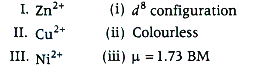
CodesKCET 2024 Hard - Mesomeric effect involves delocalisation ofKCET 2008 Easy