


KCET · Maths · Vector Algebra
If \(\mathbf{a}=(1,2,3), \mathbf{b}=(2,-1,1), \mathbf{c}=(3,2,1)\) and \(\mathbf{a} \times(\mathbf{b} \times \mathbf{c})=\alpha \mathbf{a}+\beta \mathbf{b}+\gamma \mathbf{c}\), then
- A \(\alpha=1, \beta=10, \gamma=3\)
- B \(\alpha=0, \beta=10, \gamma=-3\)
- C \(\alpha+\beta+\gamma=8\)
- D \(\alpha=\beta=\gamma=0\)
Answer & Solution
Correct Answer
(B) \(\alpha=0, \beta=10, \gamma=-3\)
Step-by-step Solution
Detailed explanation
Given,
\(a=(1,2,3)=i+2 j+3 k\)
\(b=(2,-1,1)=2 i-j+k\)
\(\begin{array}{ll}\text { and } & c=(3,2,1)=3 i+2 j+k \\ \text { Now, } & a \times(b \times c)=\alpha a+\beta b+\gamma c \\ \Rightarrow & (a \cdot c) b-(a \cdot b) c=\alpha a+\beta b+\gamma c \\ \Rightarrow & \{(i+2 j+3 k) \cdot(3 i+2 j+k)\} b \\ & \quad-\{(i+2 j+3 k) \cdot(2 i-j+k)\} c\end{array}\)
\(\begin{aligned}
&=\alpha a+\beta b+\gamma c \\
\Rightarrow &(3+4+3) b-(2-2+3) c=\alpha a+\beta b+\gamma c \\
\Rightarrow & 0 a+10 b-3 c=\alpha a+\beta b+\gamma c
\end{aligned}\)
On comparing, we get
\(\alpha=0, \beta=10 \text { and } \gamma=-3\)
\(a=(1,2,3)=i+2 j+3 k\)
\(b=(2,-1,1)=2 i-j+k\)
\(\begin{array}{ll}\text { and } & c=(3,2,1)=3 i+2 j+k \\ \text { Now, } & a \times(b \times c)=\alpha a+\beta b+\gamma c \\ \Rightarrow & (a \cdot c) b-(a \cdot b) c=\alpha a+\beta b+\gamma c \\ \Rightarrow & \{(i+2 j+3 k) \cdot(3 i+2 j+k)\} b \\ & \quad-\{(i+2 j+3 k) \cdot(2 i-j+k)\} c\end{array}\)
\(\begin{aligned}
&=\alpha a+\beta b+\gamma c \\
\Rightarrow &(3+4+3) b-(2-2+3) c=\alpha a+\beta b+\gamma c \\
\Rightarrow & 0 a+10 b-3 c=\alpha a+\beta b+\gamma c
\end{aligned}\)
On comparing, we get
\(\alpha=0, \beta=10 \text { and } \gamma=-3\)
See the Complete Solution
Get step-by-step explanations for this and 2.5 Lakh+ more JEE, NEET & CET questions.
- Unlock all solutions
- Practice the full chapter
- Track accuracy across PYQs
4.8 rated on Google Play · 14,000+ reviews
More questions from Maths
- If direction cosines of a vector of magnitude 3 are \(\frac{2}{3},-\frac{1}{3}, \frac{2}{3}\) and \(a>0\), then vector isKCET 2015 Easy
- If \(P(n): 2^{n} < n\) ! Then the smallest positive integer for which \(P(n)\) is true ifKCET 2020 Easy
- The number of terms in the expansion of \( \left(x^{2}+y^{2}\right)^{25}-\left(x^{2}-y^{2}\right)^{25} \) after simplification isKCET 2019 Medium
- \(\lim _{x \rightarrow 0} \frac{\log _{e}(1+x)}{3^{x}-1}\) is equal toKCET 2013 Easy
- \(A B C\) is a triangle with \(\angle A=30^{\circ}, B C=10 \mathrm{~cm}\). The area of the circumcircle of the triangle isKCET 2007 Medium
- The locus of the point of intersection of perpendicular tangents to the ellipse is calledKCET 2012 Hard
More PYQs from KCET
- Mass of \(0.1\) mole of methane isKCET 2008 Easy
- In the given figure, the magnetic field at \(O\).
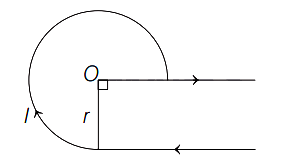 KCET 2020 Easy
 - One of the chief reasons among the following for the depletion in the number of species making it endangered isKCET 2014 Medium
- For constant \(a, \frac{d}{d x}\left(x^{x}+x^{a}+a^{x}+a^{a}\right)\) isKCET 2021 Medium
- Potential difference between \( A \) and \( B \) in the following circuit
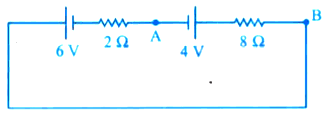 KCET 2016 Medium
 - Identify the correct statement in the following :KCET 2017 Medium