


KCET · Maths · Sequences and Series
If \( 1+\sin \theta+\sin ^{2} \theta+\ldots . \) upto \( \infty=2 \sqrt{3}+4 \), then \( \theta= \)
- A \( \frac{\pi}{6} \)
- B \( \frac{\pi}{4} \)
- C \( \frac{\pi}{3} \)
- D \( \frac{3 \pi}{4} \)
Answer & Solution
Correct Answer
(C) \( \frac{\pi}{3} \)
Step-by-step Solution
Detailed explanation
Given that,
\(1+\sin \theta+\sin ^{2} \theta+\ldots+\infty=2 \sqrt{3}+4\)
We know that \(S_{\infty}=\frac{a}{1-r}\)
Here \(a=1\) and \(r=\sin \theta\)
\[
\begin{array}{l}
\text { So, } \frac{1}{1-\sin \theta}=2 \sqrt{3}+4 \\
\Rightarrow 1-\sin \theta=\frac{1}{2 \sqrt{3}+4} \\
\Rightarrow 1-\sin \theta=\frac{1}{2 \sqrt{3}+4} \times \frac{2 \sqrt{3}-4}{2 \sqrt{3}-4} \\
\Rightarrow 1-\sin \theta=\frac{2 \sqrt{3}-4}{12-16}=\frac{2 \sqrt{3}-4}{-4} \\
\Rightarrow 1-\sin \theta=\frac{-\sqrt{3}}{2}+1 \\
\Rightarrow 1-\sin \theta=\frac{-\sqrt{3}}{2}+1 \\
\Rightarrow \sin \theta=\frac{\sqrt{3}}{2} \Rightarrow \theta=\frac{\pi}{3}
\end{array}
\]
\(1+\sin \theta+\sin ^{2} \theta+\ldots+\infty=2 \sqrt{3}+4\)
We know that \(S_{\infty}=\frac{a}{1-r}\)
Here \(a=1\) and \(r=\sin \theta\)
\[
\begin{array}{l}
\text { So, } \frac{1}{1-\sin \theta}=2 \sqrt{3}+4 \\
\Rightarrow 1-\sin \theta=\frac{1}{2 \sqrt{3}+4} \\
\Rightarrow 1-\sin \theta=\frac{1}{2 \sqrt{3}+4} \times \frac{2 \sqrt{3}-4}{2 \sqrt{3}-4} \\
\Rightarrow 1-\sin \theta=\frac{2 \sqrt{3}-4}{12-16}=\frac{2 \sqrt{3}-4}{-4} \\
\Rightarrow 1-\sin \theta=\frac{-\sqrt{3}}{2}+1 \\
\Rightarrow 1-\sin \theta=\frac{-\sqrt{3}}{2}+1 \\
\Rightarrow \sin \theta=\frac{\sqrt{3}}{2} \Rightarrow \theta=\frac{\pi}{3}
\end{array}
\]
See the Complete Solution
Get step-by-step explanations for this and 2.5 Lakh+ more JEE, NEET & CET questions.
- Unlock all solutions
- Practice the full chapter
- Track accuracy across PYQs
4.8 rated on Google Play · 14,000+ reviews
More questions from Maths
- If \(A\) and \(B\) are two independent events such that \(P(\bar{A})=0.75, P(A \cup B)=0.65\) and \(P(B)=x\), then find the value of \(x\).KCET 2022 Hard
- \(\int_{1}^{3} \frac{\sqrt{4-\mathrm{x}}}{\sqrt{\mathrm{x}}+\sqrt{4-\mathrm{x}}} \mathrm{dx}\) is equal toKCET 2009 Medium
- If the value of \(C_{0}+2 \cdot C_{1}+3 \cdot C_{2}+\ldots+(n+1) \cdot C_{n}=576\), then \(n\) is equal toKCET 2013 Hard
- The value of
\(e^{\log _{10} \tan 1^{\circ}+\log _{10} \tan 2^{\circ}+\log _{10} \tan 3^{\circ}+\ldots+\log _{10} \tan 89^{\circ}}\)
isKCET 2023 Medium - \(\int e^{-x \log 2} \cdot 2^x\,dx = \)KCET 2026 Easy
- If \(y=\sin x \cdot \sin 2 x \cdot \sin 3 x \ldots \sin n x\), then \(y^{\prime}\) isKCET 2011 Medium
More PYQs from KCET
- Sarcomere is the functional unit of contraction in a muscle fibre. Identify the portion of myofibril that constitute a sarcomere.KCET 2016 Medium
- Identify the correct equation for Hardy - Weinberg law.KCET 2016 Medium
- If \( 3.01 \times 10^{20} \) molecules are removed from \( 98 \mathrm{mg} \) of \( \mathrm{H}_{2} \mathrm{SO}_{4} \), then number of moles of
\( \mathrm{H}_{2} \mathrm{SO}_{4} \) left areKCET 2017 Medium - The correct IUPAC name of
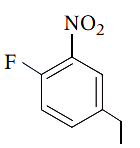 KCET 2021 Easy
 - The area of the region bounded by \(y=2 x-x^{2}\) and the \(x\)-axis isKCET 2008 Easy
- In series \(L C R\) circuit at resonance, the phase difference between voltage and current isKCET 2023 Easy