


KCET · Maths · Application of Derivatives
A sphere increases its volume at the rate of \(\pi \mathrm{cc} / \mathrm{s}\). The rate at which its surface area increases when the radius is \(1 \mathrm{~cm}\) is
- A \(2 \pi \mathrm{sq} \mathrm{cm} / \mathrm{s}\)
- B \(\pi \mathrm{sq} \mathrm{cm} / \mathrm{s}\)
- C \(\frac{3 \pi}{2} \mathrm{sq} \mathrm{cm} / \mathrm{s}\)
- D \(\frac{\pi}{2} \mathrm{sq} \mathrm{cm} / \mathrm{s}\)
Answer & Solution
Correct Answer
(A) \(2 \pi \mathrm{sq} \mathrm{cm} / \mathrm{s}\)
Step-by-step Solution
Detailed explanation
Given rate of increase volume of sphere is
\[
\frac{d V}{d t}=\pi
\]
We know that,
Volume of sphere; \(V=\frac{4}{3} \pi r^{3}\)
\(\Rightarrow \quad \frac{d V}{d t}=\frac{4}{3} \pi \cdot 3 r^{2} \cdot \frac{d r}{d t}=4 \pi r^{2} \frac{d r}{d t}\)
\(\Rightarrow \quad \pi=4 \pi r^{2} \frac{d r}{d t} ; \quad\) [from Eq. (i)]
\(\Rightarrow \quad \frac{d r}{d t}=\frac{1}{4 r^{2}}\)
5
Also, we know that, surface of sphere,
\[
\begin{aligned}
&S=4 \pi r^{2} \\
&\Rightarrow \quad \frac{d S}{d t}=8 \pi r \frac{d r}{d t}=8 \pi r \cdot \frac{1}{4 r^{2}} \quad[\text { from Eq. (ii)] } \\
&\Rightarrow \quad[\because \text { given } r=1] \\
&\Rightarrow \quad \frac{d S}{d t}=2 \pi
\end{aligned}
\]
So, rate of increase in surface \(=2 \pi \mathrm{sq} \mathrm{cm} / \mathrm{s}\)
\[
\frac{d V}{d t}=\pi
\]
We know that,
Volume of sphere; \(V=\frac{4}{3} \pi r^{3}\)
\(\Rightarrow \quad \frac{d V}{d t}=\frac{4}{3} \pi \cdot 3 r^{2} \cdot \frac{d r}{d t}=4 \pi r^{2} \frac{d r}{d t}\)
\(\Rightarrow \quad \pi=4 \pi r^{2} \frac{d r}{d t} ; \quad\) [from Eq. (i)]
\(\Rightarrow \quad \frac{d r}{d t}=\frac{1}{4 r^{2}}\)
5
Also, we know that, surface of sphere,
\[
\begin{aligned}
&S=4 \pi r^{2} \\
&\Rightarrow \quad \frac{d S}{d t}=8 \pi r \frac{d r}{d t}=8 \pi r \cdot \frac{1}{4 r^{2}} \quad[\text { from Eq. (ii)] } \\
&\Rightarrow \quad[\because \text { given } r=1] \\
&\Rightarrow \quad \frac{d S}{d t}=2 \pi
\end{aligned}
\]
So, rate of increase in surface \(=2 \pi \mathrm{sq} \mathrm{cm} / \mathrm{s}\)
See the Complete Solution
Get step-by-step explanations for this and 2.5 Lakh+ more JEE, NEET & CET questions.
- Unlock all solutions
- Practice the full chapter
- Track accuracy across PYQs
4.8 rated on Google Play · 14,000+ reviews
More questions from Maths
- The inverse of 2010 in the group \(\mathrm{Q}^{+}\)of all positive rational under the binary operation * defined by \(\mathrm{a}\) * \(\mathrm{b}=\frac{\mathrm{ab}}{2010}, \forall \mathrm{a}, \mathrm{b} \in \mathrm{Q}^{+}\), isKCET 2010 Easy
- A random variable ' \( X \) ' has the following probability distribution
\(\begin{array}{|l|l|l|l|l|l|l|l|}
\hline \mathbf{X} & 1 & 2 & 3 & 4 & 5 & 6 & 7 \\
\hline \mathbf{P}(\mathbf{X}) & \mathrm{k}-1 & 3 \mathrm{k} & \mathrm{k} & 3 \mathrm{k} & 3 \mathrm{k}^{2} & k^{2} & k^{2}+\mathrm{k} \\
\hline
\end{array}\)
Then the value of \( k \) isKCET 2019 Medium - If \(\overrightarrow{\mathbf{a}}\) and \(\overrightarrow{\mathbf{b}}\) are unit vectors and \(|\overrightarrow{\mathbf{a}}+\overrightarrow{\mathbf{b}}|=1\), then \(|\overrightarrow{\mathbf{a}}-\overrightarrow{\mathbf{b}}|\) is equal toKCET 2008 Medium
- \(\int \sqrt{\operatorname{cosec} x-\sin x} d x\) is equals toKCET 2023 Medium
- If \(y=e^{\log _{e}\left[1+x+x^{2}+\ldots\right]}\), then \(\frac{d y}{d x}\) is equal toKCET 2012 Easy
- If the area of the auxillary circle of the ellipse \(\frac{x^{2}}{a^{2}}+\frac{y^{2}}{b^{2}}=1(a>b)\) is twice the area of the ellipse, then the eccentricity of the ellipse isKCET 2007 Easy
More PYQs from KCET
- If a curve passes through the point \((1,1)\) and at any point \((x, y)\) on the curve, the product of the slope of its tangent and \(x\) coordinate of the point is equal to the \(y\) coordinate of the point, then the curve also passes through the pointKCET 2023 Easy
- The correct statement regarding defects in solid isKCET 2021 Easy
- In the mechanism of muscle contraction or shortening of muscle, the __________ get reduced whereas the __________ retain the length.KCET 2025 Hard
- If \( y=e^{\sin ^{-1}\left(t^{2}-1\right)} \& x=e^{\sec ^{-1}\left(\frac{1}{t^{2}-1}\right)} \) then \( \frac{d y}{d x} \) is equal toKCET 2016 Hard
- The organic compound
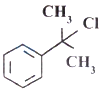
can be classified as ______KCET 2025 Easy - The eccentricity of the ellipse \( \frac{x^{2}}{36}+\frac{y^{2}}{16}=1 \) isKCET 2017 Easy