


KCET · Chemistry · Haloalkanes and Haloarenes
Which one of the following forms propane nitrile as the major product?
- A Ethyl bromide + alcoholic KCN
- B Propyl bromide + alcoholic KCN
- C Propyl bromide \(+\) alcoholic AgCN
- D Ethyl bromide \(+\) alcoholic AgCN
Answer & Solution
Correct Answer
(A) Ethyl bromide + alcoholic KCN
Step-by-step Solution
Detailed explanation
When ethyl bromide reacts with alcoholic KCN, propane nitrile is obtained as main product.
\(\mathrm{C}_{2} \mathrm{H}_{5} \mathrm{Br}+\mathrm{Alc} . \mathrm{KCN} \longrightarrow \underset{\text { propane nitrile }}{\mathrm{C}_{2} \mathrm{H}_{5} \mathrm{CN}}\)
\(\mathrm{C}_{2} \mathrm{H}_{5} \mathrm{Br}+\mathrm{Alc} . \mathrm{KCN} \longrightarrow \underset{\text { propane nitrile }}{\mathrm{C}_{2} \mathrm{H}_{5} \mathrm{CN}}\)
See the Complete Solution
Get step-by-step explanations for this and 2.5 Lakh+ more JEE, NEET & CET questions.
- Unlock all solutions
- Practice the full chapter
- Track accuracy across PYQs
4.8 rated on Google Play · 14,000+ reviews
More questions from Chemistry
- Zeta potential isKCET 2021 Medium
- A correct statement isKCET 2014 Easy
- Which of the following gives positive Fehling's solution test?KCET 2016 Easy
- \(1 \mathrm{~g}\) of silver gets distributed between \(10 \mathrm{~cm}^{3}\) of molten zinc and \(100 \mathrm{~cm}^{3}\) of molten lead at \(800^{\circ} \mathrm{C}\). The percentage of silver in the zinc layer is approximatelyKCET 2010 Hard
- The IUPAC name of
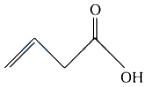
isKCET 2011 Easy - Solute ' \(X^{\prime}\) dimerises in water to the extent of \(80 \% .2 .5 \mathrm{~g}\) of ' \(X^{\prime}\) in \(100 \mathrm{~g}\) of water increases the boiling point by \(0.3^{\circ} \mathrm{C}\). The molar mass of \(' X^{\prime}\) is \(\left[K_{b}=0.52 \mathrm{~K} \mathrm{~kg} \mathrm{~mol}{ }^{-1}\right]\)KCET 2020 Medium
More PYQs from KCET
- Length of the subtangent at \(\left(x_{1}, y_{1}\right)\) on \(x^{n} y^{m}=a^{m+n}, m, n>0\), isKCET 2012 Medium
- ADA deficiency results inKCET 2014 Medium
- In \(\triangle \mathrm{ABC}\), if \(\mathrm{a}=2, \mathrm{~B}=\tan ^{-1} \frac{1}{2}\) and \(C=\tan ^{-1} \frac{1}{3}\), then (A, b) equalsKCET 2010 Medium
- Match List-I with List-II:
Choose the correct answer from the options given below.List-I (Element-Atomic number) List-II (Position in periodic table) (a) Ra – 88 (i) \(4^{th}\) period, \(13^{th}\) group (b) Ga – 31 (ii) \(6^{th}\) period, \(6^{th}\) group (c) W – 74 (iii) \(5^{th}\) period, \(10^{th}\) group (d) Pd – 46 (iv) \(7^{th}\) period, \(2^{nd}\) group KCET 2026 Medium - Statement-I: Nitrogen in pyridine cannot be estimated by Kjeldahl's method.
Statement-II: Nitrogen in pyridine changes to ammonium sulphate when heated with conc. \(\text{H}_2\text{SO}_4\) in Kjeldahl's method.
Read the above given statements and choose the correct answer from the given options.KCET 2026 Medium - The state of hybrid orbitals of carbon in \( \mathrm{CO}_{2}, \mathrm{CH}_{4} \) and \( \mathrm{CO}_{3}{ }^{2-} \) respectively isKCET 2018 Easy