


KCET · Chemistry · Ionic Equilibrium
Which among the following has highest \(\mathrm{pH}\) ?
- A \(1 \mathrm{M} \mathrm{NaOH}\)
- B \(1 \mathrm{M} \mathrm{H}_2 \mathrm{SO}_4\)
- C \(0.1 \mathrm{M} \mathrm{NaOH}\)
- D \(1 \mathrm{M} \mathrm{HCl}\)
Answer & Solution
Correct Answer
(A) \(1 \mathrm{M} \mathrm{NaOH}\)
Step-by-step Solution
Detailed explanation
For acidic medium, we know that \(\mathrm{pH}\) values range is between \(0-6.9\), for neutral it is 7 and for bases it is \(7.1-14\). So, \(\mathrm{HCl}\) is acidic and \(\mathrm{NaOH}\) is basic. Thus, we can straight forward infer that \(\mathrm{NaOH}\) has a higher \(\mathrm{pH}\) value.
Now, 1 mole of sodium hydroxide produces 1 mole of \(\mathrm{Na}^{+}\)and 1 mole of \(\mathrm{OH}^{-}\)ions. This means that the concentration of the hydroxide ions will be equal to \(\left[\mathrm{OH}^{-}\right]=[\mathrm{NaOH}]=1 \mathrm{M}\)
For case \(\mathrm{A}\),
\[
\begin{aligned}
& \mathrm{pOH}=-\log \left[\mathrm{OH}^{-}\right]=-\log [1]=0 \\
& \therefore \quad \mathrm{pH}=14-\mathrm{pOH}=14-0=14 \\
& \text { For case } B \text {, } \\
& {\left[\mathrm{OH}^{-}\right]=[\mathrm{NaOH}]=0.1 \mathrm{M}} \\
& \text { pOH }=-\log [0.1]=1 \\
& \therefore \quad \mathrm{pH}=14-1=13 \\
&
\end{aligned}
\]
So, pH of \(1 \mathrm{M} \mathrm{NaOH}\) is highest among the given solution.
Now, 1 mole of sodium hydroxide produces 1 mole of \(\mathrm{Na}^{+}\)and 1 mole of \(\mathrm{OH}^{-}\)ions. This means that the concentration of the hydroxide ions will be equal to \(\left[\mathrm{OH}^{-}\right]=[\mathrm{NaOH}]=1 \mathrm{M}\)
For case \(\mathrm{A}\),
\[
\begin{aligned}
& \mathrm{pOH}=-\log \left[\mathrm{OH}^{-}\right]=-\log [1]=0 \\
& \therefore \quad \mathrm{pH}=14-\mathrm{pOH}=14-0=14 \\
& \text { For case } B \text {, } \\
& {\left[\mathrm{OH}^{-}\right]=[\mathrm{NaOH}]=0.1 \mathrm{M}} \\
& \text { pOH }=-\log [0.1]=1 \\
& \therefore \quad \mathrm{pH}=14-1=13 \\
&
\end{aligned}
\]
So, pH of \(1 \mathrm{M} \mathrm{NaOH}\) is highest among the given solution.
See the Complete Solution
Get step-by-step explanations for this and 2.5 Lakh+ more JEE, NEET & CET questions.
- Unlock all solutions
- Practice the full chapter
- Track accuracy across PYQs
4.8 rated on Google Play · 14,000+ reviews
More questions from Chemistry
- Extraction of chlorine from brine solution is based onKCET 2017 Easy
- Half life period of a first order reaction is \( 10 \mathrm{~min} \). Starting with initial concentration \( 12 \mathrm{M} \), the
rate after \( 20 \mathrm{~min} \) isKCET 2015 Hard - A metallic oxide reacts with water to form its hydroxide, hydrogen peroxide and also liberates oxygen. The metallic oxide could beKCET 2014 Hard
- Ethanoic acid undergoes Hell-Volhard Zelinsky reaction but methanoic acid does not, because ofKCET 2022 Medium
- Paracetamol is a/anKCET 2007 Medium
- In the reaction,
Aniline \(\xrightarrow[\text { Dil. } \mathrm{HCl}]{\mathrm{NaNO}_2} P \xrightarrow[\mathrm{NaOH}]{\text { Phenol }} Q\)KCET 2024 Easy
More PYQs from KCET
- The probability of happening of an event \( A \) is \( 0.5 \) and that of \( B \) is \( 0.3 \). If \( A \) and \( B \) are mutually
exclusiveevents, then the probability of neither A nor B isKCET 2018 Easy - Magnetic susceptibility of Mg at 300 K is \(1.2 \times 10^{-5}\). What is its susceptibility at \(200 \mathrm{~K} ?\)KCET 2024 Easy
- Variation of resistance of the conductor with temperature is as shown
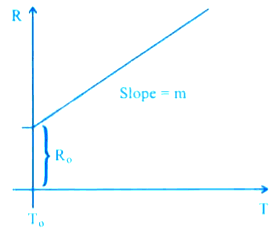
The temperature co-efficient \( (\alpha) \) of the conductor isKCET 2016 Easy - Most ape - like ancestral primate wasKCET 2024 Hard
- Which one of these is not an accessory gland in male reproductive system?KCET 2016 Medium
- \(\mathrm{Mg}^{2+}\) is isoelectronic withKCET 2007 Easy