


KCET · Chemistry · Some Basic Concepts of Chemistry
In which one of the following, does the given amount of chlorine exert the least pressure in a vessel of capacity \(1 \mathrm{dm}^{3}\) at \(273 \mathrm{~K}\) ?
- A \(0.0355 \mathrm{~g}\)
- B \(0.071 \mathrm{~g}\)
- C \(6.023 \times 10^{21}\) molecules
- D \(0.02 \mathrm{~mol}\)
Answer & Solution
Correct Answer
(A) \(0.0355 \mathrm{~g}\)
Step-by-step Solution
Detailed explanation
Ideal gas equation is
\[
\mathrm{pV}=\mathrm{nRT}
\]
When \(\mathrm{V}\) and \(\mathrm{T}\) are same,
\[
\mathrm{p} \propto \mathrm{n}
\]
Thus, when number of moles, ie, \(\mathrm{n}\) is least, it will exert least pressure.
(a) \(\mathrm{n}=\frac{\mathrm{wt}}{\mathrm{mol} \text {. wt }}=\frac{0.0355}{35.5}=1 \times 10^{-3} \mathrm{~mol}\)
(b) \(\mathrm{n}=\frac{0.071}{35.5}=2 \times 10^{-3} \mathrm{~mol}\)
(c) \(\mathrm{n}=\frac{\text { number of molecules }}{\mathrm{N}_{\mathrm{A}}}\) \(=\frac{6.023 \times 10^{21}}{6.023 \times 10^{23}}=0.01 \mathrm{~mol}\)
(d) \(\mathrm{n}=0.02 \mathrm{~mol}\)
Thus, \(0.0355 \mathrm{~g}\) chlorine will exert the least pressure.
\[
\mathrm{pV}=\mathrm{nRT}
\]
When \(\mathrm{V}\) and \(\mathrm{T}\) are same,
\[
\mathrm{p} \propto \mathrm{n}
\]
Thus, when number of moles, ie, \(\mathrm{n}\) is least, it will exert least pressure.
(a) \(\mathrm{n}=\frac{\mathrm{wt}}{\mathrm{mol} \text {. wt }}=\frac{0.0355}{35.5}=1 \times 10^{-3} \mathrm{~mol}\)
(b) \(\mathrm{n}=\frac{0.071}{35.5}=2 \times 10^{-3} \mathrm{~mol}\)
(c) \(\mathrm{n}=\frac{\text { number of molecules }}{\mathrm{N}_{\mathrm{A}}}\) \(=\frac{6.023 \times 10^{21}}{6.023 \times 10^{23}}=0.01 \mathrm{~mol}\)
(d) \(\mathrm{n}=0.02 \mathrm{~mol}\)
Thus, \(0.0355 \mathrm{~g}\) chlorine will exert the least pressure.
See the Complete Solution
Get step-by-step explanations for this and 2.5 Lakh+ more JEE, NEET & CET questions.
- Unlock all solutions
- Practice the full chapter
- Track accuracy across PYQs
4.8 rated on Google Play · 14,000+ reviews
More questions from Chemistry
- Which of the following compound does not give dinitrogen on heating?KCET 2023 Medium
- Which one of the nitrogen atoms in
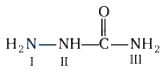
is the most nucleophilic?KCET 2011 Easy - \(\mathrm{H}_{2} \mathrm{~S}\) is passed into one \(\mathrm{nm}^{3}\) of a solution containing \(0.1\) mole of \(\mathrm{Zn}^{2+}\) and \(0.01\) mole of \(\mathrm{Cu}^{2+}\) till the sulphide ion concentration reaches to \(8.1 \times 10^{-19}\) moles. Which one of the following statements is true?
\(\left[K_{\mathrm{sp}}\right.\) of \(\mathrm{ZnS}\) and CuS are \(3 \times 10^{-22}\) and \(8 \times 10^{-36}\) respectively.]KCET 2011 Medium - Which of the following statements is true?KCET 2012 Medium
- For a cell reaction involving two electron changes, \( E_{\text {cell }}^{\circ}=0.3 \mathrm{~V} \) at \( 25^{\circ} \mathrm{C} \). The cell equilibrium
constant of the reaction isKCET 2018 Medium - A sample of water is found to contain \(5.85 \%\) \(\left(\frac{w}{w}\right)\) of \(A B\) (molecular mass 58.5 ) and \(9.50 \%\) \(\left(\frac{w}{w}\right) X Y_2\) (molecular mass 95). Assuming \(80 \%\) ionisation of \(A B\) and \(60 \%\) ionisation of \(X_2\), the freezing point of water sample is [Given, \(K_f\) for water \(1.86 \mathrm{~K} \mathrm{~kg} \mathrm{~mol}^{-1}\),
Freezing point of pure water is \(273 \mathrm{~K}\) and \(A\), \(B\) and \(Y\) are monovalent ions.]KCET 2023 Hard
More PYQs from KCET
- Evaluate \(\int_2^3 x^2 d x\) as the limit of a sumKCET 2022 Easy
- The number of solutions of \(\frac{d y}{d x}=\frac{y+1}{x-1}\), when \(y(\mathrm{l})=2\) isKCET 2021 Medium
- A light beam of intensity \(20 \mathrm{~W} / \mathrm{cm}^{2}\) is incident normally on a perfectly reflecting surface of sides \(25 \mathrm{~cm} \times 15 \mathrm{~cm}\). The momentum imparted to the surface by the light per second isKCET 2020 Hard
- If \(1, \omega, \omega^{2}\) are the cube roots of unity, then \((1+\omega)\left(1+\omega^{2}\right)\left(1+\omega^{4}\right)\left(1+\omega^{8}\right)\) is equal toKCET 2007 Easy
- Solute ' \(X^{\prime}\) dimerises in water to the extent of \(80 \% .2 .5 \mathrm{~g}\) of ' \(X^{\prime}\) in \(100 \mathrm{~g}\) of water increases the boiling point by \(0.3^{\circ} \mathrm{C}\). The molar mass of \(' X^{\prime}\) is \(\left[K_{b}=0.52 \mathrm{~K} \mathrm{~kg} \mathrm{~mol}{ }^{-1}\right]\)KCET 2020 Medium
- The angle between the lines whose direction ratios are \(a, b, c\) and \(b - c, c - a, a - b\) isKCET 2026 Easy