


JEE Advanced · Chemistry · 6. Thermodynamics (C)
The value of \(\log _{10} \mathrm{~K}\) for a reaction \(A \rightleftharpoons B\) is (Given: \(\Delta_{\mathrm{r}} H_{298 \mathrm{~K}}^{\circ}=-54.07 \mathrm{~kJ} \mathrm{~mol}^{-1}, \Delta_{\mathrm{r}} S_{298 \mathrm{~K}}^{\circ}\)\(=10 \mathrm{JK}^{-1} \mathrm{~mol}^{-1}\) and \(R=8.314 \mathrm{JK}^{-1} \mathrm{~mol}^{-1} ; 2.303 \times 8.314 \times 298\)\(=5705\) )
- A 5
- B 10
- C 95
- D 100
Answer & Solution
Correct Answer
(B) 10
Step-by-step Solution
Detailed explanation
\(
\begin{aligned}
A & \rightleftharpoons B \\
\Delta G^{\circ} & =\Delta H^{\circ}-T \Delta S^{\circ} \\
\Delta G^{\circ} & =-2303 R T \log K \\
\log K & =\frac{\Delta H^{\circ}-T \Delta S^{\circ}}{-2303 R T} \\
& =\frac{-54.07 \times 10^3-298 \times 10}{-2303 \times 8.314 \times 298} \\
& =\frac{-57050}{-5705}=10
\end{aligned}
\)
\begin{aligned}
A & \rightleftharpoons B \\
\Delta G^{\circ} & =\Delta H^{\circ}-T \Delta S^{\circ} \\
\Delta G^{\circ} & =-2303 R T \log K \\
\log K & =\frac{\Delta H^{\circ}-T \Delta S^{\circ}}{-2303 R T} \\
& =\frac{-54.07 \times 10^3-298 \times 10}{-2303 \times 8.314 \times 298} \\
& =\frac{-57050}{-5705}=10
\end{aligned}
\)
See the Complete Solution
Get step-by-step explanations for this and 2.5 Lakh+ more JEE, NEET & CET questions.
- Unlock all solutions
- Practice the full chapter
- Track accuracy across PYQs
4.8 rated on Google Play · 14,000+ reviews
More questions from Chemistry
- At the reaction of with produces a xenon compound The total number of lone pair(s) of electrons present on the whole molecule of is __________JEE Advanced 2019 Medium
- With respect to graphite and diamond, which of the statement(s) given below is (are) correct?JEE Advanced 2012 Easy
- Match the complexes in Column I with their properties listed in Column II. Indicates your answer by darkening the appropriate bubbles of \(4 \times 4\) matrix given in the ORS.
 JEE Advanced 2007 Easy
 - Match the chemical substance in Column I with type of polymers/type of bond in Column II. Indicate your answer by darkening the appropriate bubbles of \(4 \times 4\) matrix given in the ORS.
Column I Column II A. Cellulose p. Natural polymer B. Nylon-6,6 q. Synthetic polymer C. Protein r. Amide linkage D. Sucrose s. Glycoside linkage JEE Advanced 2007 Easy - The unbalanced chemical reactions given in List I show missing reagent or condition (?) which are provided in list II. match List I with List II and select the correct answer using the code given below the lists :
List - I List - II A. \(PbO _2+ H _2 SO _4 \xrightarrow{?}\) \(PbSO _4 + O _2+\) other product P. \(\text{NO}\) B. \(Na _2 S_2 O _3+ H _2 O \xrightarrow{?}\) \(NaHSO _4~+\) other product Q. \(\text{I}_2\) C. \(N _2 H _4 \xrightarrow{?} N_2 +\) other product R. Warm D. \(XeF _2 \xrightarrow{?} Xe ~+\) other product S. \(\text{Cl}_2\) JEE Advanced 2013 Easy - The correct statement(s) for the following addition reactions is(are)
 JEE Advanced 2017 Hard
More PYQs from JEE Advanced
- Let the functions and be defined by
and .
Then the area of the region in the first quadrant bounded by the curves and isJEE Advanced 2020 Hard - The total number of distinct for which isJEE Advanced 2016 Medium
- A pulse of light of duration 100 ns is absorbed completely by a small object initially at rest. Power of the pulse is 30 mW and the speed of light is 3 ×10⁸ ms-1. The final momentum of the object isJEE Advanced 2013 Easy
- The function is the solution of the differential equation in (- 1 , 1) satisfying Then isJEE Advanced 2014 Medium
- The wave function, is a mathematical function whose value depends upon spherical polar coordinates of the electron and characterized by the quantum numbers and . Here is the distance from the nucleus, is colatitude and is azimuth. In the mathematical functions given in the Table, is the atomic number and is Bohr radius
For hydrogen atom, what is the only CORRECT combination?Column 1 Column 2 Column 3 (I) 1s orbital \(\text {(i) } \psi_{ n , 1, m_1}\)
\(\propto\left(\frac{ Z }{ a _{ o }}\right)^{\frac{3}{2}} e ^{-\left(\frac{ Zr }{ e _{ o }}\right)}\)(P) 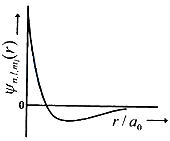
(II) 2s orbital (ii) One radial node (Q) Probability density at the nucleus \(\propto \frac{1}{ a _{ o }^3}\). (III) \(2 p _{ z }\) orbital \(\text {(iii) } \psi_{ n }, 1, m_{ l }\)
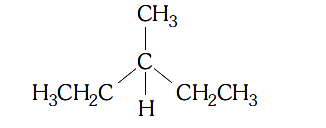
\(\propto\left(\frac{ Z }{ a _{ o }}\right)^{\frac{5}{2}} re ^{-\left(\frac{ Zr }{2 a _{ o }}\right)} \cos \theta\)(R) Probability density is maximum at the nucleus. (IV) \(3 d_{ z }^2\) orbital (iv) \(x y\)-plane is a nodal plane (S) Energy needed to excite an electron from \(n =2\) state to \(n =4\) state is \(\frac{27}{32}\) times the energy needed to excite are electron from \(n =2\) state to \(n =6\) state. JEE Advanced 2017 Hard - The maximum number of isomers (including stereoisomers) that are possible on monochlorination of the following compounds, is
 JEE Advanced 2011 Hard