


WBJEE · Maths · Functions
A Mapping from IN to IN is defined as follows :
\[
\begin{aligned}
& \mathrm{f}: \mathrm{IN} \rightarrow \mathrm{IN} \\
& \mathrm{f}(\mathrm{n})=(\mathrm{n}+5)^2, \mathrm{n} \in \mathrm{IN}
\end{aligned}
\]
(IN is the set of natural numbers). Then
- A \(\mathrm{f}\) is not one-to-one
- B \(\mathrm{f}\) is onto
- C \(\mathrm{f}\) is both one-to-one and onto
- D \(\mathrm{f}\) is one-to-one but not onto
Answer & Solution
Correct Answer
(D) \(\mathrm{f}\) is one-to-one but not onto
Step-by-step Solution
Detailed explanation
\begin{aligned} & \text { Hints: } \mathrm{f}: \mathrm{IN} \rightarrow \mathrm{IN} ; \mathrm{f}(\mathrm{n})=(\mathrm{n}+5)^2 \\ & \left(\mathrm{n}_1+5\right)^2=\left(\mathrm{n}_2+5\right)^2 \\ &…
See the Complete Solution
Get step-by-step explanations for this and 2.5 Lakh+ more JEE, NEET & CET questions.
- Unlock all solutions
- Practice the full chapter
- Track accuracy across PYQs
4.8 rated on Google Play · 14,000+ reviews
More questions from Maths
- A polygon has 44 diagonals. The number of its sides isWBJEE 2009 Medium
- If \(\mathrm{n} > 1\) is an integer and \(\mathrm{x} \neq 0\), then \((1+\mathrm{x})^{\mathrm{n}}-\mathrm{nx}-1\) is divisible byWBJEE 2011 Hard
- Let \(f:[a, b] \rightarrow R\) be such that \(f\) is differentiable in \((a, b)\) is continuous at \(x=a\) and \(x=b\) and moreover \(f(a)=0=f(b)\). ThenWBJEE 2018 Medium
- For every real number \(x \neq-1\), let \(f(x)=\frac{x}{x+1}\). Write \(f_1(x)=f(x)\) \& for \(n \geq 2, f_n(x)=f\left(f_{n-1}(x)\right)\). Then \(f_1(-2) . f_2(-2)\) \(\qquad\) must beWBJEE 2024 Medium
- The locus of the mid-points of the chords of the circle \(x^{2}+y^{2}+2 x-2 y-2=0,\) which make an angle of \(90^{\circ}\) at the centre isWBJEE 2017 Hard
- \(x+8 y-22=0,5 x+2 y-34=0\), \(2 x-3 y+13=0\) are the three sides of a triangle. The area of the triangle isWBJEE 2016 Medium
More PYQs from WBJEE
- Average distance of the Earth from the Sun is \(L_{1}\) : If one year of the Earth \(=D\) days, one year of another planet whose average distance from the Sun is \(L_{2}\) will beWBJEE 2012 Easy
- Which of the following statements is incorrect?WBJEE 2023 Medium
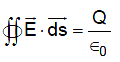
- Consider the integral form of the Gaussian law in electrostatics.
Which of the following statements are correct?WBJEE 2024 Medium - The value of a for which sum of the squares of the roots of the equation \(x^2-(a-2) x-a-1=0\) assumes the least value isWBJEE 2022 Easy
- \(\mathrm{C}_6 \mathrm{H}_6(\mathrm{liq})+\frac{15}{2} \mathrm{O}_2(\mathrm{~g}) \rightarrow 6 \mathrm{CO}_2(\mathrm{~g})+3 \mathrm{H}_2 \mathrm{O}(\mathrm{liq})\)
Benzene burns in oxygen according to the above equation. What is the volume of oxygen (at STP) needed for complete combustion of 39 gram of liquid benzene?WBJEE 2022 Medium - The value of the integral \(\int_{\pi / 6}^{\pi / 2}\left(\frac{1+\sin 2 x+\cos 2 x}{\sin x+\cos x}\right) d x\) is equal toWBJEE 2012 Medium