


TS EAMCET · Physics · Work Power Energy
A light rigid wire of length \(1 \mathrm{~m}\) is attached to a ball \(A\) of mass \(500 \mathrm{~g}\) to one end. The other end of the wire is fixed, so that the wire can rotate freely in the vertical plane about its fixed end. At the lowest point of the circular motion, the ball is given a horizontal velocity \(6 \mathrm{~m} / \mathrm{s}\). Determined the radial component of the acceleration of the ball, when this rigid wire makes an angle \(60^{\circ}\) with the upward vertical. (Take, \(g=10 \mathrm{~m} / \mathrm{s}^2\) )
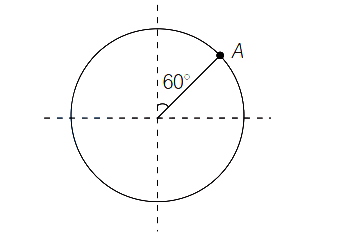
- A \(10 \mathrm{~m} / \mathrm{s}^2\)
- B \(6 \mathrm{~m} / \mathrm{s}^2\)
- C \(18 \mathrm{~m} / \mathrm{s}^2\)
- D \(25 \mathrm{~m} / \mathrm{s}^2\)
Answer & Solution
Correct Answer
(B) \(6 \mathrm{~m} / \mathrm{s}^2\)
Step-by-step Solution
Detailed explanation
Given, length of a rigid wire, \(l=1 \mathrm{~m}\) mass of the ball, \(m=500 \mathrm{~g}=0.5 \mathrm{~kg}\) velocity of ball at a point, \(C=v \mathrm{~m} / \mathrm{s}\) Motion of body in vertical plane is shown in the figure. In \(\triangle B O C\),…
See the Complete Solution
Get step-by-step explanations for this and 2.5 Lakh+ more JEE, NEET & CET questions.
- Unlock all solutions
- Practice the full chapter
- Track accuracy across PYQs
4.8 rated on Google Play · 14,000+ reviews
More questions from Physics
- The de Broglie wavelength of a particle moving with a speed of \(0.8 \mathrm{c}\) is equal to the wavelength of a photon. If \(\mathrm{c}\) is speed of the photon in vacuum, the ratio of the energy of the photon and the kinetic energy of the particle isTS EAMCET 2023 Medium
- If \(\mathrm{F}_1\) and \(\mathrm{F}_2\) are the relative strengths of the gravitational and weak nuclear forces respectively, then \(\frac{F_2}{F_1}\) is nearlyTS EAMCET 2023 Easy
- A piece of metal has a weight of \(49 \mathrm{gm}\) in air and \(39 \mathrm{gm}\) in a liquid of density \(1.2 \times 10^3 \mathrm{~kg} / \mathrm{m}^3 \mathrm{kept}\) at \(32^{\circ} \mathrm{C}\). When the temperature of the liquid is raised to \(45^{\circ} \mathrm{C}\) the metal piece has a weight of \(40 \mathrm{gm}\). If the density of the liquid at \(42{ }^{\circ} \mathrm{C}\) is \(1.0 \times 10^3 \mathrm{~kg} / \mathrm{m}^3\), then the coefficient of linear expansion of the metal isTS EAMCET 2022 Medium
- An air bubble rises from the bottom to the top of a water tank in which the temperature of the water is uniform. The surface area of the bubble at the top of the tank is \(125 \%\) more than its surface area at the bottom of the tank. If the atmospheric pressure is equal to the pressure of 10 m water column, then the depth of water in the tank isTS EAMCET 2025 Medium
- The resistance of a device component decreases as the current through it increases and it is described by the relation, \(R=\frac{0.2 I}{I-4}\), where \(I\) is the current. Determined the minimum power deliver. (Assume, \(I>4\) )TS EAMCET 2019 Hard
- An amount of \(700 \mathrm{~J}\) of heat is transferred to a diatomic gas allowing it to expand with the pressure held constant. The work done on the gas isTS EAMCET 2022 Easy
More PYQs from TS EAMCET
- Let \(\mathbf{E}_0\) and \(\mathbf{B}_0\) denote the amplitude of electric and magnetic field of a plane electromagnetic wave in air. The magnitude of the average momentum transferred per unit area and per unit time to a totally absorbing surface isTS EAMCET 2018 Medium
- A bullet of mass \(25 \mathrm{~g}\) moves horizontally at a speed of \(250 \mathrm{~m} / \mathrm{s}\) is fired into a wooden block of mass \(1 \mathrm{~kg}\) suspended by a long string. The bullet crosses the block and emerges on the other side. If the centre of the mass of the block rises through a height of \(20 \mathrm{~cm}\). The speed of the bullet as it emerges from the block is (take, \(g=10 \mathrm{~m} / \mathrm{s}^2\) )TS EAMCET 2020 Medium
- Two radioactive materials \(R_1\) and \(R_2\) have decay constants \(6 \lambda\) and \(\lambda\), respectively. The half life of \(R_2\) is \(1.4 \times 10^{17} \mathrm{~s}\). Initially they contain some number of nuclei. The time at which the ratio of the remaining nuclei of \(R_2\) to that of \(R_1\) will be \(e\) is \((\) Let \(\ln 2=0.7)\)TS EAMCET 2019 Medium
- A force acts on a body of mass \(10 \mathrm{~kg}\), resulting in its displacement given as \(x=\left(\frac{t^3}{25}\right) \mathrm{m}\), where \(t\) is the time in seconds. The work done by the force in \(1 \mathrm{~s}\) isTS EAMCET 2020 Hard
- Magnetic induction at the centre of a circular loop of area \(\pi \mathrm{m}^2\) is 0.1 tesla. The magnetic moment of the loop is ( \(\mu_0=\) permeability of air \()\)TS EAMCET 2004 Easy
- An ideal gas expands isothermally from volume \(V_1\) to volume \(V_2\). It is then compressed to the original volume \(V_1\) adiabatically. If \(p_1, p_2\) and \(W\) represent the initial pressure, final pressure and the net work done by the gas respectively during the entire process, thenTS EAMCET 2010 Medium