


TS EAMCET · Maths · Functions
If \(\mathrm{D} \subseteq \mathbb{R}\) and \(f: \mathrm{D} \rightarrow \mathbb{R}\) defined by \(f(x)=\frac{x^2+x+a}{x^2-x+a}\) is a surjection then ' \(a\) ' lies in the interval
- A \(\mathbb{R}\)
- B \((0, \infty)\)
- C \((-\infty, 0)\)
- D \((0,1)\)
Answer & Solution
Correct Answer
(C) \((-\infty, 0)\)
Step-by-step Solution
Detailed explanation
\((y-1)x^2 - (y+1)x + a(y-1) = 0\) For \(f\) to be a surjection, for every \(y \in \mathbb{R}\), a real \(x\) must exist. If \(y=1\), \(-2x=0 \Rightarrow x=0\). For \(f(0)=1\) to be defined, \(a \neq 0\). If \(y \neq 1\), the discriminant must be non-negative:…
See the Complete Solution
Get step-by-step explanations for this and 2.5 Lakh+ more JEE, NEET & CET questions.
- Unlock all solutions
- Practice the full chapter
- Track accuracy across PYQs
4.8 rated on Google Play · 14,000+ reviews
More questions from Maths
- \(P(\theta)\) is a point on the hyperbola \(\frac{x^2}{a^2}-\frac{y^2}{9}=1, \mathrm{~S}\) is its focus lying on the positive X -axis and \(\mathrm{Q}=(0,1)\). If \(S Q=\sqrt{26}\) and \(\mathrm{SP}=6\), then \(\theta=\)TS EAMCET 2024 Hard
- If \((x, y, z)=(\alpha, \beta, y)\) is the unique solution of the system of simultaneous linear equations \(3 x-4 y+z+7=0\), \(2 x+3 y-z=10, x-2 y-3 z=3\) then \(a=\)TS EAMCET 2024 Medium
- \(\int \frac{1}{3 \cos x-4 \sin x+5} d x=\)TS EAMCET 2023 Medium
- If the possible solution of the equation \(2 \cos ^2 x+3 \sin x-3=0\) constitute two unequal angles of a triangle, then the third angle of that triangle isTS EAMCET 2020 Easy
- If the focal chord drawn through the point \((1,2)\) to the parabola \(y^2=8 x\) meets this parabola in \(\left(x_1, y_1\right)\) and \(\left(x_2, y_2\right)\) then \(x_1+x_2=\)TS EAMCET 2022 Hard
- If \(f: R \rightarrow R\) is defined by \[ f(x)=\left\{\begin{array}{cc} \frac{\cos 3 x-\cos x}{x^2}, & \text { for } x \neq 0 \ \lambda & , \text { for } x=0 \end{array}\right. \] and if \(f\) is continuous at \(x=0\), then \(\lambda\) is equal toTS EAMCET 2008 Hard
More PYQs from TS EAMCET
- The temperature at which the rms speed of oxygen molecules is \(75 \%\) of rms speed of nitrogen molecules at a temperature of \(287^{\circ} \mathrm{C}\) isTS EAMCET 2024 Easy
- Which one of the following statements is not correct?TS EAMCET 2002 Medium
- Unknown inorganic compound ' \(\mathrm{A}\) ' is used for water softening ' \(\mathrm{A}\) ' reacts with \(\mathrm{Na}_2 \mathrm{CO}_3\) to generate an alkaline compound 'B' whose \(\mathrm{pH}=14\). 'A' on reaction with \(\mathrm{CO}_2\) gives cloudy ppt. ' \(\mathrm{B}\) ' \(+\mathrm{CaO}\) reacts with unknown organic compound ' \(\mathrm{C}\) ' to give \(\mathrm{C}_6 \mathrm{H}_6\). \(\mathrm{A}, \mathrm{B}\) and \(\mathrm{C}\), respectively, areTS EAMCET 2022 Hard
- A random experiment is conducted five times. If the number of successes of the experiment follows binomial distribution such that the difference of mean and variance of the successes is \(\frac{5}{9}\), then the probability of getting atmost two successes isTS EAMCET 2020 Hard
- In which of the following hydrogen bonding is strongest?TS EAMCET 2019 Easy
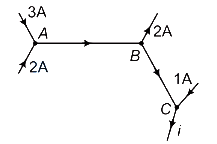
- The electric current \(i\) in the circuit shown is
 TS EAMCET 2011 Easy