


KCET · Physics · Ray Optics
An object approaches a convergent lens from the left of the lens with a uniform speed \(5 \mathrm{~m} / \mathrm{s}\) and stops at the focus, the image
- A moves away from the lens with an uniform specd \(5 \mathrm{~m} / \mathrm{s}\)
- B moves away from the lens with an uniform acceleration
- C moves away from the lens with a non- uniform acceleration
- D moves towards the lens with a non-uniform acceleration
Answer & Solution
Correct Answer
(C) moves away from the lens with a non- uniform acceleration
Step-by-step Solution
Detailed explanation
From lens formula,
\(\frac{1}{f}=\frac{1}{v}-\frac{1}{u}\)
Differentiating w.r.t. time, we get
\(\begin{aligned}
0 &=-\frac{1}{v^{2}} \frac{d v}{d t}+\frac{1}{u^{2}} \frac{d u}{d t} \\
\Rightarrow \quad \frac{d v}{d t} &=\left(\frac{v^{2}}{u^{2}}\right) \frac{d u}{d t} \\
v_{i} &=m^{2} v_{O} ...(i)
\end{aligned}\)
where, \(v_{i}=\) image speed, \(v_{0}=\) object speed, and \(m=\) magnification.
Again differentiating w.r.t. time, we get
\(\begin{aligned}
\frac{d^{2} v_{i}}{d t^{2}} &=v_{0} 2 m \frac{d m}{d t} \\
\Rightarrow \quad a_{i} &=2 m v_{0} \frac{d m}{d t} ...(ii)
\end{aligned}\)
where, \(a_{i}\) is the acceleration of the image.
So, when the object approaches the lens with a uniform speed \(5 \mathrm{~m} / \mathrm{s}\) and stops at focus, then from Eq. (i) and (ii), we can say that, the image will move away from the lens with a non-uniform acceleration as \(\frac{d m}{d t}\) is variable.
\(\frac{1}{f}=\frac{1}{v}-\frac{1}{u}\)
Differentiating w.r.t. time, we get
\(\begin{aligned}
0 &=-\frac{1}{v^{2}} \frac{d v}{d t}+\frac{1}{u^{2}} \frac{d u}{d t} \\
\Rightarrow \quad \frac{d v}{d t} &=\left(\frac{v^{2}}{u^{2}}\right) \frac{d u}{d t} \\
v_{i} &=m^{2} v_{O} ...(i)
\end{aligned}\)
where, \(v_{i}=\) image speed, \(v_{0}=\) object speed, and \(m=\) magnification.
Again differentiating w.r.t. time, we get
\(\begin{aligned}
\frac{d^{2} v_{i}}{d t^{2}} &=v_{0} 2 m \frac{d m}{d t} \\
\Rightarrow \quad a_{i} &=2 m v_{0} \frac{d m}{d t} ...(ii)
\end{aligned}\)
where, \(a_{i}\) is the acceleration of the image.
So, when the object approaches the lens with a uniform speed \(5 \mathrm{~m} / \mathrm{s}\) and stops at focus, then from Eq. (i) and (ii), we can say that, the image will move away from the lens with a non-uniform acceleration as \(\frac{d m}{d t}\) is variable.
See the Complete Solution
Get step-by-step explanations for this and 2.5 Lakh+ more JEE, NEET & CET questions.
- Unlock all solutions
- Practice the full chapter
- Track accuracy across PYQs
4.8 rated on Google Play · 14,000+ reviews
More questions from Physics
- Frequency of revolution of an electron revolving in nth orbit of H-atom is proportional toKCET 2019 Medium
- A Carnot engine working between \( 300 \mathrm{~K} \) and \( 400 \mathrm{~K} \) has \( 800 \mathrm{~J} \) of useful work. The amount of
heat energy supplied to the engine from the source isKCET 2016 Easy - The horizontal component of Earth's magnetic field at a place is \(3 \times 10^{-5} \mathrm{~T}\). If the dip at that place is \(45^{\circ}\), the resultant magnetic field at that place isKCET 2023 Easy
- The half life of a radioactive substance is \( 20 \) minutes. The time taken between \( 50 \% \) decay and
\( 87.5 \% \) decay of the substance will beKCET 2015 Hard - Consider an electrical conductor connected across a potential difference \(V\). Let \(\Delta q\) be a small charge moving through it in time \(\Delta t\). If \(I\) is the electric current through it,
I. the kinetic energy of the charge increases by \(I V \Delta t\).
II. the electric potential energy of the charge decreases by \(I V \Delta t\).
III. the thermal energy of the conductor increases by IV \(\Delta t\).
Choose the correct option.KCET 2021 Easy - Moment of Inertia of a thin uniform rod rotating about the perpendicular axis passing through its centre is \( I \). If the same rod is bent into a ring and its moment of inertia about its diameter is \( I^{\prime} \) then the ratio \( \frac{I}{I^{\prime}} \) isKCET 2015 Easy
More PYQs from KCET
- Number of stereoisomers exhibited by \(\left[\mathrm{Co}(\mathrm{en})_{2} \mathrm{Cl}_{2}\right]^{+}\)isKCET 2020 Easy
- Match the contents of List-I with List-II
List-I List-II A. Bioreactors (i) Insulin produced by rDNA technology B. Downstream processing (ii) Vessels which convert raw material into specific product C. Recombinant protein (iii) Detect mutated genes in suspected cancer patient D. PCR (iv) Involves separation and purification KCET 2025 Easy - Which of the following is an example of homogeneous catalysis?KCET 2019 Easy
- The appropriate reagent for the following transformation is
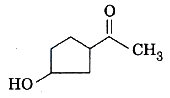

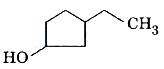 KCET 2018 Easy
 - The transition element ( \(\approx 5 \%\) ) present with lanthanoid metal in misch metal isKCET 2024 Medium
- When a brown compound of \( M n(A) \) is treated with \( H C l \), it gives a gas (B). The gas (B) taken in
excess reacts with \( \mathrm{NH}_{3} \) to give an explosive compound (C).
The compounds A, B and C are;KCET 2016 Hard