


KCET · Maths · Complex Number
In Argand's plane, the point corresponding to \(\frac{(1-i \sqrt{3})(1+i)}{(\sqrt{3}+i)}\) lies in
- A quadrant I
- B quadrant II
- C quadrant III
- D quadrant IV
Answer & Solution
Correct Answer
(D) quadrant IV
Step-by-step Solution
Detailed explanation
Given,
\[
\begin{aligned}
&\frac{(1-i \sqrt{3})(1+i)}{(\sqrt{3}+i)}=\frac{(1-i \sqrt{3}+i+\sqrt{3})(\sqrt{3}-i)}{(3+1)} \\
&=\frac{1}{4} \cdot\{(1+\sqrt{3})+i(1-\sqrt{3})\} \cdot(\sqrt{3}-i) \\
&=\frac{1}{4} \cdot\{\sqrt{3}(1+\sqrt{3})+i(1-\sqrt{3}) \sqrt{3} \\
&\left.=\frac{1}{4} \cdot\{\sqrt{3}+3+1-\sqrt{3})+(\sqrt{3}-3-1-\sqrt{3}) i\right\} \\
&=\frac{1}{4} \cdot\{4-4 i\}=1-i
\end{aligned}
\]
The point \((1-i)\) in Arg and plane is \((1,-1)\) which lies in IVth quadrant.
\[
\begin{aligned}
&\frac{(1-i \sqrt{3})(1+i)}{(\sqrt{3}+i)}=\frac{(1-i \sqrt{3}+i+\sqrt{3})(\sqrt{3}-i)}{(3+1)} \\
&=\frac{1}{4} \cdot\{(1+\sqrt{3})+i(1-\sqrt{3})\} \cdot(\sqrt{3}-i) \\
&=\frac{1}{4} \cdot\{\sqrt{3}(1+\sqrt{3})+i(1-\sqrt{3}) \sqrt{3} \\
&\left.=\frac{1}{4} \cdot\{\sqrt{3}+3+1-\sqrt{3})+(\sqrt{3}-3-1-\sqrt{3}) i\right\} \\
&=\frac{1}{4} \cdot\{4-4 i\}=1-i
\end{aligned}
\]
The point \((1-i)\) in Arg and plane is \((1,-1)\) which lies in IVth quadrant.
See the Complete Solution
Get step-by-step explanations for this and 2.5 Lakh+ more JEE, NEET & CET questions.
- Unlock all solutions
- Practice the full chapter
- Track accuracy across PYQs
4.8 rated on Google Play · 14,000+ reviews
More questions from Maths
- The general solution of the differential equation \( \frac{d y}{d x}+\frac{y}{x}=3 x \) isKCET 2014 Easy
- Let \( { }^{*} \) be a binary operation defined on \( R \) by \( a * b=\frac{a+b}{4} \forall a, b \in R \) then the operation \( * \) is
O examsnet com)KCET 2016 Hard - \(\lim _{y \rightarrow 0} \frac{\sqrt{3+y^3}-\sqrt{3}}{y^3}=\)KCET 2022 Easy
- The value of \(\int e^{\sin x} \sin 2 x d x\) isKCET 2020 Medium
- If \( f(x)=|\cos x-\sin x| \), then \( f^{\prime}\left(\frac{\Pi}{6}\right) \) is equal toKCET 2018 Medium
- The simplified form of \( i^{n}+i^{n+1}+i^{n+2}+i^{n+3} \) isKCET 2016 Easy
More PYQs from KCET
- \( \left(\mathrm{CH}_{3}\right)_{3} \mathrm{SiCl} \) is used during polymerization of organosilicons becauseKCET 2018 Easy
- The volume of \(0.1 \mathrm{M}\) oxalic acid that can be completely oxidized by \(20 \mathrm{~mL}\) of \(0.025 \mathrm{M}\) \(\mathrm{KMnO}_{4}\) solution isKCET 2012 Medium
- An n-type and p-type semiconductor can be obtained by respectively doping pure silicon withKCET 2026 Easy
- The integrating factor of \( \frac{d y}{d x}+y=\frac{1+y}{x} \) isKCET 2018 Medium
- \(O A\) and \(O B\) are two roads enclosing an angle of \(120^{\circ} . X\) and \(Y\) start from ' \(O\) ' at the same time. \(X\) travels along \(O A\) with a speed of \(4 \mathrm{~km} / \mathrm{h}\) and \(Y\) travels along \(O B\) with a speed of \(3 \mathrm{~km} / \mathrm{h}\). The rate at which the shortest distance between \(X\) and \(Y\) is increasing after \(1 \mathrm{~h}\) is
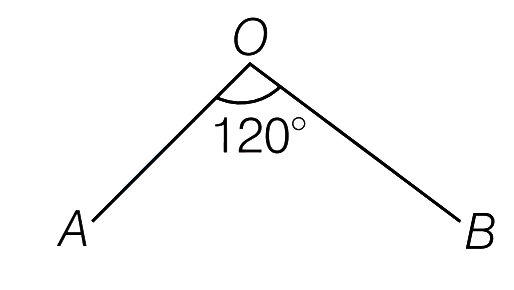 KCET 2007 Hard
 - IUPAC name of the compound is
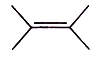 KCET 2023 Easy