


KCET · Maths · Determinants
If \( x y z \) are all different and not equal to zero and \( \left|\begin{array}{cccc}1+x & 1 & 1 \\ 1 & 1+y & 1 \\ 1 & 1 & 1+z\end{array}\right|=0 \)
then the value of \( x^{-1}+y^{-1}+z^{-1} \) is equal to
- A \( x y z \)
- B \( x^{-1} y^{-1} z^{-1} \)
- C \( -x-y-z \)
- D \( -1 \)
Answer & Solution
Correct Answer
(D) \( -1 \)
Step-by-step Solution
Detailed explanation
Given that,
\[
\begin{array}{l}
\left|\begin{array}{ccc}
1+x & 1 & 1 \\
1 & 1+y & 1 \\
1 & 1 & 1+z
\end{array}\right|=0 \\
R_{1} \rightarrow R_{1}-R_{2} \text { and } R_{2} \rightarrow R_{2}-R_{3} \\
\left|\begin{array}{ccc}
x & -y & 0 \\
0 & y & -z \\
1 & 1 & 1+z
\end{array}\right|=0 \\
\Rightarrow x[y(1+z)+z]+y(z)=0 \\
\Rightarrow x y+y z+z x+x y z=0
\end{array}
\]
Divide by xyz both side, we get
\[
\begin{array}{l}
\Rightarrow \frac{1}{x}+\frac{1}{y}+\frac{1}{z}+1=0 \\
\Rightarrow x^{-1}+y^{-1}+z^{-1}=-1
\end{array}
\]
\[
\begin{array}{l}
\left|\begin{array}{ccc}
1+x & 1 & 1 \\
1 & 1+y & 1 \\
1 & 1 & 1+z
\end{array}\right|=0 \\
R_{1} \rightarrow R_{1}-R_{2} \text { and } R_{2} \rightarrow R_{2}-R_{3} \\
\left|\begin{array}{ccc}
x & -y & 0 \\
0 & y & -z \\
1 & 1 & 1+z
\end{array}\right|=0 \\
\Rightarrow x[y(1+z)+z]+y(z)=0 \\
\Rightarrow x y+y z+z x+x y z=0
\end{array}
\]
Divide by xyz both side, we get
\[
\begin{array}{l}
\Rightarrow \frac{1}{x}+\frac{1}{y}+\frac{1}{z}+1=0 \\
\Rightarrow x^{-1}+y^{-1}+z^{-1}=-1
\end{array}
\]
See the Complete Solution
Get step-by-step explanations for this and 2.5 Lakh+ more JEE, NEET & CET questions.
- Unlock all solutions
- Practice the full chapter
- Track accuracy across PYQs
4.8 rated on Google Play · 14,000+ reviews
More questions from Maths
- The coordinates of the foot of the perpendicular drawn from the point \((3,4)\) on the line \(2 x+y-7=0\) isKCET 2007 Hard
- If \( A=\left[\begin{array}{cc}\cos 2 \theta & -\sin 2 \theta \\ \sin 2 \theta & \cos 2 \theta\end{array}\right] \) and \( A+A^{T}=I \),
where \( \mathrm{I} \) is the unit matrix of \( 2 \times 2 \& \mathrm{~A}^{\mathrm{T}} \) is the transpose of \( \mathrm{A} \), then the value of \( \theta \) is equal toKCET 2016 Hard - The two lines \(l x+m y=n\) and \(l^{\prime} x+m^{\prime} y=n^{\prime}\) are perpendicular ifKCET 2020 Easy
- The locus of the point of intersection of perpendicular tangents to the ellipse is calledKCET 2012 Hard
- The number of positive divisors of 252 isKCET 2007 Hard
- \(f(x)=\left\{\begin{array}{cc}\frac{\log x}{x-1}, & \text { if } x \neq 1 \\ k, & \text { if } x=1\end{array}\right.\)
is continuous at
\(x=1\), then the value of \(k\) isKCET 2011 Easy
More PYQs from KCET
- In the electrolytic refining of zincKCET 2010 Easy
- Match the following.
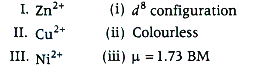
CodesKCET 2024 Hard - The de-Broglie wavelength of a proton (charge \(=16 . \times 10^{-19} \mathrm{C}\), mass \(\left.=16 . \times 10^{-27} \mathrm{~kg}\right)\) accelerated through a potential difference of \(1 \mathrm{kV}\) isKCET 2007 Easy
- Pollen grains are generally spherical, measuring aboutKCET 2017 Easy
- IUDS which are used by femalesKCET 2014 Medium
- \(\lim _{n \rightarrow \infty}\left(\frac{n}{n^2+1^2}+\frac{n}{n^2+2^2}+\frac{n}{n^2+3^2}+\ldots+\frac{1}{5 n}\right)=\)KCET 2024 Hard