


KCET · Maths · Determinants
If \(\left|\begin{array}{lll}\mathrm{x}+1 & \mathrm{x}+2 & \mathrm{x}+\mathrm{a} \\ \mathrm{x}+2 & \mathrm{x}+3 & \mathrm{x}+\mathrm{b} \\ \mathrm{x}+3 & \mathrm{x}+4 & \mathrm{x}+\mathrm{c}\end{array}\right|=0\), then \(a, b, c\) are
- A in GP
- B in HP
- C equal
- D in AP
Answer & Solution
Correct Answer
(D) in AP
Step-by-step Solution
Detailed explanation
Given, \(\left|\begin{array}{lll}x+1 & x+2 & x+a \\ x+2 & x+3 & x+b \\ x+3 & x+4 & x+c\end{array}\right|=0\)
Applying \(\mathrm{R}_{1} \rightarrow \mathrm{R}_{1}+\mathrm{R}_{3}-2 \mathrm{R}_{2}\), we get
\[
\begin{aligned}
&\quad\left|\begin{array}{ccc}
0 & 0 & a+c-2 b \\
x+2 & x+3 & x+b \\
x+3 & x+4 & x+c
\end{array}\right|=0 \\
&\Rightarrow(a+c-2 b)\left[x^{2}+6 x+8-\left(x^{2}+6 x+9\right)\right] \\
&\Rightarrow \quad(a+c-2 b)(-1)=0 \\
&\Rightarrow \quad 2 b=a+c \\
&\Rightarrow \quad a, b, c \text { are in AP. }
\end{aligned}
\]
Applying \(\mathrm{R}_{1} \rightarrow \mathrm{R}_{1}+\mathrm{R}_{3}-2 \mathrm{R}_{2}\), we get
\[
\begin{aligned}
&\quad\left|\begin{array}{ccc}
0 & 0 & a+c-2 b \\
x+2 & x+3 & x+b \\
x+3 & x+4 & x+c
\end{array}\right|=0 \\
&\Rightarrow(a+c-2 b)\left[x^{2}+6 x+8-\left(x^{2}+6 x+9\right)\right] \\
&\Rightarrow \quad(a+c-2 b)(-1)=0 \\
&\Rightarrow \quad 2 b=a+c \\
&\Rightarrow \quad a, b, c \text { are in AP. }
\end{aligned}
\]
See the Complete Solution
Get step-by-step explanations for this and 2.5 Lakh+ more JEE, NEET & CET questions.
- Unlock all solutions
- Practice the full chapter
- Track accuracy across PYQs
4.8 rated on Google Play · 14,000+ reviews
More questions from Maths
- If \(\mathbf{a}=(1,2,3), \mathbf{b}=(2,-1,1), \mathbf{c}=(3,2,1)\) and \(\mathbf{a} \times(\mathbf{b} \times \mathbf{c})=\alpha \mathbf{a}+\beta \mathbf{b}+\gamma \mathbf{c}\), thenKCET 2013 Medium
- Which of the following is not a group with respect to the given operation?KCET 2007 Easy
- Find the co-ordinates of the foot of the perpendicular drawn from the origin to the plane \( 5 y+8 \)
\( =0 \) :KCET 2016 Hard - The least and the greatest distances of the point \((10,7)\) from the circle
\[
x^{2}+y^{2}-4 x-2 y-20=0 \text { are }
\]KCET 2012 Medium - The sum of the squares of the eccentricities of the conics \(\frac{x^{2}}{4}+\frac{y^{2}}{3}=1\) and \(\frac{x^{2}}{4}-\frac{y^{2}}{3}=1\) isKCET 2013 Medium
- If \( |x+5| \geq 10 \) thenKCET 2018 Easy
More PYQs from KCET
- The potential of the electric field produced by point charge at any point \((x, y, z)\) is given by \(V=3 x^{2}+5\), where \(x, y\) are in metres and \(V\) is in volts. The intensity of the electric field at \((-2,1,0)\) isKCET 2007 Easy
- If \( f(x)=8 x^{2}, g(x)=x^{\frac{1}{3}} \) then \( f o g(x) \) isKCET 2017 Hard
- The intermediates in heteropolar reactions areKCET 2026 Easy
- The \(X\) and \(Y\) components of a force \(F\) acting at \(30^{\circ}\) to \(x\)-axis are respectivelyKCET 2012 Easy
- Which is the most suitable reagent for the following conversion?
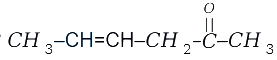
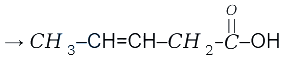 KCET 2019 Medium
 - The complex formed when \( \mathrm{Al}_{2} \mathrm{O}_{3} \) is leached from Bauxite using concentrated \( \mathrm{NaOH} \) solution
is,KCET 2016 Easy