


KCET · Maths · Indefinite Integration
\(\int \frac{1}{x\left[6(\log x)^2+7 \log x+2\right]} d x\) is
- A \(\frac{1}{2} \log \left|\frac{2 \log x+1}{3 \log x+2}\right|+C\)
- B \(\log \left|\frac{2 \log x+1}{3 \log x+2}\right|+C\)
- C \(\log \left|\frac{3 \log x+2}{2 \log x+1}\right|+C\)
- D \(\frac{1}{2} \log \left|\frac{3 \log x+2}{2 \log x+1}\right|+C\)
Answer & Solution
Correct Answer
(B) \(\log \left|\frac{2 \log x+1}{3 \log x+2}\right|+C\)
Step-by-step Solution
Detailed explanation
\(I=\int \frac{1}{x\left[6(\log x)^2+7 \log x+2\right]} d x\)
\(=\int \frac{d t}{6 t^2+7 t+2} \quad\left[\begin{array}{l}\because \text { put } t=\log x \\ d t=\frac{1}{x} d x\end{array}\right]\)
\(=\int \frac{d t}{(3 t+2)(2 t+1)}\)
Now, \(\frac{1}{(3 t+2)(2 t+1)}=\frac{A}{(3 t+2)}+\frac{B}{(2 t+1)}\)
\(=\frac{A(2 t+1)+B(3 t+2)}{(3 t+2)(2 t+1)}\)
\(\Rightarrow \quad 1=A(2 t+1)+B(3 t+2)\)
Now, on putting \(t=\frac{-1}{2}\)
\(\Rightarrow \quad 1=0+B\left[3\left(-\frac{1}{2}\right)+2\right]\)
\(\Rightarrow \quad B=2\)
and put \(t=\frac{-2}{3}\)
\(\Rightarrow \quad 1=A\left(2 \times\left(-\frac{2}{3}\right)+1\right)+0 \Rightarrow 1=A\left(-\frac{4}{3}+1\right)\)
\(\Rightarrow \quad A=-3\)
\(\therefore \quad I=\int\left(\frac{-3}{3 t+2}+\frac{2}{2 t+1}\right) d t\)
\(=\frac{-3 \log |3 t+2|}{3}+2 \frac{\log |2 t+1|}{2}+C\)
\(=-\log |3 t+2|+\log |2 t+1|+C\)
\(=\log \left|\frac{2 t+1}{3 t+2}\right|+C\)
\(=\log \left|\frac{2 \log x+1}{3 \log x+2}\right|+C \quad[\because t=\log x]\)
\(=\int \frac{d t}{6 t^2+7 t+2} \quad\left[\begin{array}{l}\because \text { put } t=\log x \\ d t=\frac{1}{x} d x\end{array}\right]\)
\(=\int \frac{d t}{(3 t+2)(2 t+1)}\)
Now, \(\frac{1}{(3 t+2)(2 t+1)}=\frac{A}{(3 t+2)}+\frac{B}{(2 t+1)}\)
\(=\frac{A(2 t+1)+B(3 t+2)}{(3 t+2)(2 t+1)}\)
\(\Rightarrow \quad 1=A(2 t+1)+B(3 t+2)\)
Now, on putting \(t=\frac{-1}{2}\)
\(\Rightarrow \quad 1=0+B\left[3\left(-\frac{1}{2}\right)+2\right]\)
\(\Rightarrow \quad B=2\)
and put \(t=\frac{-2}{3}\)
\(\Rightarrow \quad 1=A\left(2 \times\left(-\frac{2}{3}\right)+1\right)+0 \Rightarrow 1=A\left(-\frac{4}{3}+1\right)\)
\(\Rightarrow \quad A=-3\)
\(\therefore \quad I=\int\left(\frac{-3}{3 t+2}+\frac{2}{2 t+1}\right) d t\)
\(=\frac{-3 \log |3 t+2|}{3}+2 \frac{\log |2 t+1|}{2}+C\)
\(=-\log |3 t+2|+\log |2 t+1|+C\)
\(=\log \left|\frac{2 t+1}{3 t+2}\right|+C\)
\(=\log \left|\frac{2 \log x+1}{3 \log x+2}\right|+C \quad[\because t=\log x]\)
See the Complete Solution
Get step-by-step explanations for this and 2.5 Lakh+ more JEE, NEET & CET questions.
- Unlock all solutions
- Practice the full chapter
- Track accuracy across PYQs
4.8 rated on Google Play · 14,000+ reviews
More questions from Maths
- The probability of happening of an event \( A \) is \( 0.5 \) and that of \( B \) is \( 0.3 \). If \( A \) and \( B \) are mutually
exclusiveevents, then the probability of neither A nor B isKCET 2018 Easy - The function represented by the following graph is,
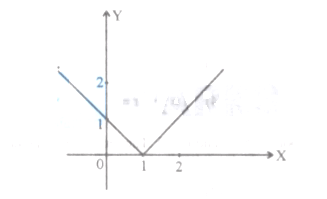 KCET 2014 Hard
 - If \(\sin ^{-1} a\) is the acute angle between the curves \(x^{2}+y^{2}=4 x\) and \(x^{2}+y^{2}=8\) at \((2,2)\), then \(a\) is equal toKCET 2013 Hard
- If \(f(x)=\frac{g(x)+g(-x)}{2}+\frac{2}{[h(x)+h(-x)]^{-1}}\) where \(g\) and \(h\) are differentiable function, then \(\mathrm{f}^{\prime}(0)\)KCET 2009 Medium
- \(\lim _{\mathrm{n} \rightarrow \infty} \mathrm{n} \sin \frac{2 \pi}{3 \mathrm{n}} \cdot \cos \frac{2 \pi}{3 \mathrm{n}}\) isKCET 2010 Easy
- The number of diagonals that can be drawn in an octagon isKCET 2025 Easy
More PYQs from KCET
- For the reaction, \(A(g)+B(g) \rightleftharpoons C(g)+D(g) ; \Delta H=Q \mathrm{~kJ}\)
The equilibrium constant cannot be disturbed byKCET 2021 Easy - For hydrogen - oxygen fuel cell at one atm and \( 298 \mathrm{~K} \)
\( \mathrm{H}_{2}(g)+\frac{1}{2} \mathrm{O}_{2(g)} \rightarrow \mathrm{H}_{2} \mathrm{O}(l) ; \Delta \mathrm{G}^{\circ}=-240 \mathrm{~kJ} \)
\( \mathrm{E}^{\circ} \) for the cell is approximately,
(Given \( \mathrm{F}=96,500 \mathrm{C} \) )KCET 2014 Medium - With reference to the pituitary, which of the following statements is true?KCET 2011 Hard
- The equation of two circles which touch the \(Y\)-axis at \((0,3)\) and make an intercept of 8 units on \(X\)-axis areKCET 2007 Medium
- If A and B are invertible square matrices of order n, then which of the following is not correct?KCET 2026 Easy
- A certain amount of heat energy is supplied to a monoatomic ideal gas which expands at constant pressure. What fraction of the heat energy is converted into work ?KCET 2020 Easy