


KCET · Chemistry · Chemical Kinetics
For an elementary reaction \(2 A+3 B \rightarrow 4 C+D\) the rate of appearance of \(C\) at time ' \(t\) ' is \(2.8 \times 10^{-3} \mathrm{~mol} \mathrm{~L}^{-1} \mathrm{~S}^{-1}\). Rate of disappearance of \(B\) at ' \(t\) '. \(t\) will be
- A \(\frac{4}{3}\left(2.8 \times 10^{-3}\right) \mathrm{mol} \mathrm{L}-1 \mathrm{~S}^{-1}\)
- B \(\frac{3}{4}\left(2.8 \times 10^{-3}\right) \mathrm{mol} \mathrm{L}^{-1} \mathrm{~S}^{-1}\)
- C \(2\left(2.8 \times 10^{-3}\right) \mathrm{mol} \mathrm{L}^{-1} \mathrm{~S}^{-1}\)
- D \(\frac{1}{4}\left(2.8 \times 10^{-3}\right) \mathrm{mol} \mathrm{L}-1 \mathrm{~S}^{-1}\)
Answer & Solution
Correct Answer
(B) \(\frac{3}{4}\left(2.8 \times 10^{-3}\right) \mathrm{mol} \mathrm{L}^{-1} \mathrm{~S}^{-1}\)
Step-by-step Solution
Detailed explanation
\(2 A+3 B \longrightarrow 4 C+D\)
\(\begin{aligned}
\frac{d(C)}{d t} &=2.8 \times 10^{-3} \mathrm{~mol} \mathrm{~L}^{-1} \mathrm{~s}^{-1}(\text { at time } t) \\
-\frac{d(B)}{d t} &=? \\
-\frac{1}{3} \frac{d(B)}{\Delta t} &=+\frac{1}{4} \frac{d[C]}{\Delta t}
\end{aligned}\)
Rate of disappearance of \(B=\frac{3}{4} \times\) rate of appearance of \(C\)
\(=\frac{3}{4} \times 2.8 \times 10^{-3}\)
\(\begin{aligned}
\frac{d(C)}{d t} &=2.8 \times 10^{-3} \mathrm{~mol} \mathrm{~L}^{-1} \mathrm{~s}^{-1}(\text { at time } t) \\
-\frac{d(B)}{d t} &=? \\
-\frac{1}{3} \frac{d(B)}{\Delta t} &=+\frac{1}{4} \frac{d[C]}{\Delta t}
\end{aligned}\)
Rate of disappearance of \(B=\frac{3}{4} \times\) rate of appearance of \(C\)
\(=\frac{3}{4} \times 2.8 \times 10^{-3}\)
See the Complete Solution
Get step-by-step explanations for this and 2.5 Lakh+ more JEE, NEET & CET questions.
- Unlock all solutions
- Practice the full chapter
- Track accuracy across PYQs
4.8 rated on Google Play · 14,000+ reviews
More questions from Chemistry
- Which of the following is more basic than aniline?KCET 2018 Easy
- Identify the correct statement in the following :KCET 2017 Medium
- A metal exists as an oxide with formula \(M_{0.96} \mathrm{O}\). Metal, \(M\) can exist as \(M^{2+}\) and \(M^{3+}\) in its oxide \(M_{0.96} \mathrm{O}\). The percentage of \(M^{3+}\) in the oxide is nearlyKCET 2020 Medium
- A \(0.15\) mole of pyridinium chloride has been added to \(500\text{ cm}^3\) of \(0.2\) M pyridine solution (a base). Assuming there is no change in volume upon mixing(Given: \(pK_b\) of pyridine = 8.82), the pH of the resulting solution isKCET 2026 Medium
- \(0.4 \mathrm{~g}\) of dihydrogen is made to react with \(7.4 \mathrm{~g}\) of dichlorine to form hydrogen chloride. The volume of hydrogen chloride formed at \(273 \mathrm{~K}\) and 1 bar pressure isKCET 2020 Hard
- MnO exhibitsKCET 2024 Easy
More PYQs from KCET
- IUPAC name of the compound is
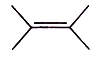 KCET 2023 Easy
 - A person admitted to hospital as he had myocardial infraction. A cardiologist injecting him 'streptokinase' why?KCET 2016 Easy
- If \(u=\sin ^{-1}\left(\frac{2 x}{1+x^2}\right)\) and \(v=\tan ^{-1}\left(\frac{2 x}{1-x^2}\right)\) then \(\frac{d u}{d v}\) isKCET 2023 Medium
- Coersivity of a magnet where the ferromagnet gets completely demagnetized is \( 3 \times 10^{3} \mathrm{Am}^{-1} \)
The minimum current required to be passed in a solenoid having \( 1000 \) turns per metre, so
that the magnet gets completely demagnetized when placed inside the solenoid isKCET 2019 Hard - Equation of line passing through the point \( (2,3,1) \) and parallel to the line of intersection of the
plane \( x-2 y-z+5=0 \) and \( x+y+3 z=6 \) isKCET 2015 Hard - Two dice are thrown. If it is known that the sum of numbers on the dice was less than 6 the probability of getting a sum as 3 isKCET 2021 Easy