


enEnglishguગુજરાતી
JEE Mains · Maths · STD 12 - 7.2 definite integral
Let \(\{x\}\) and \([x]\) denote the fractional part of \(x\) and the greatest integer \(\leq x\) respectively of a real number \(x\). If \(\int \limits_{0}^{n}\{x\} d x, \int \limits_{0}^{n}[x] d x\) and \(10\left( n ^{2}- n \right),( n \in N , n >1)\) are three consecutive terms of a \(G.P.\), then \(n\) is equal to
- A \(20\)
- B \(18\)
- C \(21\)
- D \(23\)
Answer & Solution
Correct Answer
(C) \(21\)
Step-by-step Solution
Detailed explanation
\(\int_{0}^{n}\{x\} d x=n \int_{0}^{1}\{x\} d x=n \int_{0}^{1} x d x=\frac{n}{2}\) \(\int_{0}^{n}[x] d x=\int_{0}^{n}(x-\{x\}) d x=\frac{n^{2}}{2}-\frac{n}{2}\) \(\Rightarrow\left(\frac{n^{2}-n}{2}\right)^{2}=\frac{n}{2} \cdot 10 \cdot n(n-1)(\) where \(n>1)\)…
See the Complete Solution
Get step-by-step explanations for this and 2.5 Lakh+ more JEE, NEET & CET questions.
- Unlock all solutions
- Practice the full chapter
- Track accuracy across PYQs
4.8 rated on Google Play · 14,000+ reviews
More questions from Maths
- The area of the region \(\left\{(x, y): x^2 \leq y \leq 8-x^2, y \leq 7\right\}\) isJEE Mains 2023 Hard
- Let \(a, b, c \in \{1, 2, 3, 4\}\). If the probability, that \(ax^2 + 2\sqrt{2}\,bx + c > 0\) for all \(x \in \mathbb{R}\), is \(\dfrac{m}{n}\), \(\gcd(m, n) = 1\), then \(m + n\) is equal to _______.JEE Mains 2026 Hard
- Let \(y = y(x)\) be the solution of the differential equation \(x\sin\left(\dfrac{y}{x}\right)dy = \left(y\sin\left(\dfrac{y}{x}\right) - x\right)dx\), \(y(1) = \dfrac{\pi}{2}\) and let \(\alpha = \cos\left(\dfrac{y(e^{12})}{e^{12}}\right)\). Then the number of integral values of \(p\), for which the equation \(x^2 + y^2 - 2px + 2py + \alpha + 2 = 0\) represents a circle of radius \(r \leq 6\), is __________.JEE Mains 2026 Hard
- Let the positive integers be written in the form :
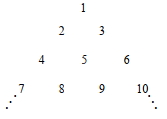
If the \(\mathrm{k}^{\text {th }}\) row contains exactly \(\mathrm{k}\) numbers for every natural number \(\mathrm{k}\), then the row in which the number \(5310\) will be, is .........JEE Mains 2024 Hard - Let \(a>0, b>0\). Let \(e\) and \(\ell\) respectively be the eccentricity and length of the latus rectum of the hyperbola \(\frac{ x ^{2}}{ a ^{2}}-\frac{ y ^{2}}{ b ^{2}}=1\). Let \(e ^{\prime}\) and \(\ell^{\prime}\) respectively the eccentricity and length of the latus rectum of its conjugate hyperbola. If \(e ^{2}=\frac{11}{14} \ell\) and \(\left( e ^{\prime}\right)^{2}=\frac{11}{8} \ell^{\prime}\), then the value of \(77 a+44 b\) is equal toJEE Mains 2022 Hard
- Three rotten apples are accidently mixed with fifteen good apples. Assuming the random variable \(x\) to be the number of rotten apples in a draw of two apples, the variance of \(x\) isJEE Mains 2024 Hard
More PYQs from JEE Mains
- Let \(z \in C\) be such that \(\left| z \right| < 1\). If \(w = \frac{{5 + 3z}}{{5\,\left( {1 - z} \right)}}\), thenJEE Mains 2019 Hard
- The total number or irrational terms in the binomial expansion of \(\left( {{7^{1/5}} - {3^{1/10}}} \right)^{60}\) isJEE Mains 2019 Hard
- Let \(v\) be the solution of the differential equation \(\left(1-x^{2}\right) d y=\left(xy+\left(x^{3}+2\right) \sqrt{1-x^{2}}\right) d x,-1 < x < 1\) and \(y(0)=0\) if \(\int\limits_{-\frac{1}{2}}^{\frac{1}{2}} \sqrt{1-x^{2}} y(x) d x=k\) then \(k^{-1}\) is equal to:JEE Mains 2022 Hard
- Consider a set of \(3 n\) numbers having variance \(4.\) In this set, the mean of first \(2 n\) numbers is \(6\) and the mean of the remaining \(n\) numbers is \(3.\) A new set is constructed by adding \(1\) into each of first \(2 n\) numbers, and subtracting \(1\) from each of the remaining \(n\) numbers. If the variance of the new set is \(k\), then \(9 k\) is equal to .... .JEE Mains 2021 Hard
- Let a circle passing through \((2,0)\) have its centre at the point \((\mathrm{h}, \mathrm{k})\). Let \(\left(\mathrm{x}_{\mathrm{c}}, \mathrm{y}_{\mathrm{c}}\right)\) be the point of intersection of the lines \(3 x+5 y=1\) and \((2+c) x+\) \(5 c^2 y=1\). If \(h=\lim _{c \rightarrow 1} x_c\) and \(k=\lim _{c \rightarrow 1} y_c\), then the equation of the circle is :JEE Mains 2024 Hard
- Let \(\mathrm{S}=\left\{x: \cos ^{-1} x=\pi+\sin ^{-1} x+\sin ^{-1}(2 x+1)\right\}\). Then \(\sum_{x \in \mathrm{~S}}(2 x-1)^2\) is equal to ______.JEE Mains 2025 Hard