


JEE Advanced · Chemistry · 3. Periodic Table
The increasing order of atomic radii of the following group elements is
- A
- B
- C
- D
Answer & Solution
Correct Answer
(B)
Step-by-step Solution
Detailed explanation
The order of radius of group elements is .
ReasonDue to poor shielding effect of -orbital, radius of is smaller than .
ReasonDue to poor shielding effect of -orbital, radius of is smaller than .
See the Complete Solution
Get step-by-step explanations for this and 2.5 Lakh+ more JEE, NEET & CET questions.
- Unlock all solutions
- Practice the full chapter
- Track accuracy across PYQs
4.8 rated on Google Play · 14,000+ reviews
More questions from Chemistry
- The correct statements (s) about intermolecular forces is(are)JEE Advanced 2025 Medium
- The major products obtained from the reactions in List-II are the reactants for the named reactions mentioned in List-I. Match each entry in List-I with the appropriate entry in List-II and choose the correct options.
List - I List - II (P) Stephen reaction (1) 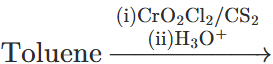
(Q) Sandmeyer reaction (2) 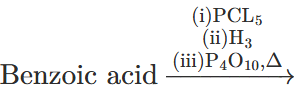
(R) Hoffmann bromamide degradation reaction (3) 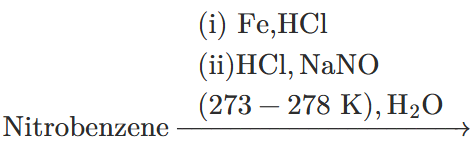
(S) Cannizzaro reaction (4) 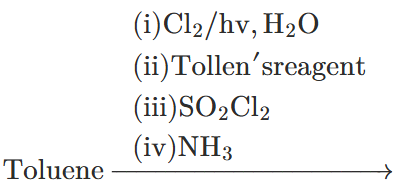
(5) 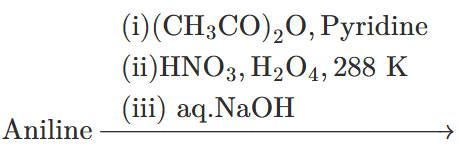 JEE Advanced 2025 Hard
 - \(\mathrm{CuSO}_4\) decolourises on addition of \(\mathrm{KCN}\), the product isJEE Advanced 2006 Medium
- Statement 1 Bromobenzene, upon reaction with \(\mathrm{Br}_2 / \mathrm{Fe}\) gives 1, 4-dibromobenzene as the major product.
Statement 2 In bromobenzene, the inductive effect of the bromo group is more dominant than the mesomeric effect in directing the incoming electrophile.JEE Advanced 2008 Medium - The total number of possible isomers for is___.JEE Advanced 2021 Medium
- Reaction of \(\mathbf{x}\) g of \(\mathrm{Sn}\) with \(\mathrm{HCl}\) quantitatively produced a salt. Entire amount of the salt reacted with \(\mathbf{y} g\) of nitrobenzene in the presence of required amount of \(\mathrm{HCl}\) to produce \(1.29 \mathrm{~g}\) of an organic salt (quantitatively).
(Use Molar masses (in \(\mathrm{g} \mathrm{mol}^{-1}\) ) of \(\mathrm{H}, \mathrm{C}, \mathrm{N}, \mathrm{O}, \mathrm{Cl}\) and \(\mathrm{Sn}\) as \(1,12,14,16,35\) and 119 , respectively).
The value of is_________ .JEE Advanced 2021 Easy
More PYQs from JEE Advanced
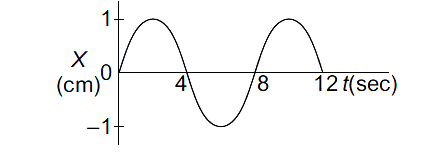
- The \(x-t\) graph of a particle undergoing simple harmonic motion is shown below. The acceleration of the particle at \(t=\frac{4}{3} \mathrm{~s}\) is
 JEE Advanced 2009 Easy
 - Consider three points \(P=(-\sin (\beta-\alpha),-\cos \beta), Q=(\cos (\beta-\alpha), \sin \beta)\) and \(R=(\cos (\beta-\alpha+\theta), \sin (\beta-\theta)\), where \(0 < \alpha, \beta, \theta < \frac{\pi}{4}\). Then,JEE Advanced 2008 Easy
- If \(e_1\) is the eccentricity of the ellipse \(\frac{x^2}{16}+\frac{y^2}{25}=1\) and \(e_2\) is the eccentricity of the hyperbola passing through the focii of the ellipse and \(e_1 e_2=1\), then equation of the hyperbola isJEE Advanced 2006 Easy
- Let be a circle of radius . Let be circles of equal radius . Suppose each of the circles touches the circle externally. Also, for , the circle touches externally, and touches externally. Then, which of the following statements is/are TRUE?JEE Advanced 2022 Easy
- Four harmonic waves of equal frequencies and equal intensities have phase angles and . When they are superposed, the intensity of the resulting wave is . The value of isJEE Advanced 2015 Medium
- Let \(f:(-1,1) \rightarrow I R\) be such that \(f(\cos 4 \theta)=\frac{2}{2-\sec ^{2} \theta}\) for \(\theta \in\left(0, \frac{\pi}{4}\right) \cup\left(\frac{\pi}{4}, \frac{\pi}{2}\right)\). Then the value (s) of \(f\left(\frac{1}{3}\right)\) is (are)JEE Advanced 2012 Medium