


AP EAMCET · Maths · Binomial Theorem
If \(\mathrm{C}_0, \mathrm{C}_1, \mathrm{C}_2, \ldots, \mathrm{C}_{\mathrm{n}}\) are the binomial coefficients in the expansion of \((1+\mathrm{x})^{\mathrm{n}}\), then \(\left(\mathrm{C}_0+\mathrm{C}_1\right)-\left(\mathrm{C}_2+\mathrm{C}_3\right)+\left(\mathrm{C}_4+\mathrm{C}_5\right)-\left(\mathrm{C}_6+\mathrm{C}_7\right)+\ldots=\)
- A \(2^{n / 2}\left(\cos \frac{n \pi}{4}+i \sin \frac{n \pi}{4}\right)\)
- B \(2^{n / 2}\left(\cos \frac{n \pi}{3}+\sin \frac{n \pi}{3}\right)\)
- C \(2^{n / 2}\left(\cos \frac{n \pi}{3}+i \sin \frac{n \pi}{3}\right)\)
- D \(2^{n / 2}\left(\cos \frac{n \pi}{4}+\sin \frac{n \pi}{4}\right)\)
Answer & Solution
Correct Answer
(D) \(2^{n / 2}\left(\cos \frac{n \pi}{4}+\sin \frac{n \pi}{4}\right)\)
Step-by-step Solution
Detailed explanation
(1+\mathrm{i})^{\mathrm{n}} = \mathrm{C}_0 + \mathrm{C}_1\mathrm{i} + \mathrm{C}_2\mathrm{i}^2 + \mathrm{C}_3\mathrm{i}^3 + \mathrm{C}_4\mathrm{i}^4 + \ldots = (\mathrm{C}_0 - \mathrm{C}_2 + \mathrm{C}_4 - \ldots) + \mathrm{i}(\mathrm{C}_1 - \mathrm{C}_3 + \mathrm{C}_5 - \ldots)…
See the Complete Solution
Get step-by-step explanations for this and 2.5 Lakh+ more JEE, NEET & CET questions.
- Unlock all solutions
- Practice the full chapter
- Track accuracy across PYQs
4.8 rated on Google Play · 14,000+ reviews
More questions from Maths
- If \(x\) is real, then the value of \(\frac{x^2-3 x+4}{x^2+3 x+4}\) lies in the intervalAP EAMCET 2011 Medium
- If \(f(x)=k x^3-9 x^2+9 x+3(k>0)\) is increasing for all \(x\), thenAP EAMCET 2021 Easy
- \(\left(\frac{1+\cos \frac{\pi}{8}-i \sin \frac{\pi}{8}}{1+\cos \frac{\pi}{8}+i \sin \frac{\pi}{8}}\right)^8\) is equal toAP EAMCET 2015 Medium
- The area (in sq. units) bounded by the curves \(x^2=9 y\), \((x-6)^2=9 y\) and the \(X\) - axis isAP EAMCET 2023 Medium
- If is a positive integer such that the roots of the equation are rational numbers, then the smallest possible value of isAP EAMCET 2021 Medium
- If \((a, 8)\) is a point on the join of \((2,5)\) and \((4,-1)\) thenAP EAMCET 2020 Easy
More PYQs from AP EAMCET
- The radius of the circle passing through the points of intersection of the circles \(x^2+y^2+2 x+4 y+1=0, x^2+y^2-2 x-4 y-4=0\) and intersecting the circle \(x^2+y^2=6\) orthogonally isAP EAMCET 2025 Hard
- Which of the following matrix has rank 3?AP EAMCET 2021 Easy
- The parabola with directrix \(x+2 y-1=0\) and focus \((1,0)\) isAP EAMCET 2020 Easy
- If -1 is a twice repeated root of the equation \(a\left(x^3+x^2\right)+\) \(\mathrm{bx}+\mathrm{c}=0\), then \(\mathrm{a}: \mathrm{b}: \mathrm{c}=\)AP EAMCET 2023 Easy
- Arrange the following in the correct order of their acidic strength
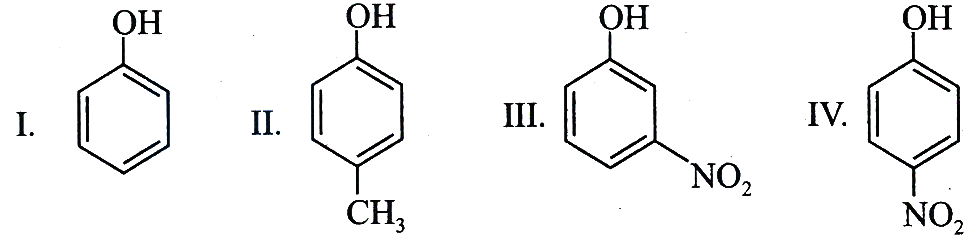 AP EAMCET 2024 Easy
 - \(\mathrm{Be}\) and \(\mathrm{Al}\) show similarities in properties due to diagonal relationship except in the property \(X\) given below. What is \(X\) ?AP EAMCET 2018 Easy