


MHT CET · Physics · Alternating Current
In LCR resonant circuit, the current and voltage have phase difference
- A \(\frac{\pi}{4}\)
- B \(\frac{\pi}{2}\)
- C \(-\frac{\pi}{2}\)
- D zero
Answer & Solution
Correct Answer
(D) zero
Step-by-step Solution
Detailed explanation
At resonance frequency, phase difference between current function and voltage function is zero.
See the Complete Solution
Get step-by-step explanations for this and 2.5 Lakh+ more JEE, NEET & CET questions.
- Unlock all solutions
- Practice the full chapter
- Track accuracy across PYQs
4.8 rated on Google Play · 14,000+ reviews
More questions from Physics
- When three capacitors of equal capacities are connected in parallel and one of the same capacity, capacitor is connected in series with the combination. The resultant capacity is \(4.5 \mu \mathrm{~F}\). The capacity of each capacitor isMHT CET 2024 Easy
- The majority charge carriers in p-type and n-type semiconductor are respectivelyMHT CET 2022 Easy
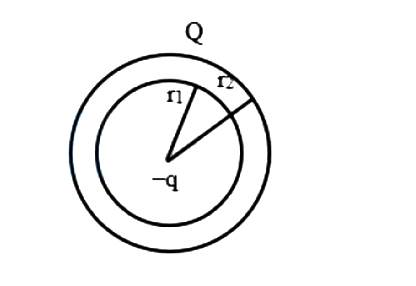
- A spherical conducting shell of inner radius ' \(r_1\) ' and outer radius ' \(r_2\) ' has a charge ' \(Q\) '. A charge \(-q\) is placed at the center of the shell. The surface charge density on the inner and outer surface of the shell will be
 MHT CET 2021 Easy
 - According to kinetic theory of gases, which one of the following statements is wrong?MHT CET 2023 Easy
- A radioactive element has a rate of disintegration 10,000 disintegrations per minute at a particular instant. After four minutes it becomes 2500 disintegrations per minute. The decay constant per minute isMHT CET 2017 Medium
- The temperature of a liquid falls from 365 K to 359 K in 3 minutes. The time during which temperature of this liquid falls from 342 K to 338 K is [Let the room temperature be 296 K ]MHT CET 2024 Hard
More PYQs from MHT CET
- \(\lim _{n \rightarrow \infty} \frac{1}{n^3+1}+\frac{4}{n^3+1}+\frac{9}{n^3+1}+\ldots \ldots \ldots \ldots+\frac{n^2}{n^3+1}=\)MHT CET 2025 Medium
- Calculate the standard enthalpy change for synthesis of ammonia gas from following data
i. \(2 \mathrm{H}_{2(\mathrm{~g})}+\mathrm{N}_{2(\mathrm{~g})} \longrightarrow \mathrm{N}_2 \mathrm{H}_{4(\mathrm{~g})} ; \quad \Delta_{\mathrm{r}} \mathrm{H}_1^0=95.4 \mathrm{~kJ}\)
ii. \(\mathrm{N}_2 \mathrm{H}_{4(\mathrm{~g})}+\mathrm{H}_{2(\mathrm{~g})} \longrightarrow 2 \mathrm{NH}_{3(\mathrm{~g})} ; \quad \Delta_{\mathrm{r}} \mathrm{H}_2^0=-187 \cdot 6 \mathrm{~kJ}\)MHT CET 2025 Medium - The value of \(\int e^{x}\left[\frac{1+\sin x}{1+\cos x}\right] d x\) isMHT CET 2012 Hard
- If the planes \(2 x-5 y+z=8\) and \(2 \lambda x-15 y+\lambda z+6=0\) are parallel to each other, then value of \(\lambda\) isMHT CET 2020 Easy
- Calculate the number of unit cells in 0.79 g metal if product of density and volume of unit cell is \(1.58 \times 10^{-22} \mathrm{~g}\)MHT CET 2025 Medium
- Which among the following molecules is non polar?MHT CET 2022 Easy