


MHT CET · Physics · Wave Optics
In a diffraction pattern due to single slit of width ' \(a\) ', the first minimum is observed at an angle \(30^{\circ}\) when light of wavelength \(5000 Å\) is incident on the slit. The first secondary maximum is observed at an angle \(\left[\sin 30=\frac{1}{2}\right]\)
- A \(\sin ^{-1}\left(\frac{1}{2}\right)\)
- B \(\sin ^{-1}\left(\frac{3}{4}\right)\)
- C \(\sin ^{-1}\left(\frac{1}{4}\right)\)
- D \(\sin ^{-1}\left(\frac{3}{5}\right)\)
Answer & Solution
Correct Answer
(B) \(\sin ^{-1}\left(\frac{3}{4}\right)\)
Step-by-step Solution
Detailed explanation
For \(\mathrm{n}^{\text {th }}\) secondary minimum, path difference \(=\mathrm{a} \sin \theta_{\mathrm{n}}=\mathrm{n} \lambda\) and for \(\mathrm{n}^{\text {th }}\) secondary maximum, path difference \(=a \sin \theta_n=(2 n+1) \frac{\lambda}{2}\)
\(\therefore \quad\) For \(1^{\text {st }}\) minimum, a \(\sin 30^{\circ}=\lambda\)...(i)
For \(2^{\text {nd }}\) maximum, a \(\sin \theta_n=(2+1) \frac{\lambda}{2}\)...(ii)
\(\therefore \quad\) Dividing equations (i) by equation (ii),
\(\frac{1 / 2}{\sin \theta_n}=\frac{2}{3} \Rightarrow \theta_n=\sin ^{-1}\left(\frac{3}{4}\right)\)
\(\therefore \quad\) For \(1^{\text {st }}\) minimum, a \(\sin 30^{\circ}=\lambda\)...(i)
For \(2^{\text {nd }}\) maximum, a \(\sin \theta_n=(2+1) \frac{\lambda}{2}\)...(ii)
\(\therefore \quad\) Dividing equations (i) by equation (ii),
\(\frac{1 / 2}{\sin \theta_n}=\frac{2}{3} \Rightarrow \theta_n=\sin ^{-1}\left(\frac{3}{4}\right)\)
See the Complete Solution
Get step-by-step explanations for this and 2.5 Lakh+ more JEE, NEET & CET questions.
- Unlock all solutions
- Practice the full chapter
- Track accuracy across PYQs
4.8 rated on Google Play · 14,000+ reviews
More questions from Physics
- In Young's experiment, fringes are obtained on a screen placed a distance \(75 \mathrm{~cm}\) from the slits. When the separation between two narrow slits is doubled, then the fringe width is decrease. In order to obtain the initial fringe width, the screen should be moved through.MHT CET 2021 Easy
- An ideal transformer converts AC to AC. It transmits the power of . If the primary coil has turns, then alternating current in the secondary coil isMHT CET 2018 Medium
- In young's experiment with a monochromatic source and two slits, one of the slits is covered with black opaque paper, the fringes willMHT CET 2021 Easy
- An observer on sea-coast counts 45 waves in one minute. If the wavelength of the waves is 7 m , then the velocity of the waves will beMHT CET 2025 Easy
- In case of free expansion, which one of the following statements is \(\underline{WRONG}\)?MHT CET 2025 Easy
- The magnetic field at the centre of a current carrying circular coil of area ' A ' is ' B '. The magnetic moment \((\mathrm{M})\) of the coil is ( \(\mu_0=\) permeability of free space)MHT CET 2025 Medium
More PYQs from MHT CET
- After four successive mitotic divisions of a cell, arithmetic growth pattern of the total number of cells that have lost the ability of cell division is /are __________
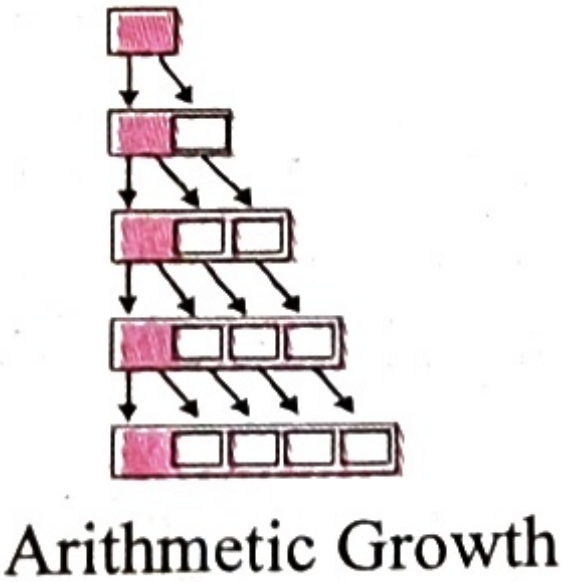 MHT CET 2024 Medium
 - Which from following medicinal properties is exhibited by curcumin?MHT CET 2025 Easy
- The correct order of reactivity for reactions involving cleavage of \(\mathrm{C}-\mathrm{X}\) bond in following compounds is
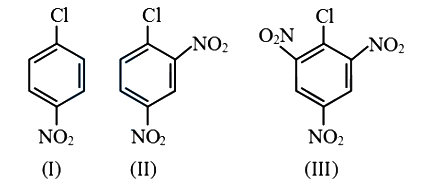 MHT CET 2022 Medium
 - The period of \(|\cos x|\) will beMHT CET 2012 Easy
- What is the final product obtained when benzonitrile react with phenyl megnesium bromide in equimolar proportion?MHT CET 2020 Medium
- A liquid drop of radius ' \(R\) ' is broken into ' \(n\) ' identical small droplets. The work done is \([\mathrm{T}=\) surface tension of the liquid]MHT CET 2023 Medium